
Core Rules
The RoL d20 rules are quite extensive and replace a large portion of the normal d20 and D&D 3.5E rules. Nevertheless, for the few areas not covered by this document, the regular d20 rules still apply. But don't forget... The DM is always right and can override any rule, even the RoL rules.
The main purpose of rules in a role-playing game is to provide a common framework for the players (and the DM).
First of all, it defines a set of characteristics that are used to describe player characters, non-player characters, monsters, and even inanimate objects. For example, they let you know how strong, quick, or intelligent your character is, in absolute numbers. In other words, it is easy to tell whether your character is stronger than an average orc or smarter than the village wizard. All in all, there are quite a number of characteristics that define a character (or any DM-controlled creature for that matter). Some characteristics are generated randomly, while others are chosen by the player. Quite a few are simply calculated and derived from other characteristics. Some will remain constant throughout the character's career, while others will change frequently. Some are relatively obscure and abstract, with little or no effect in a typical gaming session, while others provide well-defined modifiers to actions the character performs on a regular basis.
Second, the rules define which actions your character can perform, your chances of success or failure, and how long those actions take to perform. Of course, the rules cannot cover every possible action, so it is the duty of the DM to adjudicate the cases not already covered by the rules.
Fundamentals
Dice-Rolling
Dice: The traditional role-playing notation for dice is used in the RoL rules. In other words, "3d6+5" means "roll three six-sided dice, calculate their sum, and add five".
Open-Ended Dice: In some situations (those involving d20 checks, in particular) RoL d20 makes use of open-ended dice rolling. The notation used for open-ended rolls consists of an exclamation mark after the die size. For example, "d20!+12" means "roll a d20 and add 12 to the result" as usual. In addition to this, each die that rolls the maximum result (20 in this case) should be rerolled and added to the final result. And each die that rolls the minimum result (usually 1) subtracts "die size+1" from the result and should then be rerolled.
Dice Increase and Decrease: Some skills, spells, and other effects can either increase or decrease the damage dice of a weapon. Such an increase or decrease follows these steps:
1 ↔ d2 ↔ d3 ↔ d4 ↔ d6 ↔ d8 ↔ d10 ↔ 2d6 (or d12) ↔ 2d8 ↔ 2d10 (or d20) ↔ 4d6 ↔ 5d6 ↔ 6d6 ...
In general, treat multiple dice separately. For example, increasing 3d8 results in a progression of 3d10, then 6d6, 7d6, etc.
Mathematics
Units: Measurements in this document are given in metric units. However, to avoid major confusion with D&D, most distances, areas, and volumes are measured in squares. The size of one square (or more accurately one of its edges) is equal to 5 feet or 1.5 m. One square is also the appropriate spacing for a man-sized creature in combat situations.
For diagonal movement and measurements of distance, every other square (starting with the second one) counts double.
Rounding: Unless otherwise specified, always round fractions down.
Multiplication: When applying a single multiplier to a die roll or number, just multiply normally. In some rare cases, such as a spell multiplying a weapon's damage combined with a critical hit, several multiplicative modifiers will apply to a single base number. Such modifiers should, when applied to an abstract value, be added rather than multiplied together, and all multipliers except the first should be reduced by one. For example, a ×2 modifier combined with a ×3 modifier will result in a total of ×4 (2+(3-1)) rather than ×6. When applying several multiplicative modifiers to a "real" value (such as a weight or distance), normal math should be used and all the multipliers multiplied together.
Stacking
Characteristics and modifiers of the same type do not generally stack. However, please check the section about modifiers for exceptions to this rule.
The same rule applies to most non-instantaneous spell effects and special abilities. Unless otherwise specified (or otherwise dictated by logic), when two similar or identical effects affect the same creature or area at the same time, only the most powerful of them applies. Note, however, that determining the similarity of two effects is not always trivial and is ultimately up to the DM.
For example, let us say that a creature is first charmed by a wizard's spell, then charmed again by a vampire's gaze, and finally compelled by a cursed magic item. In most cases, two charm effects can coexist without conflict, but if the creature in this case is forced to make a choice between aiding the wizard or the vampire, the most powerful charm will apply. The compulsion, however, is defined by the rules as a more powerful version of a charm effect, so in this example it will trump both of the charm effects.
Also note that a single spell can have multiple effects, and unless otherwise specified, the same spell can be cast multiple times on the same target. The spell Enhance Senses, for example, can be cast several times at a single target, once to give low-light vision, another to give darkvision, etc.
Timing
Time in a role-playing game is quite fluid, just as it is in movies and literature. When the DM and players agree that few interesting things are taking place, then days, months, or even years of game time can pass in a second of real time. During a complicated situation, on the other hand, a large number of characters may be performing a variety of actions in just a few seconds of game time, but this can take hours of real time to play out.
Every action takes a certain amount of game time to perform. For slower actions, the time is measured in "normal" time units: minutes (min), hours (h), days, weeks, months, or years. Faster actions, however, are measured in rounds or action points rather than seconds.
Round (r): A round is a unit of time roughly equal to 6 seconds. In other words, 10 rounds equal one minute. During each round, a character can perform either a single full-round action or a combination of faster actions. Note, however, that a full-round action can be combined with one or more free actions (those that take 0 AP to perform).
Action Points (AP): Action Points is a measure of how much a creature can do in a single round. When a time is specified in AP, it reflects the number of AP a creature must spend to perform a certain action. Typically, a high-level character or monster has more AP to spend per round than one of low level. For a low-level character, 1 AP is roughly equivalent to 0.5 seconds, while for a high-level character, it can be as short as 0.15 seconds.
Movement Points (MP): Movement Points are similar to Action Points but are tied to a creature's rate of movement. Movement Points can be used only for movement actions (those with the [Move] descriptor). A creature's amount of available MP is determined by its speed characteristic, but a limited number of AP can also be converted into extra MP. When a time is specified in MP, it reflects the number of MP a creature must spend to perform a certain action.
Encounter (enc): An encounter is not a fixed amount of time, but it is typically somewhere between half a minute and half an hour. It can be an entire combat, from start to finish, a fast-paced chase through a forest, a friendly five-minute chat between characters, a few minutes spent climbing a wall, etc. In situations where an encounter's duration cannot be clearly defined, this time unit is typically limited at one minute per skill level (or TL, when skill level is not applicable).
Racial Characteristics
Race/Creature: This is the species an individual belongs to. Some races will also have a variety of subraces. For example, sylvan and drow elves are two subraces of the elven race, with very different racial traits and temperaments.
Creature type and subtype: Each creature belongs to a specific creature type and subtype. This will sometimes affect or determine the efficiency of special powers, spells, and magic items. For example, some magic weapons deal greater damage to certain creature types, and some skills teach you how to better track and fight specific creature types.
Template: This is a special racial modification that can be added on top of a base race. Vampiricism and lycanthropy are two well-known examples of templates.
Culture: This represents the upbringing and background of a creature. Most importantly, it determines which class or classes to use for racial levels and when choosing background skills.
Gender: There is usually very little difference between male and female as far as the rules are concerned. For most races, the only technical difference is in height and weight calculations. Still, there are a few races where the two genders are distinctly different with regards to ability adjustments and other traits.
In these rules (as in the original ones), the words ‘he’, ‘him’, and ‘his’ will often refer to both genders, in an attempt to make the text somewhat easier to read.
Age: This is just what it sounds like, the number of years a creature has been alive. In a few rare cases, a creature may suffer unnatural aging or may even be able to halt or reverse natural aging. If that is the case, it becomes necessary to track physical and mental age separately.
Age category: A creature’s age and race determine which age category it belongs to. Age category, in turn, will affect ability scores and racial level for most creature types, as shown in the table below.
| Age Category | Str | Con | Dex | Int | Wis | Cha | RL Multiplier1 | Size Mod2 |
|---|---|---|---|---|---|---|---|---|
| Child | -4 | -2 | +2 | 0 | -4 | 0 | ×0.5 | -1 |
| Juvenile | -2 | 0 | 0 | 0 | -2 | 0 | ×0.75 | 0 |
| Adult | 0 | 0 | 0 | 0 | 0 | 0 | ×1 | 0 |
| Mature | -1 | -1 | -1 | +1 | +1 | +1 | ×1 | 0 |
| Old | -3 | -3 | -3 | +2 | +2 | +2 | ×1 | 0 |
| Venerable | -6 | -6 | -6 | +3 | +3 | +3 | ×1 | 0 |
| Age Category | Str | Con | Dex | Int | Wis | Cha | RL Multiplier1 | Size Mod2 |
|---|---|---|---|---|---|---|---|---|
| Child | -4 | -2 | +2 | 0 | -4 | 0 | ×0.5 | -1 |
| Juvenile | -2 | 0 | 0 | 0 | -2 | 0 | ×0.75 | 0 |
| Adult | 0 | 0 | 0 | 0 | 0 | 0 | ×1 | 0 |
| Mature | +1 | +1 | 0 | +1 | +1 | +1 | ×1.5 | 0 |
| Old | +2 | +2 | 0 | +2 | +2 | +2 | ×2 | +1 |
| Venerable | +3 | +3 | 0 | +3 | +3 | +3 | ×3 | +1 |
1 RL Multiplier: A creature's RL should be multiplied by this age-based factor.
2 Size Modifier: A creature's size can also vary with age, according to this modifier.
Constructs, elementals, and outsiders do not normally have age categories or age-based adjustments. Some, however, may use the ability adjustments for animals and humanoids.
Level Characteristics
One of the most crucial characteristics of any creature is its level. Level is quite simply a rough indication of how powerful and skilled a creature is. For many intelligent creatures, time and experience will lead to a gradual increase in level. This, in turn, will lead to more health points, improved skills, and many other benefits.
Experience Points (XP): This is a measure of how much total experience a character has accumulated in his lifetime. When a character defeats opponents and overcomes other challenges, the DM will reward him with an appropriate number of XP. The number of XP determines when a creature gains a level, as shown on the table below.
Class: This is a creature's profession or vocation (if any). Although classes are primarily associated with the more intelligent and civilized races, even dumb animals can sometimes gain a few levels in the Warrior class and improve their combat skills. Some creatures will adopt more than one class, and this is referred to as multi-classing.
Class Level (ClL): This is the number of levels a creature has in a certain class. A creature can also have different levels in a number of separate classes. Class levels are most commonly shown as the abbreviation for the class followed by the level. For example, 5 levels in the fighter class is abbreviated as Ftr5, while 6 rogue levels combined with 3 wizard levels are abbreviated as Rog6/Wiz3.
Racial Level (RL): Many creatures are so physically powerful that just belonging to their race counts as a certain number of "bonus" levels. For example, an ogre that is also a level 5 fighter is a more powerful and dangerous opponent than a human level 5 fighter, and this is represented by a number of racial ogre levels. Racial levels are technically treated as levels in one of the classes associated with the creature's culture.
Total Level (TL): A creature’s total level is simply the sum of all its class and racial levels.
TL = ∑ClL + RL
Challenge Level (CL): This is a measure of how challenging a creature is as an opponent. In many cases, CL is equal to TL, but sometimes a creature has special abilities, social class, etc. that can make it more (or less) dangerous than its TL would indicate.
CL = TL + CL modifier
| TL (or CL)1 | XP | AP |
|---|---|---|
| 1 | 0 | 11 |
| 2 | 1000 | 12 |
| 3 | 3000 | 13 |
| 4 | 6000 | 14 |
| 5 | 10000 | 15 |
| 6 | 15000 | 16 |
| 7 | 21000 | 17 |
| 8 | 28000 | 18 |
| 9 | 36000 | 19 |
| 10 | 45000 | 20 |
| 11 | 55000 | 21 |
| 12 | 66000 | 22 |
| 13 | 78000 | 23 |
| 14 | 91000 | 24 |
| 15 | 105000 | 25 |
| 16 | 120000 | 26 |
| 17 | 136000 | 27 |
| 18 | 153000 | 28 |
| 19 | 171000 | 29 |
| 20 | 190000 | 30 |
| 21 | 210000 | 31 |
| 22 | 231000 | 32 |
| 23 | 253000 | 33 |
| 24 | 276000 | 34 |
| 25 | 300000 | 35 |
| 26 | 325000 | 36 |
| 27 | 351000 | 37 |
| 28 | 378000 | 38 |
| 29 | 406000 | 39 |
| 30 | 435000 | 40 |
| 31 | 465000 | 41 |
| 32 | 496000 | 42 |
| 33 | 528000 | 43 |
| 34 | 561000 | 44 |
| 35 | 595000 | 45 |
| 36 | 630000 | 46 |
| 37 | 666000 | 47 |
| 38 | 703000 | 48 |
| 39 | 741000 | 49 |
| 40 | 780000 | 50 |
1CL (when it differs from TL) should be used to determine the XP requirement per level. TL is used to determine the number of action points, skill points, improvement points, and most other level-based characteristics.
Action Points (AP): Action Points is a measure of how much a creature can do in a single round. The available amount of AP is determined by TL, so for a character this amount will typically increase as the character gains experience and becomes more skilled. During combat, action points can be used to perform a wide variety of attacks and other actions.
Skill Points: As a creature gains levels, it also gains skill points (determined by the class). These points can be used to learn new skills or improve already known skills. Skill points have to be spent when the level is gained, and they can’t be saved for future use.
Improvement Points (IP): Characters and other exceptional creatures gain 5 improvement points per level, and these can be used to improve a wide variety of characteristics (see Character Generation chapter). Improvement points can be saved and accumulated for future use.
Power Level (PL): Power Level is used for all supernatural creatures, objects, and effects, and it is a measure of how supernatural they are. A high PL makes the creature, object, or effect easier to detect with magic and supernatural senses but also more resistant to dispelling, anti-magic, and wild magic. Most supernatural creatures have a PL equal to their TL, objects have a PL based on their supernatural powers, and supernatural effects have a PL based on their PP cost.
Ability Scores
The six ability scores, Strength, Constitution, Dexterity, Intelligence, Wisdom, and Charisma, are among the most basic and important characteristics for any character or creature. They affect almost everything a creature does, and a good ability score can give as much bonus as several levels of training in a skill.
| Ability | Abbrev | Description | Effect of No Score (–, not 0) |
|---|---|---|---|
| Strength | Str | Affects Fortitude defense, some melee attack rolls, melee weapon damage, some skill action rolls, strength ability checks, and carrying capacity. | Cannot exert force or physically manipulate objects; fail all Str checks; may be allowed to use Dex modifier for some attacks. |
| Constitution | Con | Affects Fortitude defense, starting hit points, starting stamina points, some skill action rolls, and constitution ability checks. | Immune to ability damage, energy drain, and attacks against Fort defense; have no stamina points and do not suffer fatigue; fail all Con checks. |
| Dexterity | Dex | Affects Defense Class, Reflex defense, some melee attack rolls, most ranged attack rolls, initiative rolls, some skill action rolls, and dexterity ability checks. | Cannot move; fail all Dex checks, and attacks against Ref defense always have full effect; no initiative modifier. |
| Intelligence | Int | Affects Reflex defense, some magical attack rolls, some skill action rolls, and intelligence ability checks. | Fail all Int checks; can never learn skills; immune to mind-affecting attacks. |
| Wisdom | Wis | Affects Will defense, starting power points, some magical attack rolls, some skill action rolls, and wisdom ability checks. | Must be an object; have no power points and do not suffer mental fatigue. |
| Charisma | Cha | Affects Will defense, some magical attack rolls, some skill action rolls, and charisma ability checks. | Must be an object. |
Each ability score is calculated from a base ability score, which is then modified for race, age, and other factors. A base ability score can be said to represent an individual's raw potential compared to the average for his or her race and age. It is typically a random "bell" distribution between 3 and 18, and once generated for a character or creature, it will never change. An (actual) ability score, however, will often have modifiers that make it different from the base score. Some modifiers, such as race and age, tend to remain constant over long periods of time, wbile others, such as magic and disease, tend to be temporary. The main reason that you should keep track of both the base and actual ability scores is that a character’s race can change in the world of D&D. For example, assume that you have a human druid with a low base Strength score of 5. If he shapeshifts into a grizzly bear, he will gain a +16 racial bonus to strength, giving him an actual Strength score of 21. This would be significantly stronger than any unaided human. but the druid will still be relatively weak for a grizzly (base ability score is still the same).
Ability score modifiers are always calculated from the actual ability scores, according to the formula or table below. Those modifiers are then used for a wide variety of skill checks, ability checks, attack rolls, damage rolls, defenses, etc.
Base ability score = 3 to 18 (using 3d6 for average individuals)
Ability score (actual) = base ability score + racial/template mods + age mod + other modifiers
Ability score modifier = (ability score / 2) - 5
| Ability Score | Ability Modifier | Ability Score | Ability Modifier | Ability Score | Ability Modifier | Ability Score | Ability Modifier | Ability Score | Ability Modifier |
|---|---|---|---|---|---|---|---|---|---|
| 0-1 | -5 | 20-21 | +5 | 40-41 | +15 | 60-61 | +25 | 80-81 | +35 |
| 2-3 | -4 | 22-23 | +6 | 42-43 | +16 | 62-63 | +26 | 82-83 | +36 |
| 4-5 | -3 | 24-25 | +7 | 44-45 | +17 | 64-65 | +27 | 84-85 | +37 |
| 6-7 | -2 | 26-27 | +8 | 46-47 | +18 | 66-67 | +28 | 86-87 | +38 |
| 8-9 | -1 | 28-29 | +9 | 48-49 | +19 | 68-69 | +29 | 88-89 | +39 |
| 10-11 | 0 | 30-31 | +10 | 50-51 | +20 | 70-71 | +30 | 90-91 | +40 |
| 12-13 | +1 | 32-33 | +11 | 52-53 | +21 | 72-73 | +31 | 92-93 | +41 |
| 14-15 | +2 | 34-35 | +12 | 54-55 | +22 | 74-75 | +32 | 94-95 | +42 |
| 16-17 | +3 | 36-37 | +13 | 56-57 | +23 | 76-77 | +33 | 96-97 | +43 |
| 18-19 | +4 | 38-39 | +14 | 58-59 | +24 | 78-79 | +34 | 98-99 | +44 |
Health Points
Hit Points (HP): Represent how much physical damage a creature can take before falling unconscious or dying.
HP = Con + (HP bonus per class and level) + (HP bonus per race and level) × size factor + other modifiers
Stamina Points (SP): Represent how much physical fatigue a creature can take before becoming exhausted or passing out.
SP = Con + (SP bonus per class/race and level) + other modifiers
Power Points (PP): Represent how much mental fatigue a creature can take before passing out.
PP = Wis + (PP bonus per class/race and level) + other modifiers
An increase or decrease of a creature’s Con or Wis scores (even a temporary change) immediately leads to a corresponding increase or decrease in both maximum and current HP, SP, and/or PP. If the creature is already injured or fatigued, an ability decrease can potentially lead to unconsciousness or even death.
The durability of an object is represented as HP, but very few objects have SP or PP. When an object is reduced to 0 HP, it is destroyed.
Temporary Health Points: Some effects can grant temporary HP, SP, or PP. These are added to the creature’s current score and are lost before regular points. If the effect ends before all the temporary points have been lost, the creature’s current score drops back to its old, unenhanced value. Temporary points can never be healed, naturally or supernaturally. Also note that multiple effects that grant temporary health points will not stack; only the highest value counts.
Reduced Health Points (optional rule for more realistic campaigns): DMs who want faster and more dangerous combat encounters may consider reducing the health points of all creatures. Simply reduce the health points granted by class and racial levels by a given fraction (25% or 50%, for example). Another option would be to reduce the health points only of certain creature types, such as humanoids.
Random Health Points (optional rule for more varied characters): For DMs (and players) who want more variation in the health points of characters, NPCs, and other creatures, consider replacing the fixed health point bonuses per level with random dice rolls of similar size. For example, a fighter might receive 2d8 HP, 2d6 SP, and d4 PP per level.
Defense Characteristics
Defense Class
Defense Class (DeC): A measure of how difficult a creature (or object) is to hit with physical attacks.
DeCp (passive DeC) = 10 + Dex mod (if negative) + TL (total level) + size mod + deflection bonus + other modifiers
DeCa (active DeC) = DeCp + Dex mod (if positive) + parry bonus + dodge bonus + other modifiers
The active DeC is used against attacks that you are aware of and can actively try to avoid. The passive DeC is used in other situations, such as when you are flat-footed or surprised, when being attacked by an invisible creature, when you have become entangled or paralyzed, etc.
The parry bonus can actually be a combination of multiple bonus types. Weapons (natural as well as manufactured ones) and shields usually provide parry bonuses. As your skill with a weapon or shield improves, so does the parry bonus you gain from it. Magic can also enhance the parrying ability of a weapon or shield. Parry bonuses from multiple weapons (or a weapon and shield, or even two shields) do not stack. Apply only the highest parry bonus of the ones provided by weapons and shields that are held in "primary attack forms" (see below), where the parry bonus for each weapon or shield is the sum of the item's parry bonus and the parry bonus from your skill with that weapon. Note that none of the parry-based bonuses apply when calculating passive DeC.
Certain attacks may have the ability to bypass or ignore specific modifiers to DeC. For example, an incorporeal attacker typically ignores non-magical objects and can therefore ignore a target's parry bonus for non-magical weapons (including the skill-based parry bonuses for such weapons).
DeC can also be calculated for inanimate objects, but they have a Dex of 0 (-5 penalty) and are helpless (-4 penalty). In other words, their DeC = 1 + size mod. Note, however, that most objects are resistant or immune to critical hits and coup de grace.
Fortitude, Reflex, and Will
Fortitude defense (Fort): A measure of how resistant a creature is to attacks against its health and stamina.
Fort = 10 + Str mod + Con mod + TL (total level) + skill mod + other modifiers
Reflex defense (Ref): A measure of how good a creature is at avoiding physical area-effect attacks.
Ref = 10 + Dex mod + Int mod + TL (total level) + skill mod + other modifiers
Will defense (Will): A measure of how resistant a creature is to attacks against its emotions or intellect.
Will = 10 + Wis mod + Cha mod + TL (total level) + skill mod + other modifiers
Most inanimate objects have no Con, Int, or Wis, and their Dex is 0. Effectively, this means that they are immune to attacks against Fort and Will, and they have a Ref defense of 5.
DeC, Fort, Ref, and Will are sometimes grouped together and referred to simply as Defenses. Fort, Ref, and Will are sometimes referred to as Non-DeC Defenses or NDD.
Damage Resistance
Damage Resistance (DR): This reflects how resistant a creature (or an object) is to physical damage, regardless of whether the damage is caused by weapons, claws, teeth, crushing boulders, or a fall from a great height. The damage resistance does not apply to energy damage. Every time the creature takes physical damage, the damage is reduced by an amount equal to the creature's DR.
DR can reduce HP as well as SP damage, as long as the source is physical. If an attack causes both HP and SP damage, DR will first reduce the SP damage, and then the HP damage.
Damage Resistance can be granted by thick skin, hard scales, suits of armor, and protective cover. DR provided by armor and/or cover is applied separately from and before any DR provided by natural armor or innate resistance.
DR = Natural DR + armor bonus + cover bonus + other modifiers
Natural DR is determined by a creature's race but can be further affected by templates, magic, etc.
In addition to reducing physical damage, DR reduces the risk of suffering critical hits from attacks against DeC. DR adds directly to critical hit resistance (see below).
When DR manages to negate all physical damage from an attack, most secondary effects of the attack are also negated. This includes effects based on poison, disease, and most special abilities, but it does not apply to touch attacks or energy damage. Also note that the defender does not have to roll any skill checks to maintain concentration on difficult tasks when all damage is negated.
Vulnerability to a type of physical damage, type of weapon, or material means that the creature suffers additional damage, typically 50% or 100% extra, whenever exposed to that type of damage. The extra damage is calculated after any other modifiers due to defenses, magical protection, etc.
Conditional DR: Some creatures receive a DR bonus against specific types of weapons or damage. For example, a creature with a natural DR of 5 and +5 DR bonus against non-magical weapons has an effective DR of 10 against unenchanted weapons. Other typical conditional DR bonuses are based on alignment (good, evil, lawful, or chaotic), damage types (bludgeoning, piercing, or slashing), and materials (adamantine, alchemical silver, cold iron, etc). Some DR bonuses may even be based on multiple combined conditions, such as +10 DR against non-good and non-silver (a bonus that would be circumvented by weapons that are good-aligned, silvered, or both).
With regard to conditional DR bonuses against non-magical weapons, a weapon with any sort of supernatural enchantment will circumvent the DR bonus, but non-magical enhancement bonuses are not enough to circumvent such bonuses. Creatures with supernatural racial traits treat all of their natural attacks as magical against this type of conditional DR bonus.
With regard to projectile weapons, either the weapon properties or the projectile properties (or both) may be used to circumvent conditional DR bonuses.
Penetrating Hits: When an attack beats a defense by 10 or more (also known as an exceptional success), the damage resistance (if any) is halved against that attack.
Critical Hit Resistance
Critical Hit Resistance (CritRes): Resistance or immunity to critical hits means that a creature has unusually few sensitive areas or that such areas are more effectively protected against physical attacks. Although an attack roll that beats DeC by 20 or more would normally result in a critical success, critical hit resistance adds directly to the levels of success required to achieve a critical hit. It applies to any attack against DeC that can achieve critical hits, but it does not apply to attacks against Fort, Ref, or Will defenses.
CritRes = DR + racial mod + other modifiers
For example, if a creature has DeC 15, DR 5, and a racial critical hit resistance of 10, an attack result of 15 is enough for a normal hit, but a result of 50 (15+5+10+20) or better is required for a critical hit.
Objects and creatures that have racial Critical Hit Resistance of 10 or better take only half damage from piercing attacks (after reduction for DR). The reason is that piercing damage is based more than other damage types on striking sensitive areas.
Energy Resistances
Energy Resistance (Acid, Cold, Electricity, Fire, Necrotic, Radiant and/or Sonic Res): Resistance to a type of energy damage, reduces the amount of damage taken when exposed to the specified energy type. The reduction in damage is made after any other modifiers due to defenses, evasion, magical protection, etc. The number indicated for an energy resistance is the maximum sum of HP and SP that can be resisted or absorbed each round.
Energy resistance can reduce HP as well as SP damage, as long as the source is an energy-based attack. If an attack causes both HP and SP damage, energy resistance will first reduce the SP damage, and then the HP damage.
Immunity is equivalent to infinite resistance. The creature never takes any damage from the specified type of energy. Immunity also protects against other effects based on the appropriate energy type, such as ability damage caused by necrotic energy, blindness caused by radiant energy, and can even prevent healing provided by [Radiant]-based healing.
Vulnerability to a type of energy damage means that the creature suffers additional damage, typically 50% or 100% extra, whenever exposed to that type of damage. The extra damage is calculated after any other modifiers due to defenses, magical protection, etc.
Unless otherwise specified, energy resistance, immunity, and vulnerability does not extend to the creature’s equipment.
Psychic Resistance (Psychic Res): Resistance to psychic damage, reduces the amount of PP damage taken when exposed to psychic attacks. The reduction in damage is made after any other modifiers due to defenses, magical protection, etc. The number indicated for psychic resistance is the maximum PP damage that can be resisted or absorbed each round.
Immunity is equivalent to infinite resistance. The creature never takes any damage (or suffers other penalties) from psychic attacks.
Vulnerability to psychic damage means that the creature suffers additional damage, typically 50% or 100% extra, whenever exposed to psychic attacks. The extra damage is calculated after any other modifiers due to defenses, magical protection, etc.
Penetrating Hits: When an attack beats a defense by 10 or more (also known as an exceptional success), the energy resistance (if any) is halved against that attack.
Magic Resistance
Magic Resistance (MR): Resistance to magic makes a creature more difficult to affect with many spells and supernatural attacks. The creature does not have to be aware of such an attack. The creature can voluntarily and temporarily lower its magic resistance, but this requires conscious effort, and it cannot do so selectively for some effects and not for others.
As with other resistances, MR from multiple sources do not stack. Only the highest MR counts.
MR works by increasing the difficulty of any spellcasting check (or similar supernatural activation check) that directly affects the protected creature. Please refer to the Rules of Magic chapter for more details about spellcasting.
Magic resistance applies to most magic spells, psionic powers, and spell-like effects that target the creature in question, but it never applies to the creature’s own spells, powers, items, and abilities. Note that magic resistance only applies against actions and spells that have the [MR] descriptor. Generally speaking, magic resistance does not normally protect against indirect effects, such as damage caused by an enchanted weapon, attacks from a summoned creature, or being entangled by enchanted plants. Nor does it protect against magically enhanced senses or illusion magic, since such effects normally apply to the caster or the illusion, respectively. Magic resistance can protect against existing and active effects, whenever the resistant creature is first exposed to that effect.
Magic resistance protects only the creature with the ability. It does not negate the magic itself nor protect others that are subject to the same magic.
Magic immunity is effectively the same as infinite magic resistance, but it is often limited to certain types or levels of magic.
Special Resistances
Ability Damage Resistance: Reduces the effect of every instance of ability damage by the specified amount. Some creatures even enjoy complete immunity to ability damage.
Specific Resistance: Many creatures have resistance or immunity to specific effects, such as charm, fear, sleep, all mind attacks, traps, etc. This type of resistance provides a bonus to any defense against such an attack.
Body Characteristics
Size
Size category (Sz): Every creature or object will receive certain modifiers based on its size, as shown on the table below. For many objects, the object’s own size category is specified ("object size") as well as the size category of the creature meant to use it ("made-for-size"). For example, a dagger made for a Medium-sized wielder is itself just a Tiny object.
| Size | Description | Att/DeC Mod1 | Grapple Mod2 | Att Spd Mod3 | RL HP Mult.4 | Weight Limit Mult.5 | Max. Length (m) | Max. Volume (cb.m) | Spacing6 | Reach (sq)7 | Maneuver. Mod8 |
|---|---|---|---|---|---|---|---|---|---|---|---|
| -4 | Fine (F) | +8 | -16 | -4 | ×0.25 | ×0.1 | 0.15 | 0.0001 | - | 0 | +2 |
| -3 | Diminutive (D) | +4 | -12 | -3 | ×0.5 | ×0.25 | 0.3 | 0.0005 | 1/4x1/4 sq | 0 | +1 |
| -2 | Tiny (T) | +2 | -8 | -2 | ×1 | ×0.5 | 0.6 | 0.004 | 1/2x1/2 sq | 1 | +1 |
| -1 | Small (S) | +1 | -4 | -1 | ×1 | ×0.75 | 1.2 | 0.03 | 1x1 sq | 1 | 0 |
| 0 | Medium (M) | 0 | 0 | 0 | ×1 | ×1 | 2.5 | 0.25 | 1x1 sq | 1 | 0 |
| +1 | Large (L) | -1 | +4 | +1 | ×1.5 | ×2 | 5 | 2 | 2x2 sq | 1 | 0 |
| +2 | Huge (H) | -2 | +8 | +2 | ×2 | ×4 | 10 | 15 | 3x3 sq | 2 | -1 |
| +3 | Gargantuan (G) | -4 | +12 | +3 | ×3 | ×8 | 20 | 120 | 4x4 sq | 3 | -1 |
| +4 | Colossal (C) | -8 | +16 | +4 | ×4 | ×16 | 0 | 0 | 6x6 sq or more | 4 | -2 |
1Att/DeC Mod: This size-based modifier is added to all attack rolls that a creature makes against DeC,
and the same modifier is added to the creature's own DeC.
The reason for this modifier is that small creatures are harder to hit than large ones,
and since Medium size is used as a common reference, a similar modifier also has to be applied to attack rolls.
2Grapple Mod: This size-based modifier is used for grapple attacks (but not for initiating a grapple).
3Att Spd Mod: A size-based modifier for the AP cost of weapon attacks.
4RL HP Mult: Hit points (HP) gained from racial levels (RL) should be multiplied by this factor.
5Weight Limit Multiplier: Multiply the creature's strength-based weight limits by this factor.
6Spacing: The number of squares a creature of this size occupies.
This includes room for typical combat maneuvers, so objects of this size usually occupy fewer squares, and most creatures can squeeze into smaller areas/volumes.
7Reach: This is the base reach of a creature of this size.
Note that actual reach can be further modified by body type and weapons.
8Maneuverability Mod: This is a modifier to maneuverability for all types of movement.
Body Type
Body type (Body): This is a description of a creature's shape and body configuration.
| Body Type | Weight Limit Mult.1 | Height Mult.2 | Reach Mod (L+)3 | Ground Maneuver.4 | Default Traits |
|---|---|---|---|---|---|
| Generic | ×1 | ×1 | 0 | 0 | |
| Biped | ×1 | ×2 | +1 | 0 | Can wear humanoid armor Can wear humanoid clothing Can wear cloak Can wear belt Can wear necklace or amulet |
| Biped, winged | ×0.75 | ×2 | +1 | 0 | Can wear winged humanoid armor Can wear winged humanoid clothing Can wear belt Can wear necklace or amulet |
| Quadruped | ×1.5 | ×1 | 0 | +1 | Can wear quadruped armor Can wear necklace or amulet Can wear saddle and carry rider(s) |
| Quadruped, winged | ×1 | ×1 | 0 | +1 | Can wear winged quadruped armor Can wear necklace or amulet Can wear saddle and carry rider(s) |
| Multiped | ×1.5 | ×1 | 0 | +1 | Can wear multiped armor Can wear necklace or amulet Can wear saddle and carry rider(s) |
| Multiped, winged | ×1 | ×1 | 0 | +1 | Can wear winged multiped armor Can wear necklace or amulet Can wear saddle and carry rider(s) |
| Blob | ×1 | ×1 | 0 | +2 | |
| Centauroid | ×1.5 | ×1 | +1 | +1 | Can wear centauroid armor Can wear centauroid clothing Can wear cloak Can wear belt Can wear necklace or amulet Can wear saddle and carry rider(s) |
| Centauroid, winged | ×1 | ×1 | +1 | +1 | Can wear winged centauroid armor Can wear winged centauroid clothing Can wear belt Can wear necklace or amulet Can wear saddle and carry rider(s) |
| Ichtyoid | ×1.5 | ×1 | 0 | 0 | Can wear saddle and carry rider(s) |
| Avian | ×0.5 | ×2 | +1 | 0 | Can wear necklace or amulet |
| Ophidian | ×1.5 | ×1 | 0 | +2 | |
| Ophidian, winged | ×1 | ×1 | 0 | +2 |
1Weight Limit Multiplier: Multiply the creature's strength-based weight limits by this factor.
2Height Multiplier: Multiply the creature's size-based spacing by this value to determine the creature's vertical spacing.
3Reach Modifier: Should be added to size-based reach for any creature of size L or larger.
4Ground Maneuverability: This is a maneuverability modifier for ground movement.
Spacing and Reach
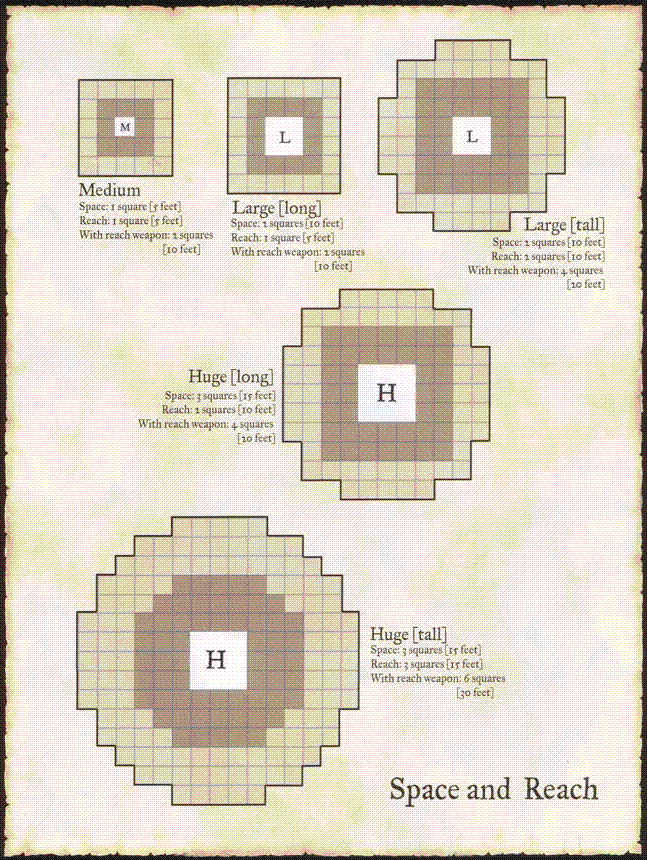
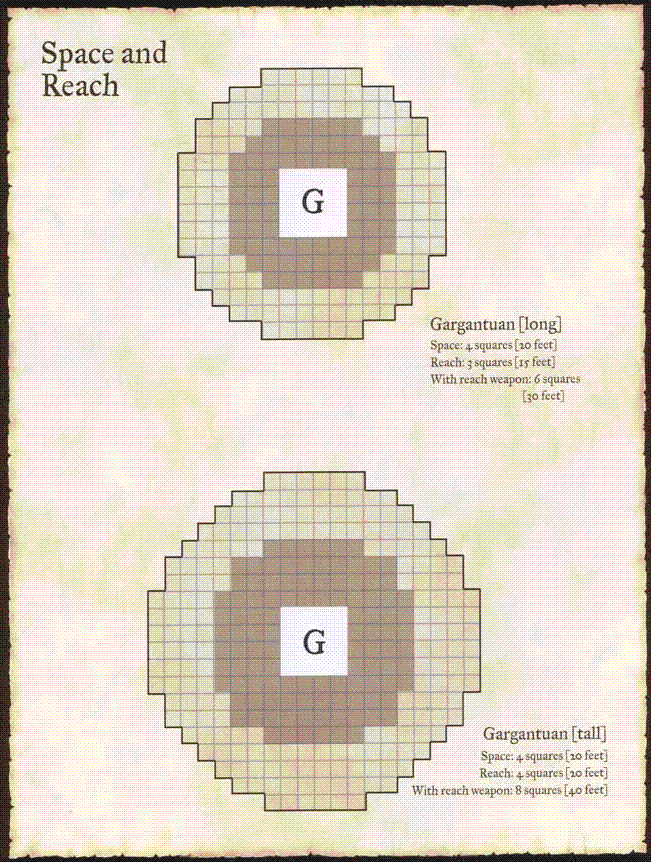
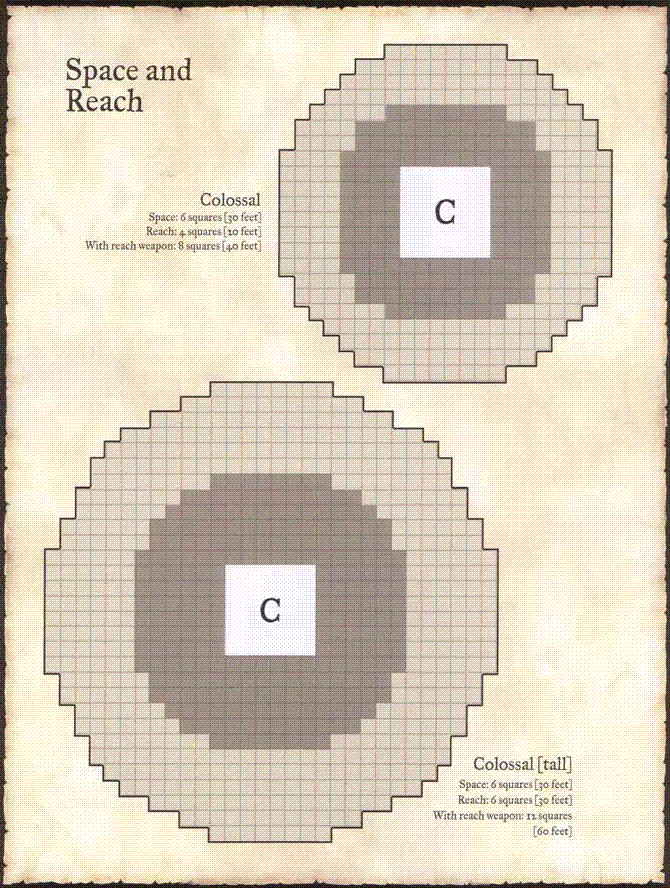
Natural Attacks
Natural attacks: Each race has a number of natural attack forms, primary as well as secondary ones. For example, most humanoids have two arms that count as primary attack forms, while the two legs and one head count as secondary.
Primary attack forms tend to have better attack and damage modifiers than secondary ones, and many actions and special abilities can only be performed with primary attack forms.
The following is a list of predefined natural attack forms and their default traits (see Equipment chapter for explanation). Please note that the traits are only default values for a medium-sized creature; many creatures will vary from these defaults.
| Natural Attack | Relative Size1 | Default Traits |
|---|---|---|
| Arm | -3 | Weapon (Gen || Nat; A/P: DexMod/0; Dmg d3+StrMod B SP; Rch 0-1; Can't be disarmed) Can use tools and somatic components Can wear bracer or armband Can wear glove or gauntlet Can wear ring |
| Bite | -2 | Weapon (Gen || Nat; A/P: DexMod/0; Dmg d4+StrMod P HP; Rch 0-1; Can't be disarmed) |
| Claw | -2 | Weapon (Gen || Nat; A/P: DexMod/0; Dmg d4+StrMod S HP; Rch 0-1; Can't be disarmed) |
| Gore | -2 | Weapon (Gen || Nat; A/P: DexMod/0; Dmg d6+StrMod P HP; Rch 0-1; Can't be disarmed) |
| Head | -2 | Weapon (Gen || Nat; A/P: DexMod-1/0; Dmg d3+StrMod/2 B SP; Rch 0-0; Can't be disarmed) Can wear helmet or hat Can wear lenses |
| Leg | -2 | Weapon (Gen || Nat; A/P: DexMod-1/0; Dmg d4+StrMod B SP; Rch 0-1; Can't be disarmed) Can wear shoe or boot |
| Slam | -2 | Weapon (Gen || Nat; A/P: DexMod/0; Dmg d4+StrMod B SP; Rch 0-1; Can't be disarmed) |
| Spittle | -3 | Weapon (Gen || Nat; A/P: DexMod/0; Dmg d4 B SP; Rng 4; Can't be disarmed; Ranged only) |
| Tail | -2 | Weapon (Gen || Nat; A/P: DexMod-2/0; Dmg d4+StrMod B SP; Rch 0-1; Can't be disarmed) |
| Tentacle | -2 | Weapon (Gen || Nat; A/P: DexMod/0; Dmg d4+StrMod B SP; Rch 0-1; Can't be disarmed) |
| Wing | -1 | Weapon (Gen || Nat; A/P: DexMod-2/0; Dmg d4+StrMod/2 B SP; Rch 1-1; Can't be disarmed) |
1Relative Size: The size of a limb or attack form is based on the creature's own size. For a human (size Medium), for example, the two arms count as Diminutive and the two legs count as Tiny.
For some creatures, a natural attack may have special effects other than causing damage. Common examples are poison (usually as a separate attack against Fort if the original attack causes damage), grapple (the creature can choose to initiate a grapple for free if the original attack is successful), trip (make a free trip attack if the original attack is successful), etc.
Movement Characteristics
Speed and Movement Points
Base speed: Most creatures (and some objects) have at least one mode of movement. The speed characteristic specifies the creature’s natural modes of movement as well as the base speed of each. For some creatures and movement modes, the characteristic will also include a maneuverability specification; this affects maximum acceleration, turning rate, etc.
- Ground: The default mode of movement for most creatures is ground movement.
- Fly: The creature can move through the air at the specified speed.
- Swim: The creature can move through water at the specified speed. Creatures with a natural swim speed gain a +8 racial bonus on Swim actions, and they can always "take 10" on those actions.
Many creatures will also have more unusual modes of movement, based on either their Ground, Fly, or Swim speed, but with a different MP cost per square of movement. For example, most humanoid creatures have the ability to climb, using its ground speed but paying 4 MP per square. Some skills may also grant special modes of movement, such as the Athletics skill granting a ground-based swim speed even to creatures without a natural swim speed.
Burrowing is a special mode of movement possessed by some creatures, and it is always based on the creature's ground speed (but usually with a higher MP cost per square of movement). Burrowing does not allow running, sprinting, or charging. Unless otherwise specified, a burrowing creature does not leave behind a tunnel other creatures can use.
Adjusted speed (Spd): This is a creature's base speed adjusted for encumbrance, armor, skills, magic, etc.
Movement points (MP): Each round, a creature gets a number of MP equal to its adjusted speed (based on the speed characteristic appropriate for its current environment). These can be used for a variety of movement actions. Furthermore, a number of AP up to a maximum of the creature's adjusted speed can be converted into additional MP.
Maneuverability
Maneuverability: This determines how fast a creature can accelerate, decelerate, or change direction while moving. Maneuverability is rarely a limitation for normal ground movement, but it comes into play during unusually complex situations, such as rapid movement across ice, combat while flying, driving a wagon, etc.
Default maneuverability for ground movement: 5 (perfect)
Default maneuverability for swimming: 4 (good)
Default maneuverability for flying: 3 (average)
The following conditions can affect maneuverability:
Wheeled vehicle on ground: -2
Running (×3 movement): -1
Sprinting (×4 movement): -2
Difficult terrain (including strong winds when flying or strong currents when swimming): -1
Slippery ground: -1
Very slippery ground: -2
| Maneuverability | Turn1 | Turn in Place2 | Reverse3 | Acc/Dec4 | Att/DeC Mod5 | Hover6 | Ascent7 | Descent8 | Descent → Ascent9 |
|---|---|---|---|---|---|---|---|---|---|
| Clumsy (1 or worse) | 45°/2 | - | N | 6 | -4 | N (1/2 spd) | 45°, 1/2 spd | 45°, x2 spd | 4 sq |
| Poor (2) | 45°/sq | - | N | 12 | - | N (1/2 spd) | 45°, 1/2 spd | 45°, x2 spd | 2 sq |
| Average (3) | 45°/sq | 45°/MP | N | 24 | - | N (1/2 spd) | 60°, 1/2 spd | 90°, x2 spd | 1 sq |
| Good (4) | 90°/sq | 90°/MP | Y (1 MP) | Unlimited | - | Y | 90°, 1/2 spd | 90°, x2 spd | - |
| Perfect (5 or better) | Any | Free | Y (free) | Unlimited | - | Y | Full spd | 90°, x2 spd | - |
The last four columns only apply to three-dimensional movement.
1Turn: The maximum change in direction per square of movement.
2Turn in place: The MP cost of changing direction when not moving.
3Reverse: Whether reverse movement is possible or not (and the MP cost of starting reverse movement).
4Acc/Dec: The maximum change in speed (acceleration or deceleration) per round.
5Att/DeC Mod: The attack and DeC penalty due to poor maneuverability.
6Hover: Whether hovering is possible (and the minimum movement required each round to avoid falling). If this speed is not maintained, the creature must land the same round or start falling.
7Ascent: The maximum ascent angle, and the speed modifier when climbing.
8Descent: The maximum descent angle, and the speed modifier when diving.
9Descent → Ascent: The minimum number of horizontal squares needed to change from diving to climbing.
A flying/swimming creature that cannot hover is not allowed to make attacks of opportunity, nor is it allowed to act defensively in order to avoid attacks of opportunity.
Here are a few maneuverability examples:
An ogre trying to run across ice: 5 - 1 (running) - 2 (ice) = 2 (poor)
A tiny fish swimming in a strong current: 4 + 1 (size) - 1 (currents) = 4 (good)
A gargantuan-sized dragon flying at normal speed: 3 - 1 (size) = 2 (poor)
A huge-sized, four-wheeled wagon moving along a good road: 5 - 1 (size) - 1 (four-wheeled) = 3 (average)
Personality Characteristics
Alignment: This is a rough representation of a creature’s personality and its moral and ethical outlook on life. It is based on two separate scales, one going from good to evil, and another going from lawful to chaotic. Each of the two scales actually covers a wide range of behaviors, but alignment is often simplified by dividing it into just nine separate categories.
Players should be free to role-play their characters any way they want, so alignment should primarily be used for monsters and NPCs. It is a useful guideline for a DM when role-playing a wide variety of strange creatures.
In addition to alignment, players are encouraged to decide on (or randomly generate) other personality traits, mannerisms, and life goals for their characters.
| Alignment | Description |
|---|---|
| Lawful Good | A lawful good character acts as a good person is expected or required to act. She combines a commitment to oppose evil with the discipline to fight relentlessly. She tells the truth, keeps her word, helps those in need, and speaks out against injustice. A lawful good character hates to see the guilty go unpunished. |
| Neutral Good | A neutral good character does the best that a good person can do. He is devoted to helping others. He works with kings and magistrates but does not feel beholden to them. |
| Chaotic Good | A chaotic good character acts as his conscience directs him with little regard for what others expect of him. He makes his own way, but he's kind and benevolent. He believes in goodness and right but has little use for laws and regulations. He hates it when people try to intimidate others and tell them what to do. He follows his own moral compass, which, although good, may not agree with that of society. |
| Lawful Neutral | A lawful neutral character acts as law, tradition, or a personal code directs her. Order and organization are paramount to her. She may believe in personal order and live by a code or standard, or she may believe in order for all and favor a strong, organized government. |
| Neutral | A neutral character does whatever seems to be a good idea. She doesn't feel strongly one way or the other when it comes to good vs. evil or law vs. chaos. Most neutral characters exhibit a lack of conviction or bias rather than a commitment to neutrality. Such a character thinks of good as better than evil - after all, she would rather have good neighbors and rulers than evil ones. Still, she's not personally committed to upholding good in any abstract or universal way. Some neutral characters, on the other hand, commit themselves philosophically to neutrality. They see good, evil, law, and chaos as prejudices and dangerous extremes. They advocate the middle way of neutrality as the best, most balanced road in the long run. |
| Chaotic Neutral | A chaotic neutral character follows his whims. He is an individualist first and last. He values his own liberty but doesn't strive to protect others' freedom. He avoids authority, resents restrictions, and challenges traditions. A chaotic neutral character does not intentionally disrupt organizations as part of a campaign of anarchy. To do so, he would have to be motivated either by good (and a desire to liberate others) or evil (and a desire to make those different from himself suffer). A chaotic neutral character may be unpredictable, but his behavior is not totally random. He is not as likely to jump off a bridge as to cross it. |
| Lawful Evil | A lawful evil villain methodically takes what he wants within the limits of his code of conduct without regard for whom it hurts. He cares about tradition, loyalty, and order but not about freedom, dignity, or life. He plays by the rules but without mercy or compassion. He is comfortable in a hierarchy and would like to rule, but is willing to serve. He condemns others not according to their actions but according to race, religion, homeland, or social rank. He is loath to break laws or promises. This reluctance comes partly from his nature and partly because he depends on order to protect himself from those who oppose him on moral grounds. Some lawful evil villains have particular taboos, such as not killing in cold blood (but having underlings do it) or not letting children come to harm (if it can be helped). They imagine that these compunctions put them above unprincipled villains. Some lawful evil people and creatures commit themselves to evil with a zeal like that of a crusader committed to good. Beyond being willing to hurt others for their own ends, they take pleasure in spreading evil as an end unto itself. They may also see doing evil as part of a duty to an evil deity or master. |
| Neutral Evil | A neutral evil villain does whatever she can get away with. She is out for herself, pure and simple. She sheds no tears for those she kills, whether for profit, sport, or convenience. She has no love of order and holds no illusion that following laws, traditions, or codes would make her any better or more noble. On the other hand, she doesn't have the restless nature or love of conflict that a chaotic evil villain has. Some neutral evil villains hold up evil as an ideal, committing evil for its own sake. Most often, such villains are devoted to evil deities or secret societies. |
| Chaotic Evil | A chaotic evil character does whatever his greed, hatred, and lust for destruction drive him to do. He is hot-tempered, vicious, arbitrarily violent, and unpredictable. If he is simply out for whatever he can get, he is ruthless and brutal. If he is committed to the spread of evil and chaos, he is even worse. Thankfully, his plans are haphazard, and any groups he joins or forms are poorly organized. Typically, chaotic evil people can be made to work together only by force, and their leader lasts only as long as he can thwart attempts to topple or assassinate him. |
In some cases, the rules will refer to alignments opposed to or compatible with a base alignment.
Opposed alignment: Any alignment opposite to the base alignment along one or both scales.
Diametrically opposed alignment: An alignment opposite to the base alignment along both scales.
Compatible alignment: An alignment within one step of the base alignment along one (but not both) scales.
| Alignment | Opposed | Diametrically Opposed | Compatible |
|---|---|---|---|
| Lawful Good | Any chaotic, any evil | Chaotic evil | Lawful good, neutral good, lawful neutral |
| Neutral Good | Any evil | Neutral evil | Any good, neutral |
| Chaotic Good | Any lawful, any evil | Lawful evil | Neutral good, chaotic good, chaotic neutral |
| Lawful Neutral | Any chaotic | Chaotic neutral | Any lawful, neutral |
| Neutral | None | None | Neutral good, lawful neutral, chaotic neutral, neutral evil |
| Chaotic Neutral | Any lawful | Lawful neutral | Any chaotic, neutral |
| Lawful Evil | Any chaotic, any good | Chaotic good | Lawful neutral, lawful evil, neutral evil |
| Neutral Evil | Any good | Neutral good | Any evil, neutral |
| Chaotic Evil | Any lawful, any good | Lawful good | Chaotic neutral, neutral evil, chaotic evil |
Whenever the rules specify that a bonus, action, or spell effect is limited to a specific alignment or set of alignments, this does not apply to the relatively weak moral tendencies exhibited by most normal creatures. Such effects should only be applied to creatures with a detectable alignment aura, meaning those with an alignment descriptor, those that have certain skills (typically divine ones), and those that are described as always having a certain alignment.
Social Characteristics
Social scores are primarily used for creatures that belong to a "civilized" race, but it is also quite possible for other creatures to gain widespread influence and repute. For example, a venerable dragon may be known and feared across several countries, and a beholder can secretly be in control of a city’s guild of thieves.
Social Class
Social Class (SC): A creature’s social class is a measure of its status and power in society. Note that this refers to the creature’s own society - an orc king will have a high SC even if neighboring countries may regard him as a criminal.
SC will change as a result of campaign events, but it does not automatically increase as a character gains experience and levels. For example, after performing a quest for the king, a character may be rewarded with land, title, and an increase in SC. Or he may commit a crime and suffer a reduction in SC.
| SC | Examples | Forms of Address | Influence1 | CL Modifier2 |
|---|---|---|---|---|
| -2 | Wanted criminal | - | 0 | -1 |
| -1 | Outcast, slave | - | 0 | -1 |
| 0 | Peasant, laborer, hedge knight (sir), sellsword, apprentice | Goodman / goodwife | 0 | 0 |
| 1 | Sworn knight (sir), servant, lesser merchant, acolyte | Sir / Lady (Sir) | +5 | 0 |
| 2 | Retainer, landed knight (sir), merchant, master | Sir / Lady (Sir) | +10 | 0 |
| 3 | Minor noble (lord), greater knight (sir), greater merchant | Lord / Lady (Lord) | +15 | +1 |
| 4 | Major noble | Milord / Milady | +20 | +2 |
| 5 | Royal family | Highness | +25 | +3 |
| 6 | King, queen, emperor, empress | Majesty | +30 | +4 |
1Influence: The bonus influence points should be used to gain influence over an appropriate organization, family, clan, or even nation.
2CL Modifier: A creature's social class affects its challenge level (CL), due to its power in society and the potential trouble it can cause for its enemies.
Minor noble title examples: baronet, baron, viscount, sheik
Major noble title examples: count, earl, marquis/margrave, duke, archduke, emir, pasha, satrap
Ruling noble title examples: king, queen, emperor, prince, raja, maharaja, basileus, sultan, caliph, shah, tsar, polemarch
Most societies will also have a large number of special positions and titles (sheriffs, magistrates, advisors, cardinals, prophets, etc.) that can grant status and power on par with minor and major nobles.
Wealth Class
Wealth Class (WC): This is a measure of a creature’s (or an organization’s) resources, assets, holdings, and sources of income rather than a simple tally of its treasure and hard cash. WC above 0 will actually generate an automatic income and can be treated as a renewable resource.
A creature’s WC also determines the amount of money that other individuals and organizations are prepared to lend to him. The exact limit may vary, but the maximum total loan should be roughly the same as the minimum investment required to reach the class (see the table below).
By default, a creature born to a certain SC will have a WC at the same level.
| WC | Description | Renewable Income1 | Minimum Investment2 | Expenses3 |
|---|---|---|---|---|
| -2 | Seriously in debt. | 0 | 0 | 0 |
| -1 | Destitute; homeless and starving; no resources or possessions. | 0 | 1 gp | 0 |
| 0 | Poor; lives with others or in a shack and eats very simple meals; a few cheap possessions. | 0 | 2 gp | 0.1 sp/day |
| 1 | Stable; owns a small homestead (or lives with a master); may own a few luxuries or heirlooms; may have a couple of apprentices. | 0.1-1 sp/day | 10 gp | 0.3 sp/day |
| 2 | Well off; claim to some land or owns profitable business; some large expenditures are possible; some stockpiled resources; may have numerous assistants and warehouses; a knight may have a small holdfast and a garrison. | 1-10 sp/day | 500 gp | 3 sp/day |
| 3 | Wealthy; extensive holdings; stockpiled resources; could have a small fleet of ships or a major castle; may employ dozens or hundreds of men. | 10-100 sp/day | 5000 gp | 30 sp/day |
| 4 | Very wealthy; multiple large properties or key territory; hundreds or thousands of vassals. | 10-100 gp/day | 50,000 gp | 10 gp/day |
| 5 | Tremendously wealthy; enormous territory, with many holdings and assets; thousands or tens of thousands of vassals. | 100-1000 gp/day | 500,000 gp | 100 gp/day |
| 6 | Fabulously wealthy; enormous territory and plum resources; can lend large sums to other lords and organizations. | 1000-10,000 gp/day | 5,000,000 gp | 1000 gp/day |
1Renewable income: This is the amount of money typically generated per day from owned resources, businesses, and holdings.
2Minimum investment: This is the minimum amount of money that must be invested to progress from the previous rank to this one.
80% of this money can be regained by selling resources and holdings, dropping back to the previous rank in the process.
3Expenses: Typical daily expenses for food, lodging, and other common consumables in this wealth bracket.
This is also what you have to spend if you want to temporarily live above your WC or pretend to be wealthier than you are.
A large purchase (on the order of 100 times the daily income) can temporarily decrease a creature’s WC. Likewise, a large windfall (of a similar magnitude) can temporarily increase a creature’s WC. Such decreases and increases will last 2d4 months.
Major events (earthquakes, city fires, drought, good or bad weather, wars, new mines or resources, etc.) can cause the WC of both individuals and organizations to fluctuate by as much as ±2.
Influence
Influence (Infl): This is a measure of a creature’s affiliation with and power over another individual, an organization, a family or clan, or even a region. It is not unusual for an individual to have multiple separate influences, each over a separate entity. For example, a high-ranking member of a guild will have influence in that guild, but he may also wield some influence in the city where he lives and over a couple of government officials he knows well. Note that influence is not always based on friendship and loyalty; it can also be based on fear, blackmail, bribes, etc.
It should be noted that influence is not strictly one-way. Increased power and influence over an organization will often lead to more responsibilities, duties, and obligations as well as privileges. Although you can use influence in an organization to command those of a lower rank or request favors from those of equal rank, you have a duty or obligation to obey commands from those of higher rank. Also, a friendly relationship between two or more individuals will usually result in mutual influences between those individuals.
Unless otherwise specified, a creature has a total number of influence points based on Cha and level. However, this can be further affected by the creature’s SC, various campaign events, character actions, or even the demise of an individual or organization with which one has influence.
Total Infl = Cha + (Infl bonus per class/race and level) + SC bonus + other modifiers
Most creatures (especially player characters) should be able to decide themselves how to distribute their influence points (and also what that influence is based on). Nevertheless, there are some limitations, and every decision has to be approved by the DM. Influence points gained from level should be spent mostly on an organization or individual associated with the creature’s class. For example, a cleric will gain influence in his church, a rogue in his thieves’ guild or network of contacts, etc. Influence points gained from SC should be spent on the focus of and reason for that social status. For example, most nobles have been born into their role, title, and status, so their SC-based influence should be spent within their family and household. Note that a society will often have cultural traditions that may affect influence; for example, a noble who joins the clergy may in some societies lose his name, title, and some or all of the power granted by his family name.
Except under extreme circumstances, a maximum of 20 influence points can be spent on a single individual. For organizations and families, influence is normally limited to 10 points for non-members, but it is unlimited for members.
Secret Influences (optional rule for more varied characters): DMs who want more intrigue in their campaign can reserve the right to secretly allocate a certain portion of each character's influence on their behalf. This could mean that the characters have allies of which they are not fully aware, but it could also mean that the characters have less influence over certain individuals or organizations than they expect.
Reputation
Reputation (Rep): This determines how famous or infamous a creature is and also the reason for its fame. A creature’s total reputation is typically divided into a couple of separate qualities that the creature is best known for. Some qualities may be rather generic descriptions, such as bold, brave, carouser, clever, dangerous, dedicated, fierce, generous, honest, honorable, loyal, rake, strong, stubborn, valiant, well-educated, wise, etc. Qualities can also be quite specific, such as sea’s master, berserker, horse lord, magi, defender of the crown, sheriff of Nulb, or slayer of Rork the Robber-Baron.
Total Rep = TL (total level) + SC + WC + other modifiers
A creature with a total reputation of 1 to 5 is typically known within its village or neighborhood, 6 to 10 within a city or county, 11 to 15 within a nation, 16 to 20 within the neighboring countries, and 21 or more within the known world. Use this only as a rough guideline, however. An undead dragon that has been buried and dormant in a desert for thousands of years is not likely to be very famous (except maybe to bards and historians).
Reputation points granted by SC and WC should be assigned to appropriate qualities, such as powerful, rich, royal advisor, smuggler lord, merchant king, etc. Characters should choose how to distribute their own level-based reputation points, but this distribution is always subject to DM approval.
Reputation and reputation qualities can and will change over time. As a reputation grows and time passes, the quality will often become more generalized. For example, a warrior who first gains fame as a ‘troll slayer’ may change the reputation quality to a more generic ‘bold warrior’ as his fame continues to grow. Many campaign events can grant positive or negative reputations, regardless of an individual’s level or intentions. Repeatedly acting against one’s reputation, such as a ‘bold warrior’ acting cowardly, will inevitably lower it.
Note that reputation represents what people think and not necessarily what is true.
In addition to the social scores described above, players are encouraged to come up with (or randomly generate) background history, family and close relatives, friends and enemies, etc. for their characters.
Equipment Characteristics
Encumbrance class (EC): This is a measure of how much a creature is encumbered by the weight of equipment carried, armor worn, and even his own obesity. Encumbrance class is calculated separately for weight carried and equipment worn, and the actual class to use is the worst of the two results. Encumbrance class due to weight is described below, and that due to armor and other equipped items is described in the equipment chapter.
| Encumbrance Class | Max Dex Bonus1 | EP2 | Ground/Swim Speed Mult.3 | Fly Speed Mult.3 | SP Mult.4 |
|---|---|---|---|---|---|
| 0 | +99 | 0 | ×1 | ×1 | ×1 |
| 1 | +8 | 0 | ×1 | ×0.9 | ×1 |
| 2 | +6 | 0 | ×1 | ×0.8 | ×1 |
| 3 | +5 | -1 | ×0.9 | ×0.7 | ×1.5 |
| 4 | +4 | -2 | ×0.8 | ×0.6 | ×1.5 |
| 5 | +3 | -3 | ×0.8 | ×0.6 | ×1.5 |
| 6 | +3 | -4 | ×0.7 | ×0.5 | ×2 |
| 7 | +2 | -5 | ×0.7 | ×0.5 | ×2 |
| 8 | +1 | -6 | ×0.6 | ×0 | ×2 |
| 9 | 0 | -7 | ×0.6 | ×0 | ×3 |
| 10 | -1 | -8 | ×0.5 | ×0 | ×3 |
| 11 | -2 | -9 | ×0.5 | ×0 | ×3 |
| 12 | -3 | -10 | ×0.4 | ×0 | ×4 |
| 13 | -4 | -12 | ×0.3 | ×0 | ×4 |
| 14 | -5 | -15 | ×0.2 | ×0 | ×6 |
| 15 | -6 | -20 | ×0 | ×0 | ×8 |
1Max Dex Bonus: This is the maximum effective Dex bonus for
DeC, Ref, Dex-based skills, etc. (due to reduced mobility).
2EP (Encumbrance Penalty): This is a penalty that is applied to a large number of physical action checks.
This is indicated by the EP abbreviation in the action check description.
3Speed multipliers: This is a multiplicative modifier that should be applied to the creature’s base speed.
For a speed multiplier of 0.6 or worse, sprinting is not allowed. For multipliers of 0.5 or worse, neither sprinting, running, nor charging is allowed.
Weight limit: The following table shows the weight limits (in kg) of a medium-sized, bipedal creature. Given the creature’s Strength score, it shows the upper weight limit of each encumbrance class. To calculate weight-based encumbrance class, add the weight of equipment and any physical overweight. Then look at the row in the following table that matches the creature’s Strength, and find the lowest weight (in kg) that is equal to or higher than the creature’s carried weight. The column for that weight tells you the creature’s weight-based encumbrance class.
Weight limits should be multiplied by a factor based on the creature’s size (see the Size Category table) and body shape (see the Body Category table).
| Str | EC 0 | EC 1 | EC 2 | EC 3 | EC 4 | EC 5 | EC 6 | EC 7 | EC 8 | EC 9 | EC 10 | EC 11 | EC 12 | EC 13 | EC 14 | EC 15 |
|---|---|---|---|---|---|---|---|---|---|---|---|---|---|---|---|---|
| 1 | 0.25 | 0.5 | 1 | 1.5 | 2 | 2.5 | 3 | 3.5 | 4 | 4.5 | 5 | 6 | 7 | 8 | 9 | 10 |
| 2 | 0.5 | 1 | 2 | 3 | 4 | 5 | 6 | 7 | 8 | 9 | 10 | 12 | 14 | 16 | 18 | 20 |
| 3 | 0.75 | 1.5 | 3 | 4.5 | 6 | 7.5 | 9 | 10.5 | 12 | 13.5 | 15 | 18 | 21 | 24 | 27 | 30 |
| 4 | 1 | 2 | 4 | 6 | 8 | 10 | 12 | 14 | 16 | 18 | 20 | 24 | 28 | 32 | 36 | 40 |
| 5 | 1.25 | 2.5 | 5 | 7.5 | 10 | 12.5 | 15 | 17.5 | 20 | 22.5 | 25 | 30 | 35 | 40 | 45 | 50 |
| 6 | 1.5 | 3 | 6 | 9 | 12 | 15 | 18 | 21 | 24 | 27 | 30 | 36 | 42 | 48 | 54 | 60 |
| 7 | 1.75 | 3.5 | 7 | 10.5 | 14 | 17.5 | 21 | 24.5 | 28 | 31.5 | 35 | 42 | 49 | 56 | 63 | 70 |
| 8 | 2 | 4 | 8 | 12 | 16 | 20 | 24 | 28 | 32 | 36 | 40 | 48 | 56 | 64 | 72 | 80 |
| 9 | 2.25 | 4.5 | 9 | 13.5 | 18 | 22.5 | 27 | 31.5 | 36 | 40.5 | 45 | 54 | 63 | 72 | 81 | 90 |
| 10 | 2.5 | 5 | 10 | 15 | 20 | 25 | 30 | 35 | 40 | 45 | 50 | 60 | 70 | 80 | 90 | 100 |
| 11 | 2.75 | 5.5 | 11 | 16.5 | 22 | 27.5 | 33 | 38.5 | 44 | 49.5 | 55 | 66 | 77 | 88 | 99 | 110 |
| 12 | 3.25 | 6.5 | 13 | 19.5 | 26 | 32.5 | 39 | 45.5 | 52 | 58.5 | 65 | 78 | 91 | 104 | 117 | 130 |
| 13 | 3.75 | 7.5 | 15 | 22.5 | 30 | 37.5 | 45 | 52.5 | 60 | 67.5 | 75 | 90 | 105 | 120 | 135 | 150 |
| 14 | 4.25 | 8.5 | 17 | 25.5 | 34 | 42.5 | 51 | 59.5 | 68 | 76.5 | 85 | 102 | 119 | 136 | 153 | 170 |
| 15 | 5 | 10 | 20 | 30 | 40 | 50 | 60 | 70 | 80 | 90 | 100 | 120 | 140 | 160 | 180 | 200 |
| 16 | 5.75 | 11.5 | 23 | 34.5 | 46 | 57.5 | 69 | 80.5 | 92 | 103.5 | 115 | 138 | 161 | 184 | 207 | 230 |
| 17 | 6.5 | 13 | 26 | 39 | 52 | 65 | 78 | 91 | 104 | 117 | 130 | 156 | 182 | 208 | 234 | 260 |
| 18 | 7.5 | 15 | 30 | 45 | 60 | 75 | 90 | 105 | 120 | 135 | 150 | 180 | 210 | 240 | 270 | 300 |
| 19 | 8.75 | 17.5 | 35 | 52.5 | 70 | 87.5 | 105 | 122.5 | 140 | 157.5 | 175 | 210 | 245 | 280 | 315 | 350 |
| 20 | 10 | 20 | 40 | 60 | 80 | 100 | 120 | 140 | 160 | 180 | 200 | 240 | 280 | 320 | 360 | 400 |
| 21 | 11.5 | 23 | 46 | 69 | 92 | 115 | 138 | 161 | 184 | 207 | 230 | 276 | 322 | 368 | 414 | 460 |
| 22 | 13 | 26 | 52 | 78 | 104 | 130 | 156 | 182 | 208 | 234 | 260 | 312 | 364 | 416 | 468 | 520 |
| 23 | 15 | 30 | 60 | 90 | 120 | 150 | 180 | 210 | 240 | 270 | 300 | 360 | 420 | 480 | 540 | 600 |
| 24 | 17.5 | 35 | 70 | 105 | 140 | 175 | 210 | 245 | 280 | 315 | 350 | 420 | 490 | 560 | 630 | 700 |
| 25 | 20 | 40 | 80 | 120 | 160 | 200 | 240 | 280 | 320 | 360 | 400 | 480 | 560 | 640 | 720 | 800 |
| 26 | 23 | 46 | 92 | 138 | 184 | 230 | 276 | 322 | 368 | 414 | 460 | 552 | 644 | 736 | 828 | 920 |
| 27 | 26 | 52 | 104 | 156 | 208 | 260 | 312 | 364 | 416 | 468 | 520 | 624 | 728 | 832 | 936 | 1040 |
| 28 | 30 | 60 | 120 | 180 | 240 | 300 | 360 | 420 | 480 | 540 | 600 | 720 | 840 | 960 | 1080 | 1200 |
| 29 | 35 | 70 | 140 | 210 | 280 | 350 | 420 | 490 | 560 | 630 | 700 | 840 | 980 | 1120 | 1260 | 1400 |
| +10 | ×4 | ×4 | ×4 | ×4 | ×4 | ×4 | ×4 | ×4 | ×4 | ×4 | ×4 | ×4 | ×4 | ×4 | ×4 | ×4 |
A humanoid creature can press its EC 10 maximum load above its head, but this will prevent it from moving more than 1 square per round or performing any other actions.
A creature can lift its EC 15 maximum load off the ground, but this will prevent it from moving more than 1 square per round or performing any other actions.
Loads being pushed or dragged across the ground count as only one fifth their actual weight for encumbrance purposes. Favorable conditions (or wheels) change this to one tenth, while unfavorable conditions change it to one half.
In order to reduce one’s encumbrance class in combat or escape situations, it can be a good idea to carry heavy but less valuable equipment in containers that can be easily dropped. If this is the case, the recommendation is to keep track of both encumbrance classes (with full load as well as with reduced load).
Other Characteristics
Initiative
Initiative modifier (Init): This is the modifier applied to a creature’s initiative rolls. Such rolls are used to determine the order in which creatures get to act during an encounter.
Init = Dex mod + other modifiers
Fate Points
Fate Points (FP): These are points that can be used in a situation where all else has failed. They are possessed by individuals that have important destinies, more specifically the player characters and their key opponents. Fate points can be used as follows:
- One point can change any failed check to a basic success.
- One point can change an opponent’s successful check into a failure.
- One point can change a recent death (caused by HP loss) into unconsciousness (-1 HP).
- One point lets a character recover immediately from any single condition (e.g. compelled or stunned).
- Two points can be used to provide a miraculous escape from an otherwise certain death. The DM dictates the specifics but should not give out any bonuses other than mere survival. The character can still lose treasured items or suffer some severe and long-lasting injury.
Fate points are not automatically regenerated. Once used, they are gone forever. Nevertheless, the DM should sometimes reward characters with new fate points, but only when they have accomplished something extraordinary.
Characteristics Dependency Chart
The following figure shows the characteristics that are common to most creatures. It also shows their dependencies and relationships, with the most basic and constant characteristics at the top. Whenever one of your characteristics gets updated, you can use the chart to determine which other characteristics will be indirectly affected by the change.
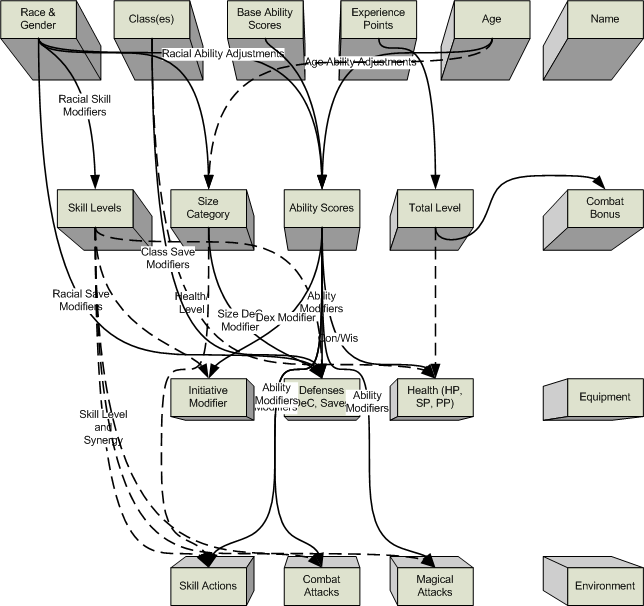
Note that spells and magic items can affect almost any characteristic, and this is not shown in the chart above.
Actions and Action Checks
Actions cover everything that a character can do. Some actions are very simple to perform, such as walking across a room or shouting a warning to a friend. Unless there are extreme circumstances (walking across a slippery floor during an earthquake, for example), such actions are automatically successful. Other actions, such as hitting a target with a thrown dagger, climbing a cliff wall, or deciphering a tome written in an ancient language, can be more or less difficult, and they always carry a chance of failure. Those actions will typically require a die roll to determine the level of success or failure.
Access to Actions
Many actions can be attempted by practically any character or creature, regardless of class or skill. In other words, such actions can be used even if the character has 0 skill levels in the action's associated skill (if any). These actions are designated with the [Untrained] descriptor.
Actions that do not allow untrained use can only be used if the character has explicitly gained access to the action, usually by belonging to a certain race or by having enough levels in the action's associated skill.
For skills that have specializations, the following rules determine access to and usage of actions. For an action that can be used untrained, the character counts half his actual skill levels when using an untrained specialization. For an action that cannot be used untrained, the character can only attempt actions with specializations that he knows.
Performing Action Checks
The core mechanism for resolving any action is known as a d20 check and is quite simple: roll an open-ended d20, add the appropriate modifiers, and compare the result against a target number (typically a difficulty class, defense score, or an opposing action check). If the total is equal to or higher than the target number, the action succeeds. If it is lower, the action fails.
Whenever an action is to be performed, follow these steps:
- Select the action you want to perform (and make sure you have the necessary skills and skill levels).
- Select any variable options and parameters (such as range, target, etc).
- Start the action.
- At the end of the activation time, roll the d20 action check (if any) and apply modifiers.
- If the action has multiple mandatory skills, use the highest skill level for the check.
- If the action takes an extended time to perform, don't apply modifiers that have shorter durations.
- If you are distracted or hurt during the activation time, additional action checks will often be required to maintain concentration and complete the action.
- Deduct costs (in SP, PP, money, etc).
- Determine and apply the results and effects.
Certain types of d20 checks are so common that they have their own names, as shown here:
- d20 check
- Roll an open-ended d20, add modifiers, and compare the result against the target number.
- Skill check
- d20 check using a skill against a difficulty class (DC) or opposing skill.
- Ability check
- d20 check using just an ability mod against a DC.
- Attack roll
- d20 check using attack modifiers against a defense.
- Supernatural activation check (also known as a spellcasting check)
- A skill check specifically used to cast a spell (or activate a supernatural ability).
A few example actions and their d20 checks:
- Climb a wall
- d20! + Athletics skill + Str mod + other mods against the wall’s DC.
- Sneaking
- d20! + Stealth skill + Dex mod + other mods against opposing 10 + Perception skill + Wis mod + other mods.
- Break door
- d20! + Brawling skill + Str mod against door’s DC.
- Weapon attack
- d20! + ability mod + weapon skill + other mods against DeC.
- Magic attack
- d20! + ability mod + attack skill + other mods against appropriate defense.
Open-Ended d20 Checks
Unless otherwise specified, all d20 checks use an open-ended d20 roll.
On an initial roll of a natural 20, roll again and add the new result to the first. A second roll of 20 allows another reroll, and so forth. Some special checks produce exceptional results more often than normal and allow open-ended rerolls on rolls lower than 20, such as on 19 to 20 or 18 to 20.
On an initial roll of a natural 1, roll again and subtract 20 from the result. If this roll results in another 1, roll again and subtract 40 instead of 20, and so forth. Some special checks have a greater than normal risk of failure and require open-ended rerolls even on rolls higher than 1, such as on 1 to 2 or 1 to 3.
Cinematic Luck (optional rule for more cinematic campaigns): Heroes in movies and literature are often extremely lucky, even when those heroes are ordinary people. If you want a similar effect in your campaign, consider allowing a certain number of action check rerolls per day for each character. A reroll can also be used to force an opponent to reroll a successful attack. Another option is to always let characters roll two d20 for each action check and use the highest roll.
Taking 10 and Taking 20
During favorable conditions, it is possible to perform certain actions without rolling a d20. "Taking 10" means that you perform the action in a relaxed and controlled manner, and you simply replace the normal d20 roll with the value 10. "Taking 20" means that you spend a lot of time getting a perfect result, allowing you to replace the normal d20 roll with the value 20 (but without triggering an open-ended reroll).
In order to "take 10", the following prerequisites apply:
- Your character must not be threatened, stressed, or distracted.
In order to "take 20", the following prerequisites apply:
- Your character must not be threatened, stressed, or distracted.
- The action must not carry penalties for failure.
- The action must allow retries.
- The action will take 20 times longer than normal to perform.
- If materials are required and consumed, calculate the total cost as if 20 failures had been rolled.
Taking 1
In situations where a creature is unable or unwilling to perform actions or roll active skill checks, but where an action check is needed and an automatic failure is not appropriate, determine the results as if the creature rolled a 1 (but without triggering an open-ended reroll). This rule can be particularly useful for opposed action checks where one or both sides are passive.
Defensive Action Checks
Many actions tend to make you more vulnerable, triggering attacks of opportunity (AoO) from opponents within reach. Unless otherwise specified, it is possible to perform those actions defensively, thereby avoiding AoO. Performing an action defensively takes twice as long as normal (double the action time) and also involves a -4 circumstance penalty on the action check.
Actions with Multiple Action Checks
Although most actions require either zero or one action checks, there are some that require multiple separate action checks. See below for three different examples, all of them attacks of one type or another:
Example 1: A disintegrating ray typically requires two attack rolls, one against DeC to hit the target, and a second one against Fort to then overcome the target's fortitude and deal maximum damage.
Example 2: A large fireball that targets multiple opponents will require a separate attack roll against each target. Unless otherwise described in the effect, damage is rolled once and applied equally against all targets, but the separate attack rolls can result in varying degrees of success and failure against the different targets, in turn resulting in different amounts of damage being inflicted.
Example 3: A combatant is using Akimbo Attack to attack with both a sword and a dagger simultaneously, possibly even against two different targets. In this case, the Akimbo Attack action counts as two separate attacks, and each of these attacks is resolved separately (albeit simultaneously), with separate attack rolls as well as damage rolls.
The fact that a single action can consist of multiple attacks and/or multiple action checks means that it will sometimes be important to note whether a modifier applies to an action, an action check, an attack, or an attack roll. For example, if you happen to have a bonus that applies to your next attack roll, and you cast a fireball spell, the bonus will only apply to the first of the spell's attack rolls (typically against the target closest to the center). If, on the other hand, the bonus applies to your next action, it would apply to all of the fireball's attack rolls.
Staged Action Checks
Some situations and conditions are complicated or long-lasting enough to require a sequence of action checks in order for the situation to be fully resolved. These sequences of action checks are represented as a number of stages, where the change from one stage to another is determined by the success or failure of an action check.
A sequence of staged action checks starts at a specific stage, typically referred to as the initial stage. Each stage has a specified duration, after which an action check is made to determine the new stage in the sequence. In most sequences, one or more stages are defined as a terminal stage - when it has been reached, the situation has been resolved and no further checks need to be made. Some sequences also specify a maximum duration or maximum number of checks, and they will also specify what happens when that maximum has been reached.
For a typical example of a staged action check, see Possession.
Aiding Another
In many cases, it is possible for multiple characters to cooperate when performing an action. One of the characters (typically the one with the best chance) makes a normal action check against the appropriate target number. Every cooperating character makes a similar action check against the target difficulty modified by -10, and the first character’s check receives a circumstance modifier for each supporting check.
| Aid Check Result | Circumstance Modifier |
|---|---|
| Success (S) | +2 |
| Outstanding Success (OS) | +4 |
| Exceptional Success (ES) | +6 |
| Critical Success (CS) | +10 |
| Failure (F) | 0 |
| Outstanding Failure (OF) | -2 |
| Exceptional Failure (EF) | -4 |
| Critical Failure (CF) | -8 |
Using a skill check to aid another takes the same amount of time, carries the same cost, and provokes attacks of opportunity the same way that the base action check does.
The DM determines when aiding another’s action check is possible as well as the maximum number of beneficial helpers.
Difficulty Classes (DC)
A difficulty class is an estimate of how difficult an action is to perform successfully. It is the number your action check has to match or exceed in order to be a success.
| Difficulty | DC | Example |
|---|---|---|
| Very easy | 0 | Notice something large in plain sight |
| Easy | 5 | Climb a knotted rope |
| Average | 10 | Hear an approaching man in armor |
| Tough | 15 | Rig a wagon wheel to fall off |
| Challenging | 20 | Swim in stormy water |
| Formidable | 25 | Open an average lock |
| Heroic | 30 | Leap across a 10 m chasm |
| Very heroic | 40 | Hear an owl flying by (when you're asleep) |
Regardless of skill levels and difficulty classes, the DM can choose to disallow or severely penalize certain illogical actions. For example, even if a crocodile has a high strength score and a few skill levels in Athletics, it should not be able to climb a tree.
Opposing Action Checks
Whenever two action checks are in opposition, the highest modified roll succeeds and the other fails. In case of a tie, the highest modifier wins. If the modifiers are also the same, the result is a stalemate. If a stalemate is not possible, even temporarily, reroll both checks until a winner can be determined.
In some cases, an action check will be opposed by several opposed checks. For example, when you are sneaking, you want your stealth check to beat every opposed perception check. In these situations, roll a single action check and compare it against each opposed check.
Results and Effects
After rolling the necessary action check (or checks), compare the result against the DC, defense, or opposed action check. The difference determines not only success or failure but also the degree of success or failure. Each action will specify what happens at the different levels.
For attack actions, please see the Combat chapter for more details.
Levels of Success and Failure
In many cases, the degree of success or failure can be significant. The difference between the total result and the target number is referred to as levels of success or failure. For example, if the DC is 20 and you make a modified roll of 23, you have achieved 3 levels of success. Sometimes this is also referred to as beating the DC by 3. For action checks where exceptional success or failure is possible, the skill action will describe how many levels of success or failure are required to achieve such exceptional results.
Some levels of success and failure are common enough to have their own standardized names:
| Description | Levels of Success/Failure |
|---|---|
| Success (S) | Success by 0 to 4 levels |
| Outstanding Success (OS) | Success by 5 to 9 levels |
| Exceptional Success (ES) | Success by 10 to 19 levels |
| Critical Success (CS) | Success by 20 or more levels Note: Attacks against DeC often require higher results |
| Failure (F) | Failure by 0 to 4 levels |
| Outstanding Failure (OF) | Failure by 5 to 9 levels |
| Exceptional Failure (EF) | Failure by 10 to 19 levels |
| Critical Failure (CF) | Failure by 20 or more levels |
Trying Again
Unless otherwise specified, actions can be retried indefinitely, regardless of success or failure. However, note that each try takes the specified amount of time and carries the full cost. In many cases, each failure will also have some sort of additional consequence. Also note that actions that are reactions never allow more than one reactive action per triggering event. There are even some actions where retrying is simply not possible, at least not until the situation has changed or your chances have improved.
For example, let us say you are trying to punch an opponent in the face. Regardless of whether the attack succeeds or fails, you can usually try to punch him again. However, each attack takes a certain amount of time and effort, and if your opponent runs away or manages to knock you unconscious, you can no longer retry your attack.
Supernatural Actions and Power Level
Just like supernatural creatures and objects, supernatural actions have a power level (PL). The PL is used to determine the effect’s chance to resist dispelling or to overcome magic resistance, anti-magic, and wild magic.
For spells and powers with a PP cost:
PL = TPC (Total Power Cost) + AP boost/dampen
For other powers:
PL = skill level or creature’s RL/TL
When a supernatural effect has terminated, its magical aura will linger for a variable amount of time. A PL of 1 to 5 lingers for 1d6 rounds, PL 6 to 10 for 1d6 minutes, PL 11 to 20 for 1d6×10 minutes, and PL 20+ for 1d6 days.
Action Modifiers
Physical and Mental Action Modifiers
Some circumstance modifiers are common enough that they have their own abbreviations. These abbreviations are used in the action checks where appropriate, PAM for Physical Action Modifier and MAM for Mental Action Modifier.
| Condition | PAM | MAM |
|---|---|---|
| Physical condition (SP)1 | ||
| - Fatigued | -2 | |
| - Exhausted | -6 | |
| Mental condition (PP)1 | ||
| - Tired | -2 | |
| - Drained | -6 | |
| Taking damage during action | - damage dealt (HP+SP+PP) | - damage dealt (HP+SP+PP) |
| Taking continuous damage | - ½ of damage taken per round (HP+SP+PP) | - ½ of damage taken per round (HP+SP+PP) |
| Exposed to non-damaging effect during action | - PL of effect | - PL of effect |
| Conditions1 | ||
| - Dazzled | -1 | -1 |
| - Shaken or frightened | -2 | -2 |
| - Squeezing through tight space | -4 | -2 |
| - Within a swarm | -4 | -4 |
| - Entangled2 | -4 | -2 |
| - Grappling or pinned | -4 | -8 |
| Obstructions on ground1 | ||
| - Light obstructions | -2 | |
| - Severe obstructions | -4 | |
| Slippery ground1 | ||
| - Slightly slippery | -2 | |
| - Very slippery | -4 | |
| On slope1 | ||
| - Slight slope (<45°) | -2 | |
| - Severe slope (>45°) | -4 | |
| In motion (even on mount or vehicle)1 | ||
| - Vigorous motion (jog) | -2 | -5 |
| - Violent motion (run) | -4 | -10 |
| - Very violent motion (sprint) | -6 | -15 |
| Environment1 | ||
| - Blinding rain or sleet | -1 | -2 |
| - Wind-driven hail, dust, or debris | -2 | -5 |
1 Within each of these categories, apply only the highest absolute modifier.
2 Note that an entangled creature also suffers a Dex penalty that can further affect some d20 checks.
Note that the Composure skill can be used to reduce PAM and MAM penalties.
Encumbrance Penalty (EP)
Heavy equipment and armor increases a creature's encumbrance class, and this in turn leads to an encumbrance penalty (EP) that applies to many physical actions, especially those related to movement.
When you are wearing armor with which you are non-proficient (skill level 0), your EP also applies to all actions with the PAM or MAM modifier in the action check (but if EP is applied to the action check normally, don't apply it twice).
Synergy Bonus
For some actions, proficiency in certain skills (other than the action's key skill, if any) can be beneficial and provide a synergy bonus to the check. Such synergy skills are listed under the modifiers for each action. Multiple synergy bonuses do not stack; only the highest applicable one applies.
Action Parameters
Action Time
Action time is the amount of time that must be spent to perform or at least initiate an action.
| Time Unit | Abbr | Description |
|---|---|---|
| Weeks | wks | For these long action times, full continuous concentration is neither possible nor required. If it is possible to spend part of the time on other activities, the percentage of time spent on the action is specified. |
| Days | d | For these long action times, full continuous concentration is neither possible nor required. If it is possible to spend part of the time on other activities, the percentage of time spent on the action is specified. |
| Hours | h | For these long action times, full continuous concentration is neither possible nor required. If it is possible to spend part of the time on other activities, the percentage of time spent on the action is specified. |
| Minutes | min | The specified number of minutes must be spent to complete or initiate the action. |
| Rounds | x r | The specified number of complete rounds must be spent to complete or initiate the action. Partial rounds do not count. The action or effect takes place just before the start of your turn on the round after the specified number of rounds. |
| Full round | r | A complete round (all AP and MP for the round) must be spent to complete or initiate the action. The action or effect takes place at the end of your current turn. |
| Partial round | 1/4 r | It takes the specified fraction of a round to complete or initiate the action. Deduct the same fraction of the creature's action points and movement points (rounded up) for this round. |
| AP | AP | The specified number of action points must be spent to complete or initiate the action. If you have an insufficient number of AP left of your turn, you can spend your remaining AP to initiate the action and pay the rest on your next turn. For many actions, interruption is then possible and may require skill checks to maintain concentration until the action is finished. |
| MP | MP | The specified number of movement points must be spent to complete or initiate the action. If you have an insufficient number of MP left of your turn, you cannot initiate the action. |
| Reaction | react | This means that the action can be performed as a reaction to another creature's action or some other triggering event. Unless otherwise specified, the reactive action is free and requires no AP to perform, but a creature can only perform one reactive action per triggering action, and each creature has a limited total number of reactions per round. |
| Passive | passive | This action is used passively in response to something else. |
Most variable decisions of an action, such as range, targets, area, etc., can be made at the end of the specified action time. A notable exception is the use of AP to gain additional bonuses for the action in question; this decision must be made when starting to perform the action.
If the action time is longer than a full-round action and the action provokes attacks of opportunity, it provokes new attacks of opportunity each round, at the beginning of your turn.
Whenever an action time specifies a percentage, it means that you can only work on the action efficiently for that portion of time. The rest of the time is typically spent sleeping, relaxing, or performing unrelated actions. On most of these actions you can also spend less than the specified portion of time, but this will increase the total action time proportionately.
Implements
An implement is a body part, tool, weapon, faculty, sense, etc. needed to perform the action.
| Implement | Abbr | Description |
|---|---|---|
| Concentration | C | You need a certain amount of focus and concentration to perform the action. If you perform the action while you are already maintaining concentration on another action, you lose the earlier action. |
| Verbal | V | You need to be able to speak in a firm voice. Typically, you have to use a language, but the targets (if any) do not need to understand the language. Creatures without true languages (such as animals) cannot perform actions that require a verbal component. If you are deafened, you suffer a -4 circumstance penalty on the action check. |
| Somatic | S | You need to be able to gesticulate clearly with one or more hands; at least one hand must be empty and free to move. However, some actions allow special foci to be used in place of hands; for example, wands can be used for arcane spellcasting and holy symbols for divine spellcasting. |
| Material | M | You need to use one or more consumables. The action's activation time assumes that the material is easy to reach (in a belt pouch, for instance, and not in a backpack). Otherwise, add the time required to find and retrieve the material. |
| Focus | F | You need a catalyst that is not consumed by the action. The action's activation time assumes that the focus is easy to reach (in a belt pouch or around the neck, for instance, and not in a backpack). If the exact type of focus is not specified, one can use any generic focus appropriate to the skill or skills used, such as a wand or staff for arcane spells, a holy symbol or rod for divine spells, a musical instrument for bardic music, etc. |
| Vision | vis | You need eyes or an equivalent sense of vision. Vision-related modifiers may apply to the action. |
| Hearing | aud | You need ears or an equivalent sense of hearing. Hearing-related modifiers may apply to the action. |
| Touch | tch | You need a sense of touch. |
| Smell | sml | You need a sense of smell. |
Note that foci with bonuses will only provide those bonuses when the spell or power allows the use of that focus (by having either a focus component or a somatic component).
Action Cost
The cost of an action includes all materials, money, stamina, blood, life energy, etc. that have to be spent in order to activate or complete the action.
| Cost Type | Abbr | Description |
|---|---|---|
| Wealth | sp | The specified amount of coins or valuables has to be spent. |
| Health | HP | The action requires a certain amount of blood or is otherwise injurious, measured as a HP cost. |
| Fatigue | SP | The action is physically taxing and costs SP to perform. |
| Power | PP | You become mentally fatigued when performing the action, expressed as a PP cost. |
| Experience | XP | You have to spend a part of your soul and life energy to perform the action. This actually makes you forget a portion of your past life, and this in turn causes a reduction in XP (possibly even a reduction in level). As a slightly less drastic alternative to spending your own XP, you can use residuum (pure life energy and magic in a liquid form). Life energy can also sometimes be drawn from permanent magical devices, from creatures other than yourself, and from some very rare and expensive material components. |
Unless otherwise specified, the full cost has to be paid even if the check fails or the action is interrupted (voluntarily or involuntarily). Certain skills (such as affinity skills) can be used to reduce specific action costs, but note that HP and SP costs will not be reduced by DR, and PP costs will not be reduced by psychic resistance.
Whenever HP, SP, or PP are used to perform an action, those health points cannot be regained until the action or effect ends. This effectively lowers the creature's maximum level of HP/SP/PP until the duration expires. No form of natural or magical healing can restore the "reserved" HP/SP/PP until the effect has ended. This also means that temporary HP, SP, and PP can only be used to pay the action cost for instantaneous actions.
This rule applies to items as well as creatures, specifically when an item has a rechargeable or regenerating power pool. For example, when a rechargeable wand creates a non-instantaneous effect, its maximum PP will be reduced by the number of PP spent until the effect expires.
Range
The range of an action is the greatest distance at which the action’s effect can occur. All targets or the point of origin of an area effect must be within this range.
| Range | Abbr | Description |
|---|---|---|
| Personal | pers | The action affects only you. |
| Touch | tch | You must be able to touch or handle the target(s) with one or both hands (or similar primary attack form). Willing targets can be touched automatically, but unwilling targets require an attack roll (with appropriate modifiers for a natural attack). Unless otherwise specified, the action time includes the time required for touching one target. The AP cost for touching additional targets is the same as for a natural attack. |
| Reach | rch | You must strike the target(s) of the action with a natural weapon or appropriate focus. Any natural weapon (hand, foot, claw, bite, etc.), even if covered with clothing or armor, can be used for the attack. Note that some actions with this range require two checks, first one to activate the action itself and then one for the reach attack. Unless otherwise specified, the action time includes the time required for one basic melee attack (with normal modifiers and dealing normal weapon damage). If the action allows more than one target, each additional attack costs full AP. |
| Ranged | rng | The effect works similar to a ranged weapon and requires an attack roll against the DeC of each target (typically in addition to the action check itself). The specified range is actually a range increment, and each multiple incurs a cumulative -2 attack penalty. The maximum range is ten range increments, unless otherwise specified. |
| 0 | 0 | You are the effect's point of origin (but the area can still affect other targets). |
| Squares | sq | The maximum range of the action's effect is the specified number of squares. |
| Close | cls | The maximum range is equal to 5 + (skill level / 2) squares. |
| Medium | mdm | The maximum range is equal to 20 + (skill level x 2) squares. |
| Long | lng | The maximum range is equal to 80 + (skill level x 8) squares. |
| Infinite | inf | The effect can reach anywhere within the same plane of existence. |
| Extraplanar | ext | The effect can reach anywhere in any plane of existence. |
An action's range will often specify one of these special limitations...
Line of sight (LoS): You must be able to see at least part of every target. Anything that blocks vision (such as total cover or total concealment) will prevent line of sight, but transparent obstacles will not.
Range of hearing (RoH): The target must be able to hear you clearly (and vice versa).
Line of effect (LoE): You must have a straight and physically (but not necessarily visually) unobstructed path to the target(s). Lines of effect can pass through openings as small as 30 cm in diameter. A limited amount of obstructions can usually be penetrated but typically incur an action check penalty based on the material(s). The DM is also free to add action check penalties for effects crossing into new materials, such as going from air into water.
Path of effect (PoE): You must have a physically unobstructed (but not necessarily straight) path to the target(s). Paths of effect can pass through openings as small as 30 cm in diameter. A limited amount of obstructions can usually be penetrated but typically incur an action check penalty based on the material(s). The DM is also free to add action check penalties for effects crossing into new materials, such as going from air into water.
Unless otherwise specified, the range of an action is only significant during activation. If the action's effect has a specified duration, the effect continues even if the targets move outside the specified range. However, effects that can be sustained, redirected, dismissed, et. al. can only be thus affected while the controller is within range of the effect.
Duration
Duration specifies how long an effect lasts.
| Duration | Abbr | Description |
|---|---|---|
| Years | yrs | When the specified time expires, the effect ends. |
| Months | mth | When the specified time expires, the effect ends. |
| Weeks | wks | When the specified time expires, the effect ends. |
| Days | d | When the specified time expires, the effect ends. |
| Hours | h | When the specified time expires, the effect ends. |
| Minutes | min | The effect ends after the specified number of minutes (multiply by 10 to get the number of rounds). |
| Rounds | x r | The effect ends after the specified number of full rounds. The effect ends at the same initiative count that it started, but at the end of the activator's turn. |
| Encounter | enc | The effect ends when the current encounter ends. If the action or effect is used outside of an encounter, the duration is limited to approximately 1 minute per skill level. |
| Instantaneous | instant | The actual effect lasts only an instant, but its consequences may be long-lasting or permanent. |
| Permanent | perm | The effect has unlimited duration. If it is magical in nature, however, it can still be dispelled. |
| Concentration | conc | The effect lasts for as long as concentration is maintained (and sometimes an additional specified duration after that). While concentrating, you can spend only half your AP and MP each round on other actions (and only on actions without the concentration implement). An action that triggers attacks of opportunity (AoO) will trigger another AoO at the beginning of each round of concentration. Every situation that can break your concentration will typically require a new skill check. |
| Ongoing | ong | The effect lasts as long as the specified cost is paid. The activator can dismiss the effect and stop paying the cost at any time (without a dismiss action), and the effect ends automatically if the activator becomes unable to pay the cost. However, the effect does not require any type of concentration; it continues even if the activator becomes unconscious or leaves the effect's range. When the effect is activated from an item with a power pool, the ongoing cost is paid from the pool, and the item's owner chooses when to dismiss the effect. If the effect is triggered from an item without a power pool, the effect's surplus PP (if any) is used to power the effect, and the effect ends as soon as those PP run out. |
Dismissible (D): You can terminate a dismissible effect at will. However, this still requires a dismiss action, and you must be within the effect’s original range.
Unless an action requires concentration to maintain, the duration continues normally even if the initiator is stunned, becomes unconscious, dies, or is otherwise rendered helpless.
If a target's condition makes it invalid as a target during the course of an effect, the effect can be temporarily rendered inactive, but the actual duration is not affected. For example, say that a creature being affected by a Fear spell is killed and then revived. Although the spell can only affect living creatures, the spell's duration will not be canceled by the condition of death, and the creature in question will still be affected after being revived.
Area of Effect and Targets
The area of effect of an action specifies the possible target(s), area, or general effect.
| Area of Effect / Target | Abbr | Description |
|---|---|---|
| You | you | The action affects only you. |
| Target | tgt | Specifies the number and types of creatures or objects that can be affected. You typically need both line of sight and line of effect to each target (unless the range specifies otherwise). Selection of a target requires no aiming and no ranged attack roll, however, and the effect only has to overcome the defense and resistance of the target(s). Some actions can only affect willing targets, but unconscious creatures are automatically considered willing for such actions. |
| Ray | ray | A ray is a ranged attack that can strike and affect a single creature or object. All of the modifiers and conditions that apply to ranged weapon attacks also apply to ray attacks. A ray is always instantaneous, and any other duration specified is the duration of the effect (not of the ray itself). |
| Burst | bst | The effect radiates the specified distance from the point of origin. It does not flow around corners, so a target's cover is calculated relative to the point of origin. A burst is always instantaneous, and any other duration specified is the duration of the effect (not of the burst itself). |
| Emanation | emn | The effect radiates the specified distance from the point of origin, just like a burst effect. Emanations, however, are generally non-instantaneous and last for the action's specified duration. |
| Spread | sprd | The effect spreads or flows out the specified distance from the point of origin. It can flow around corners, through openings, and into areas that you cannot see, but it does not penetrate solid obstructions. Spreads typically last for the action's specified duration. |
| Sphere | sph | A spherical volume with the point of origin at its center. Unless otherwise specified, the point of origin should be an intersection between squares. |
| Cone | con | Has its apex at the point of origin and spreads in a 90 degree cone in any desired direction. Unless otherwise specified, the point of origin should be an intersection between squares. |
| Cylinder | cyl | A cylinder-shaped volume with its center at the point of origin. Unless otherwise specified, the point of origin should be an intersection between squares. Many cylindrical volumes of effect have to be oriented with their circular surfaces parallel to the ground. |
| Line | line | A narrow cylinder stretching away from the point of origin in any desired direction. Line-shaped effects affect all squares that the line passes through. |
| Wall | wall | Wall areas are vertical planes of a specified material, shape, size, and thickness. Wall characteristics can vary widely, but unless otherwise specified, a wall is opaque and may not have curves or corners, and if its thickness is less than 1 square, it must be placed between squares (rather than through squares). Catching creatures "under" a wall area is usually quite hard, requiring an attack roll against Ref with exceptional success. Furthermore, many wall areas must be continuous and unbroken when formed, so creating them in a creature's spacing would cause them to fail. |
Shapeable (S): You can shape the area or volume within the specified limits, allowing you to decide which squares or cubes to exclude from the effect.
Please see the original d20 rules (or this document) for examples of area templates.
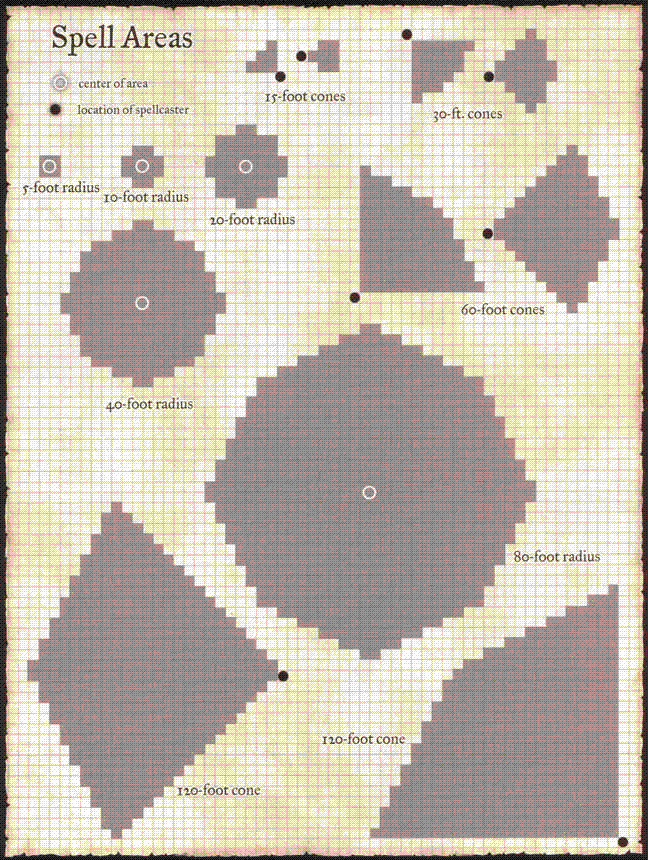
When target specifies "Ally" or "Allies", this can also include you (unless otherwise specified).
When an area-effect originates from a creature or object, the area moves with that creature/object. Otherwise, an area is immobile, unless the action specifies that it is mobile.
Modifier Types
Action checks (and other die rolls) are often affected by a variety of modifiers. Positive modifiers are commonly referred to as bonuses and negative ones as penalties. The following basic rules apply to modifiers:
- Most modifiers belong to a specified type.
- Modifiers of different types stack.
- Modifiers without a specified type stack.
- Modifiers of the same type do not normally stack. For each type, apply only the highest bonus and the most severe penalty. The following exceptions apply:
- Circumstance modifiers stack with circumstance modifiers from other sources.
- Improvement modifiers stack, but they have a limited total as described in the section about improvement points.
- Inherent modifiers stack, but they are limited to a total of +5 for each ability score.
- Enhancement and material modifiers frequently apply to weapons, shields, armor, and other equipment rather than to a character or creature. In this case, the modifier typically affects a property of the item (such as a weapon's attack modifier, a shield's parry modifier, or an armor's DR) and only indirectly affects the item's user or wearer.
| Modifier Type | Abbreviation | Typical Source | Typically Affects |
|---|---|---|---|
| Ability | Abl | Ability score (current and not base) | Defenses, action checks, damage rolls, init. |
| Age | Age | Age | Ability scores, racial level, size |
| Armor | Arm | Armor (artificial, not natural; can be enhanced) | Damage resistance |
| Circumstance | Crc | Environment, cover, concealment, equipment, etc. | Action checks, defenses |
| Class | Cls | Class trait | Any |
| Cultural | Clt | Upbringing | Skill levels, action checks |
| Deflection | Dfl | Spell or magic item | DeC, Reflex defense |
| Divine | Dvn | Divine magic | Any |
| Dodge | Ddg | Skill or special ability | DeC, Reflex defense; Dodge can be a composite of multiple modifiers |
| Encumbrance | Enc | Equipment, armor, obesity | Action checks, Dex bonus, base speed |
| Enhancement | Enh | High quality or magic | Ability scores, weapon/armor effectiveness |
| Improvement | Imp | Improvement points | Ability scores, health points, defenses, skill levels |
| Inherent | Inh | Powerful and permanent magic | Ability scores |
| Insight | Ins | Precognitive ability or magic | Defenses, action checks, damage rolls |
| Luck | Lck | Unnaturally good or bad fortune | Defenses, action checks, damage rolls |
| Material | Mat | Unusual material | Weapon/armor effectiveness |
| Metabolic | Met | Drug, disease, poison, fatigue, etc. | Ability scores, base speed, defenses |
| Morale | Mrl | Emotions | Will defense, action checks, damage rolls |
| Parry | Par | Weapon or shield (can be enhanced) | DeC; Parry can be a composite of multiple modifiers |
| Racial | Rac | Race or species (and gender) | Ability scores, defenses, skill levels, action checks |
| Resistance | Res | Spell or magic item | Defenses |
| Size | Siz | Size category | DeC, action checks |
| Skill | Skl | Skill level | Defenses, attack rolls, damage rolls |
| Social | Soc | Influence or reputation | Action checks |
| Synergy | Syn | Skill level of 5 or better | Action checks |
| Template | Tpl | Racial template | Ability scores, defenses, skill levels, action checks |
| Unnamed | Nil | Any | Any |
| Weapon | Wpn | Weapon or shield (can be enhanced) | Attack rolls, damage rolls |
Descriptors
Descriptors are used to categorize a wide variety of things, including actions, spells, special abilities, objects, and creatures. These descriptor categories can be used to determine whether a creature’s resistance applies to a certain spell, whether a certain action triggers attacks of opportunity or not, and much, much more.
| Descriptor | Notation | Description |
|---|---|---|
| Acid | [Acid] | Spell/action: causes acid energy damage (or protects against it). |
| Air | [Air] | Spell/action/creature: related to the air element. |
| Aquatic | [Aquatic] | Creature: has native swim speed and does not have to make Athletics (Swim) checks to move through water; can breathe underwater (or at least hold its breath ten times longer than non-aquatic creatures). |
| Attack of Opportunity | [AoO] | Action: using this action triggers attacks of opportunity from creatures that threaten you. |
| Augmented | [Augmented] | Creature: augmented with a template or special power. |
| Boost | [Boost] | Action: an action that can be boosted somehow with an additional investment of AP. A maximum of half your AP total can be used to boost a single action. |
| Chaotic | [Chaotic] | Creature/weapon/spell/trait: has a chaotic aura and can bypass DR susceptible to chaotic. |
| Charm | [Charm] | Spell/action: causes a charm effect. |
| Cold | [Cold] | Spell/action: causes cold energy damage (or protects against it). Creature: immune to cold and vulnerable to fire. |
| Darkness | [Dark] | Spell/action: creates a darkness or shadow effect. |
| Dimension | [Dimension] | Spell/action: creates or uses an extradimensional or extraplanar effect. |
| Earth | [Earth] | Spell/action/creature: related to the earth element. |
| Electricity | [Electric] | Spell/action: causes electrical energy damage (or protects against it). |
| Evil | [Evil] | Creature/weapon/spell/trait: has an evil aura and can bypass DR susceptible to evil. |
| Fear | [Fear] | Spell/action/trait: causes a fear effect. |
| Fire | [Fire] | Spell/action: causes fire energy damage (or protects against it), or is related to the fire element. Creature: immune to fire/heat and vulnerable to cold. |
| Force | [Force] | Spell/action: causes force damage (usually blunt physical damage) or creates a telekinetic effect. |
| Good | [Good] | Creature/weapon/spell/trait: has a good aura and can bypass DR susceptible to good. |
| Illusion | [Illusion] | Spell/action: creates an illusionary effect. |
| Incorporeal | [Incorporeal] | Spell/action: makes a target incorporeal. Creature: is or can become incorporeal. |
| Language-dependent | [Lang] | Spell/action: works only if the user and target can communicate using a shared language. |
| Lawful | [Lawful] | Creature/weapon/spell/trait: has a lawful aura and can bypass DR susceptible to lawful. |
| Light | [Light] | Spell/action: creates a light or color-based effect. |
| Magic Resistance | [MR] | Spell/action: supernatural effect that is susceptible to a target's magic resistance. |
| Mind-affecting | [Mind] | Spell/action: causes a mental effect. It does not work against creatures with Int 0 or Int -. |
| Move | [Move] | Action: a movement action that requires MP (or AP converted to MP). |
| Necrotic | [Necrotic] | Spell/action: causes necrotic energy damage (or protects against it). |
| Poison | [Poison] | Spell/action/weapon: is poisonous or creates a toxic effect. |
| Psychic | [Psych] | Spell/action: causes psychic damage or protects against psychic damage. |
| Radiant | [Radiant] | Spell/action: causes radiant energy damage, protects against radiant energy, or uses radiant energy for healing. |
| Scrying | [Scry] | Spell/action: uses a scrying effect. |
| Secret | [Secret] | Action: the DM should (usually) make a hidden roll for the character. |
| Sleep | [Sleep] | Spell/action: causes a sleep effect. |
| Sonic | [Sonic] | Spell/action: causes sonic energy damage (or protects against it). |
| Supernatural | [Su] | Action/trait: subject to anti-magic, dispelling, and counterspelling. Effects that are not supernatural may be exceptional in many ways, but they are not magical and therefore not subject to anti-magic or dispelling. |
| Take 10/20 | [T10/20] | Action: an action check that you can "take 10" and/or "take 20" on. |
| Telepathy | [Telepathy] | Spell/action/trait: causes a telepathic effect or uses telepathy. |
| Teleport | [Teleport] | Spell/action: uses a teleportation effect. |
| Turning | [Turn] | Spell/action: supernatural effect very similar to fear but unaffected by resistance to mind and fear effects. |
| Untrained | [Untrained] | Action: can be attempted even by a creature with no levels in the appropriate skill. |
| Water | [Water] | Spell/action/creature: related to the water element. |
Prerequisites
Prerequisites are conditions that need to be satisfied within the given context. Prerequisites can be applied to almost anything, including skills, classes, bonuses, magic items, etc. For example, skill A can have a prerequisite stating that skill B must be learned to a certain level before you can allocate skill points to skill A. Another example is a bonus that only applies when you are wearing a certain type of armor or wielding a certain type of weapon.
In most cases, prerequisites are self-explanatory and simple to resolve, but there are exceptions. For example, when you are levelling up a character, improvement points may be used before resolving prerequisites for skills. However, allocation of skill points when levelling up is effectively done all at once. This means that skills gained or improved when levelling may not count their improved level to fulfill prerequisites for another skill (until after the levelling).
Sometimes, a prerequisite can be temporarily satisfied due to a bonus of limited duration. The opposite situation is also possible, where a temporary penalty results in a prerequisite no longer being satisfied. The default rule is to use a creature's current characteristics to resolve any prerequisite. For example, if a magic hammer requires a minimum strength of 18 and your normal strength is 16, you can hypothetically use a magic spell to increase your strength and successfully wield the hammer. Conversely, if your strength normally is 20 but has been reduced to 17 by a spider's venomous bite, then you are temporarily unable to wield the aforementioned hammer. For the purpose of resolving "long-term" prerequisites, such as skill prerequisites and actions with a long action time, you should only count bonuses and penalties that have a duration at least as long as the action time.
Prerequisites are typically expressed as logical expressions that can be evaluated to true or false. Most prerequisites are simple expressions with a single condition, but it is possible to combine multiple conditions with the logical operators 'AND', 'OR', and 'XOR'.
| Prerequisite Type | Example | Description |
|---|---|---|
| Ability Score | Str>=15 AND Con>=12 | The specified ability scores must have at least the specified values. |
| Alignment | Align==G | Alignment must be lawful good, neutral good, or chaotic good. |
| Armor | Armor==ArmMd | Armor being worn must be medium type armor. |
| Casting | Casting(music) | Musical instrument must be used as somatic component and singing as verbal component. |
| Challenge Level | CL<=5 | Challenge level must be 5 or less. |
| Class Level | ClL(Wiz)>=10 | Class level for the wizard class must be 10 or better. |
| Condition | Cond(Bloodied) | Must have the bloodied condition. |
| Creature Subtype | CrSubt==Elf | Must belong to the elven creature subtype. |
| Creature Type | CrType==Humanoid | Must belong to the humanoid creature type. |
| Descriptor | Desc(Fire) OR Desc(Cold) | Must have the Fire descriptor and/or the Cold descriptor. |
| Encumbrance Class | EC<=2 | Must have encumbrance class 2 or less. |
| Enemy | Enemy==Dwarf | Current enemy must be a dwarf. |
| Environment | Env(Darkness) | The current environment must be dark. |
| Race | Race==Gnoll | Must belong to the gnoll race. |
| Racial Level | RL>=5 | Racial level must be 5 or better. |
| Size | Sz<=0 | Must be of size 0 (medium) or smaller. |
| Skill Level | Skl(Acrob)>=8 | Skill level in Acrobatics skill must be 8 or better. |
| Social Class | SC>=2 | Social class must be 2 or better. |
| Total Level | TL==8 | Total level must be exactly 8. |
| Wealth Class | WC<3 | Wealth class must be less than 3. |
| Weapon | Weapon==WpHvB | Weapon being used must be a heavy blade. |
Injury and Fatigue
Injury
Physical injury is measured by a decrease in hit points (HP).
| Current HP | Description and Effects |
|---|---|
| Full HP | The creature is uninjured. (The object or construct is undamaged.) |
| Half+1 to full HP | Injured: The creature is injured but suffers no special penalties. (Damaged: The object or construct is slightly damaged but still works normally.) |
| 1 to half HP | Bloodied: The creature is seriously injured. (Broken: The object or construct is damaged enough to suffer a -2 penalty on related actions.) |
| 0 | Disabled: The creature can only use half its AP/MP each round, and any action that costs SP or PP will also cause it the same number of HP (and probably render it unconscious). (Destroyed: Most objects, undead, constructs, and plants are destroyed at 0 HP.) |
| -1 to -Con | Unconscious/dying: The creature automatically falls prone and drops anything held in its hands. See progression below. |
| -Con | Dead: The creature is dead. |
If a creature takes more than half its full HP of damage in a single attack, it is dazed for 1 round.
For information about temporary HP, see the section about Health Scores.
Physical Fatigue
Physical fatigue is measured by a decrease in stamina points (SP).
| Current SP | Description and Effects |
|---|---|
| Full SP | The creature is in full vigor. |
| Half+1 to full SP | The creature is slightly fatigued but suffers no special penalties. |
| 1 to half SP | Fatigued: The creature is seriously fatigued. Many physical actions suffer a -2 penalty (see PAM). |
| 0 | Exhausted: The creature is near collapse. It can only use half its AP/MP each round, and further SP costs are converted to HP damage on a point-for-point basis. Each such SP cost or loss requires a Fortitude defense to avoid falling unconscious (d20! + SP cost vs. Fort). Many physical actions suffer a -6 penalty (PAM). |
Some types of fatigue, especially the ones that are long-lasting and/or serious, lead to a reduction in Con rather than (or in addition to) a cost in SP. See ability damage for details.
If a creature takes more than half its full SP of damage in a single attack, it is dazed for 1 round.
For information about temporary SP, see the section about Health Scores.
Mental Fatigue
Mental fatigue is measured by a decrease in power points (PP).
| Current PP | Description and Effects |
|---|---|
| Full PP | The creature is in full mental vigor. |
| Half+1 to full PP | The creature is slightly tired but suffers no special penalties. |
| 1 to half PP | Tired: The creature is very tired. Many mental actions suffer a -2 penalty (see MAM). |
| 0 | Drained: The creature is mentally drained and near collapse. It can only use half its AP/MP each round, and further PP costs are converted to HP damage on a point-for-point basis. Each such PP cost or loss requires a Will defense to avoid falling unconscious (d20! + PP cost vs. Will). Many mental actions suffer a -6 penalty (MAM). |
Some types of mental fatigue, especially the ones that are long-lasting and/or serious, lead to a reduction in Wis rather than (or in addition to) a cost in PP. See ability damage for details.
If a creature takes more than half its full PP of damage in a single attack, it is dazed for 1 round.
For information about temporary PP, see the section about Health Scores.
Increased or Decreased Health Effects
Increased Health Penalties (optional rule for more realistic campaigns): Increase the penalties incurred by damage to HP, SP, and PP.
Decreased Health Penalties (optional rule for more cinematic campaigns): Decrease or remove the penalties incurred by damage to HP, SP, and PP. For a truly cinematic alternative, change the penalties to bonuses of the same size.
Alternatively, the points at which a character becomes fatigued or tired can be changed from half SP/PP to a lower limit.
Ability Damage
Many things can cause ability damage, including poison, disease, extreme fatigue, magic, etc. Any characteristic that is dependent on a damaged ability score or its modifier should be immediately recalculated based on the new score.
- Strength 0
- The creature can only lie helpless on the ground.
- Constitution 0
- The creature is dead.
- Dexterity 0
- The creature is paralyzed, motionless, and helpless.
- Intelligence 0
- The creature cannot think and is in a coma-like stupor.
- Wisdom 0
- The creature is withdrawn in a deep sleep, helpless.
- Charisma 0
- The creature is withdrawn in a catatonic, coma-like stupor.
Note that not having an ability score is not the same as the ability score being 0. Lack of an ability score provides neither a bonus nor a penalty as an ability modifier. Creatures that lack an ability score are also immune to damage to that score.
Recovery and Levels of Activity
Living creatures automatically recover damage to HP, SP, PP, and ability scores over time; this is known as natural healing. The rate of recovery varies with levels of activity, as shown in the table below.
Note that any environment, ongoing cost, or condition that causes a certain type of damage will prevent all natural recovery of that damage type. For example, a creature that is starving will be unable to naturally recover SP until properly fed. Similarly, a creature spending PP on an ongoing spell will not naturally recover PP while the cost is being paid.
| Activity Level | Description | HP Recovery | SP Recovery | PP Recovery | Abil Dmg Recovery | Other Effects |
|---|---|---|---|---|---|---|
| Safe Rest | Resting in a safe and comfortable environment. Professional care can improve recovery rates further. Most equipment and armor are typically stowed away. 50% of time awake can be spent learning spells, doing research, performing work-related activities, etc. | 2xTL/day | 2xTL/h | 2xTL/h | 2/day | -4 circumstance modifier to Perception-based actions (-10 modifier while sleeping) |
| Low Activity (Relaxed) | Non-strenuous work, or resting in a potentially unsafe or uncomfortable environment. Heavy equipment and armor are typically not worn. 75% of time awake can be spent learning spells, research, crafting, etc. | TL/day | TL/h | TL/h | 1/day | -2 circumstance modifier to Perception-based actions |
| Medium Activity (Ready) | Normal activity, such as walking in friendly or neutral territory, active guard duty, normal physical labor, etc. All armor and equipment are usually worn/carried. | TL/day | TL/h | TL/h | 1/day | - |
| High Activity (Alert) | Fatiguing or stressful activity, such as forced march, hard labor, combat, running, walking or sneaking through hostile territory, etc. All armor and equipment are worn/carried. Creatures that perceive a possible threat will typically assume this level of activity, and they will often make preparations of encounter-level duration and perform active Spot and Listen checks each round. | - | - | - | - | +2 circumstance modifier to Perception-based actions |
Note that the recovery of ability score damage applies separately to each ability score.
Fast Recovery (optional rule for more cinematic campaigns): DMs who want a faster-paced campaign, fewer resting periods, and less resource management between encounters can increase the health point recovery rates listed above. Even full recovery of SP and PP (and maybe even of HP damage) after each encounter can be considered, if the DM desires a truly cinematic feel and a reduced dependence on healing magic (as is the case in many computer-based RPGs).
Ongoing Damage
Ongoing damage (sometimes referred to as continuous damage) is an effect that causes a recurring loss of HP, SP, or PP. The damage occurs each round at the beginning of the affected creature's turn, until the specified duration expires. Ongoing damage can be caused by both mundane effects, such as hemorrhaging, and supernatural effects, such as magical acid.
Unless otherwise specified, any type of magical healing or a successful Bind Wounds action will stop the ongoing damage and prevent further loss.
Ongoing costs of HP, SP, and PP are equivalent to ongoing damage for most purposes (except that healing will not end the cost).
Multiple instances of ongoing damage and/or ongoing cost stack and increase the amount lost per round.
Persistent and Insidious Damage [Su]
Persistent damage: Damage to HP, SP, PP, or ability scores that has the same effects as normal damage but is more difficult to heal with magic. Natural recovery works as usual. This means that persistent damage must be kept track of separately. Depending on the effect's description, healing the damage with magic is either impossible or will require a spellcasting check against the specified PL.
Insidious damage: Damage to HP, SP, PP, or ability scores that has the same effects as normal damage but can only be healed with magic. Natural recovery has no effect at all. This means that insidious damage must be kept track of separately.
Insidious damage to ability scores is sometimes referred to as ability drain rather than ability damage.
Dying
When a living creature's HP falls below 0, he falls unconscious and starts dying.
| Dying Condition | |
|---|---|
| Description: | You fall unconscious and are at risk of dying. |
| Trigger(s): | You fall unconscious due to going below 0 HP. |
| Initial Effect(s): | You fall prone and drop anything held in hands. Go to stage 1. |
| Stage 1: | Bleeding out: After 1 r, lose 1 HP and make d20! check vs. Con (S - Stay at stage 1; F - Go to stage 2; EF - Go to stage 3). |
| Stage 2: | Dying: After 1 h, lose 1 HP and make d20! check vs. Con (S - Stay at stage 2; OS - Go to stage 1; F - Go to stage 3; EF - Go to stage 4). |
| Stage 3: | Stabilized: After 1 h, make d20! check vs. Con (S - Stay at stage 3; OS - Go to stage 2; F - Go to stage 4). |
| Stage 4: | Disabled: You wake up at 0 HP and are no longer dying. |
An unconscious creature that wakes up (through natural or supernatural healing) is flat-footed until its next initiative comes up, and it is also dazed for 1 round.
Death
When a creature dies, its soul departs the body. Sooner or later, the soul will leave the Prime Material Plane and journey to an outer plane that matches the creature’s alignment or religion. Once there, it will linger for a variable amount of time, before either being turned into a servant for its favored deity or being absorbed by one of the local creatures.
With powerful magic and/or divine intervention, it is possible to heal a dead body and call the original soul back into it. However, if the soul has been destroyed or trapped, such resurrection is not possible. Nor is it possible if the soul itself does not wish to return to the body. The soul automatically knows the surface thoughts and approximate alignment of any creature that is attempting to resurrect it.
Whenever a living and intelligent creature dies, there is a chance that its soul remains in the body, turning it into an undead. In most campaign worlds, this is resolved as a +0 attack against the creature's Will (calculated as if it had been alive). If this attack fails, the creature does not become undead, but if it succeeds, the number of success levels determine the type of undead: 0 to 4 generates a ghoul, 5 to 9 a ghast, 10 to 14 a wight, 15 to 19 a shadow, 20 to 24 a wraith, 25 to 29 a spectre, 30 to 34 a ghost, and 35 or more a vampire. The transformation typically occurs 1d6 days after death.
Burial on holy ground results in a -20 penalty on the attack roll for turning a corpse into an undead. On the other hand, many situations can give a bonus to the attack, if the DM so desires. Typical examples include areas with necrotic energy, evil temple sites, a particularly violent or unfair death, etc.
Poisoning
Typically, when a creature is exposed to a poison or a drug, the poison makes an "attack" against the victim’s Fortitude. If the attack succeeds, the poison starts to affect the victim (according to each poison’s progression).
Contact: Exposure to a contact poison occurs as soon as the poison is touched with bare skin. It also works through injuries or when ingested. The poison has to penetrate armor DR but not natural DR in order to take effect. Unless otherwise specified, a weapon or an object smeared with contact poison will only affect a single creature.
Ingested: Exposure occurs only when the poison is ingested. Mere physical contact is not enough.
Inhaled: This is a gaseous poison, and exposure occurs through inhalation. This type of poison is often stored in containers that can be thrown or fired with siege weapons. Many inhaled poisons even work through nasal membranes, meaning that holding one’s breath has little or no effect.
Injury: Exposure occurs through open wounds, so the poisoned object has to penetrate both armor and natural DR. Unless otherwise specified, a weapon smeared with injury poison will only last for a single hit. This type of poison also works when ingested.
Any exceptional failure (or worse) when attacking with a poisoned weapon (or when handling a poisoned object) results in the attacker being exposed to the poison.
Unless otherwise specified, a creature with a natural poison attack is immune to its own poison.
See the list below for the effects of specific poisons, and see the equipment chapter for their prices. The effects described here are for a standard dose. The equipment chapter describes modifiers for additional doses or higher concentrations.
| Affliction Poison - [Su, Poison] | |
|---|---|
| Description: | You have been poisoned by Affliction magic. |
| Trigger(s): | You are the target of an Affliction poison effect. |
| Initial Effect(s): | Spell attack vs. Fort (S - Go to stage 1; F - No effect). |
| Maximum Duration: | 10 r |
| Stage 1: | Poisoned: After 1 r, lose d3 Con and make d20! + PL attack vs. Fort (S - Stay at stage 1; F - Poison neutralized). |
| Arsenic - [Poison] | |
|---|---|
| Description: | You are suffering from arsenic poisoning. |
| Trigger(s): | You have been exposed to arsenic through ingestion. |
| Initial Effect(s): | d20! + 3 vs. Fort (S - Go to stage 1; F - No effect). |
| Maximum Duration: | 2 min |
| Stage 1: | Poisoned: Take 1 Con damage and make d20! + 3 attack vs. Fort (S - Go to stage 2; F - Poison neutralized). |
| Stage 2: | Poisoned: After 1 minute, take d8 Con damage. |
| Basilisk Blood - [Poison] | |
|---|---|
| Description: | You are suffering from basilisk blood poisoning. |
| Trigger(s): | You have been exposed to basilisk blood through ingestion. |
| Initial Effect(s): | After 1 minute, make d20! + 10 vs. Fort (S - Go to stage 1; F - No effect). |
| Stage 1: | Poisoned: Suffer d6 Wis drain and make d20! + 10 attack vs. Fort (S - Go to stage 2; F - Poison neutralized). |
| Stage 2: | Poisoned: After 1 hour, fall unconscious for d3 hours, then become raging mad and make d20! + 10 attack vs. Fort (S - Go to stage 3; F - Poison neutralized). |
| Stage 3: | Raging mad: After 1 day, make d20! + 10 attack vs. Fort (S - Stay at stage 3; F - Poison neutralized). |
| Basilisk Venom - [Poison] | |
|---|---|
| Description: | You are suffering from basilisk venom poisoning. |
| Trigger(s): | You have been exposed to basilisk venom through injury. |
| Initial Effect(s): | d20! + 5 vs. Fort (S - Go to stage 1; F - No effect). |
| Maximum Duration: | 2 min |
| Stage 1: | Poisoned: Suffer d3 Dex drain and make d20! + 5 attack vs. Fort (S - Go to stage 2; F - Poison neutralized). |
| Stage 2: | Poisoned: After 1 minute, take 2d6 Con damage. |
| Black Adder Venom - [Poison] | |
|---|---|
| Description: | You are suffering from black adder venom poisoning. |
| Trigger(s): | You have been exposed to black adder venom through injury. |
| Initial Effect(s): | d20! + 1 vs. Fort (S - Go to stage 1; F - No effect). |
| Maximum Duration: | 2 min |
| Stage 1: | Poisoned: Take d6 Con damage and make d20! + 1 attack vs. Fort (S - Go to stage 2; F - Poison neutralized). |
| Stage 2: | Poisoned: After 1 minute, take d6 Con damage. |
| Black Lotus Extract - [Poison] | |
|---|---|
| Description: | You are suffering from black lotus poisoning. |
| Trigger(s): | You have been exposed to black lotus extract through contact. |
| Initial Effect(s): | d20! + 10 vs. Fort (S - Go to stage 1; F - No effect). |
| Maximum Duration: | 2 min |
| Stage 1: | Poisoned: Take 3d6 Con damage and make d20! + 10 attack vs. Fort (S - Go to stage 2; F - Poison neutralized). |
| Stage 2: | Poisoned: After 1 minute, take 3d6 Con damage. |
| Bloodroot - [Poison] | |
|---|---|
| Description: | You are suffering from bloodroot poisoning. |
| Trigger(s): | You have been exposed to bloodroot through injury. |
| Initial Effect(s): | d20! + 2 vs. Fort (S - Go to stage 1; F - No effect). |
| Maximum Duration: | Instant |
| Stage 1: | Poisoned: Take d4 Con and d3 Wis damage. |
| Blue Whinnis - [Poison] | |
|---|---|
| Description: | You are suffering from blue whinnis poisoning. |
| Trigger(s): | You have been exposed to blue whinnis through injury. |
| Initial Effect(s): | d20! + 4 vs. Fort (S - Go to stage 1; F - No effect). |
| Maximum Duration: | 2 min |
| Stage 1: | Poisoned: Take 1 Con damage and make d20! + 4 attack vs. Fort (S - Go to stage 2; F - Poison neutralized). |
| Stage 2: | Poisoned: After 1 minute, fall unconscious. |
| Burnt Othur Fumes - [Poison] | |
|---|---|
| Description: | You are suffering from burnt othur fumes poisoning. |
| Trigger(s): | You have been exposed to burnt othur fumes through inhalation. |
| Initial Effect(s): | d20! + 8 vs. Fort (S - Go to stage 1; F - No effect). |
| Maximum Duration: | 2 min |
| Stage 1: | Poisoned: Suffer 1 Con drain and make d20! + 8 attack vs. Fort (S - Go to stage 2; F - Poison neutralized). |
| Stage 2: | Poisoned: After 1 minute, take 3d6 Con damage. |
| Carrion Crawler Brain Juice - [Poison] | |
|---|---|
| Description: | You are suffering from carrion crawler brain juice poisoning. |
| Trigger(s): | You have been exposed to carrion crawler brain juice through contact. |
| Initial Effect(s): | d20! + 3 vs. Fort (S - Go to stage 1; F - No effect). |
| Maximum Duration: | 12 min |
| Stage 1: | Poisoned: You are dazed for 1 minute. Make d20! + 3 attack vs. Fort (S - Go to stage 2; F - Poison neutralized). |
| Stage 2: | Poisoned: After 1 minute, become paralyzed for 10 minutes. |
| Dark Reaver Powder - [Poison] | |
|---|---|
| Description: | You are suffering from dark reaver powder poisoning. |
| Trigger(s): | You have been exposed to dark reaver powder through ingestion. |
| Initial Effect(s): | d20! + 8 vs. Fort (S - Go to stage 1; F - No effect). |
| Maximum Duration: | 2 min |
| Stage 1: | Poisoned: Take 2d6 Con damage and make d20! + 8 attack vs. Fort (S - Go to stage 2; F - Poison neutralized). |
| Stage 2: | Poisoned: After 1 minute, take d6 Con and d6 Str damage. |
| Deathblade - [Poison] | |
|---|---|
| Description: | You are suffering from deathblade poisoning. |
| Trigger(s): | You have been exposed to deathblade through injury. |
| Initial Effect(s): | d20! + 10 vs. Fort (S - Go to stage 1; F - No effect). |
| Maximum Duration: | 2 min |
| Stage 1: | Poisoned: Take d6 Con damage and make d20! + 10 attack vs. Fort (S - Go to stage 2; F - Poison neutralized). |
| Stage 2: | Poisoned: After 1 minute, take 2d6 Con damage. |
| Dragon Bile - [Poison] | |
|---|---|
| Description: | You are suffering from dragon bile poisoning. |
| Trigger(s): | You have been exposed to dragon bile through contact. |
| Initial Effect(s): | d20! + 16 vs. Fort (S - Go to stage 1; F - No effect). |
| Maximum Duration: | Instant |
| Stage 1: | Poisoned: Take 3d6 Str. |
| Drow Poison - [Poison] | |
|---|---|
| Description: | You are suffering from drow poison poisoning. |
| Trigger(s): | You have been exposed to drow poison through injury. |
| Initial Effect(s): | d20! + 3 vs. Fort (S - Go to stage 1; F - No effect). |
| Maximum Duration: | Varies |
| Stage 1: | Poisoned: Take d6 Str damage and make d20! + 3 attack vs. Fort (S - Go to stage 2; F - Poison neutralized). |
| Stage 2: | Poisoned: After 1 minute, fall unconscious for 2d4 hours. |
| Firemilk - [Poison] | |
|---|---|
| Description: | You are suffering from firemilk poisoning. |
| Trigger(s): | You have been exposed to firemilk through contact. |
| Initial Effect(s): | After 1 minute, make d20! + 0 vs. Fort (S - Go to stage 1; F - No effect). |
| Maximum Duration: | 12 min |
| Stage 1: | Poisoned: Take d6 SP damage, enjoy double healing rates for 1 day, and make d20! + 0 attack vs. Fort (S - Go to stage 2; F - Poison neutralized). |
| Stage 2: | Poisoned: After 10 minutes, take 1 Str damage. |
| Giant Wasp Poison - [Poison] | |
|---|---|
| Description: | You are suffering from wasp poison poisoning. |
| Trigger(s): | You have been exposed to wasp poison through injury. |
| Initial Effect(s): | d20! + 8 vs. Fort (S - Go to stage 1; F - No effect). |
| Maximum Duration: | 2 min |
| Stage 1: | Poisoned: Take d6 Dex damage and make d20! + 8 attack vs. Fort (S - Go to stage 2; F - Poison neutralized). |
| Stage 2: | Poisoned: After 1 minute, take d6 Dex damage. |
| Greenblood Oil - [Poison] | |
|---|---|
| Description: | You are suffering from greenblood oil poisoning. |
| Trigger(s): | You have been exposed to greenblood oil through injury. |
| Initial Effect(s): | d20! + 3 vs. Fort (S - Go to stage 1; F - No effect). |
| Maximum Duration: | 2 min |
| Stage 1: | Poisoned: Take 1 Con damage and make d20! + 3 attack vs. Fort (S - Go to stage 2; F - Poison neutralized). |
| Stage 2: | Poisoned: After 1 minute, take d2 Con damage. |
| Greycap - [Poison] | |
|---|---|
| Description: | You are suffering from greycap poisoning. |
| Trigger(s): | You have been exposed to greycap through ingestion. |
| Initial Effect(s): | After 6 hours, d20! + 8 vs. Fort (S - Go to stage 1; F - No effect). |
| Maximum Duration: | Varies |
| Stage 1: | Poisoned: Take d6 Con damage and make d20! + 8 attack vs. Fort (S - Go to stage 2; F - Poison neutralized). |
| Stage 2: | Poisoned: After 1 day, take d3 Wis damage and 1 Con drain, then make d20! + 8 attack vs. Fort (S - Stay at stage 2; F - Poison neutralized). |
| Id Moss - [Poison] | |
|---|---|
| Description: | You are suffering from id moss poisoning. |
| Trigger(s): | You have been exposed to id moss through ingestion. |
| Initial Effect(s): | d20! + 4 vs. Fort (S - Go to stage 1; F - No effect). |
| Maximum Duration: | 2 min |
| Stage 1: | Poisoned: Take d4 Int damage and make d20! + 4 attack vs. Fort (S - Go to stage 2; F - Poison neutralized). |
| Stage 2: | Poisoned: After 1 minute, take 2d6 Int damage. |
| Insanity Mist - [Poison] | |
|---|---|
| Description: | You are suffering from insanity mist poisoning. |
| Trigger(s): | You have been exposed to insanity mist through inhalation. |
| Initial Effect(s): | d20! + 5 vs. Fort (S - Go to stage 1; F - No effect). |
| Maximum Duration: | 2 min |
| Stage 1: | Poisoned: Take d4 Wis damage and make d20! + 5 attack vs. Fort (S - Go to stage 2; F - Poison neutralized). |
| Stage 2: | Poisoned: After 1 minute, take 2d6 Wis damage. |
| Large Scorpion Venom - [Poison] | |
|---|---|
| Description: | You are suffering from scorpion venom poisoning. |
| Trigger(s): | You have been exposed to scorpion venom through injury. |
| Initial Effect(s): | d20! + 8 vs. Fort (S - Go to stage 1; F - No effect). |
| Maximum Duration: | 2 min |
| Stage 1: | Poisoned: Take d6 Str damage and make d20! + 8 attack vs. Fort (S - Go to stage 2; F - Poison neutralized). |
| Stage 2: | Poisoned: After 1 minute, take d6 Str damage. |
| Lich Dust - [Poison, Necrotic] | |
|---|---|
| Description: | You are suffering from lich dust poisoning. |
| Trigger(s): | You have been exposed to lich dust through ingestion. |
| Initial Effect(s): | d20! + 7 vs. Fort (S - Go to stage 1; F - No effect). |
| Maximum Duration: | 2 min |
| Stage 1: | Poisoned: Take 2d6 Str damage and make d20! + 7 attack vs. Fort (S - Go to stage 2; F - Poison neutralized). |
| Stage 2: | Poisoned: After 1 minute, take d6 Str damage. |
| Malyss Root Paste - [Poison] | |
|---|---|
| Description: | You are suffering from malyss root paste poisoning. |
| Trigger(s): | You have been exposed to malyss root paste through contact. |
| Initial Effect(s): | d20! + 6 vs. Fort (S - Go to stage 1; F - No effect). |
| Maximum Duration: | 2 min |
| Stage 1: | Poisoned: Take 1 Dex damage and make d20! + 6 attack vs. Fort (S - Go to stage 2; F - Poison neutralized). |
| Stage 2: | Poisoned: After 1 minute, take 2d4 Dex damage. |
| Medium Spider Venom - [Poison] | |
|---|---|
| Description: | You are suffering from spider venom poisoning. |
| Trigger(s): | You have been exposed to spider venom through injury. |
| Initial Effect(s): | d20! + 4 vs. Fort (S - Go to stage 1; F - No effect). |
| Maximum Duration: | 2 min |
| Stage 1: | Poisoned: Take d4 Str damage and make d20! + 4 attack vs. Fort (S - Go to stage 2; F - Poison neutralized). |
| Stage 2: | Poisoned: After 1 minute, take d4 Str damage. |
| Milk of the Poppy - [Poison] | |
|---|---|
| Description: | You are suffering from poppy milk poisoning. |
| Trigger(s): | You have been exposed to poppy milk through ingestion. |
| Initial Effect(s): | After 1 minute, make d20! + 10 vs. Fort (S - Go to stage 1; F - No effect). |
| Maximum Duration: | Varies |
| Stage 1: | Poisoned: Take d6 Wis damage and make d20! + 10 attack vs. Fort (S - Go to stage 2; F - Poison neutralized). |
| Stage 2: | Poisoned: After 10 minutes, fall unconscious for d3 hours. |
| Myrish Fire - [Poison] | |
|---|---|
| Description: | You are suffering from myrish fire poisoning. |
| Trigger(s): | You have been exposed to myrish fire through contact. |
| Initial Effect(s): | After 1 round, make d20! + 5 vs. Fort (S - Go to stage 1; F - No effect). |
| Maximum Duration: | 2 min |
| Stage 1: | Poisoned: Take d6 SP damage, enjoy double healing rates for 1 day, and make d20! + 5 attack vs. Fort (S - Go to stage 2; F - Poison neutralized). |
| Stage 2: | Poisoned: After 1 minute, take 1 Str and 1 Dex damage. |
| Nightshade - [Poison] | |
|---|---|
| Description: | You are suffering from nightshade poisoning. |
| Trigger(s): | You have been exposed to nightshade through ingestion. |
| Initial Effect(s): | After 1 minute, make d20! + 3 vs. Fort (S - Go to stage 1; F - No effect). |
| Maximum Duration: | 1 h |
| Stage 1: | Poisoned: Take d3 Wis damage and make d20! + 3 attack vs. Fort (S - Go to stage 2; F - Poison neutralized). |
| Stage 2: | Poisoned: After 1 hour, take 2d6 Con damage. |
| Nitharit - [Poison] | |
|---|---|
| Description: | You are suffering from nitharit poisoning. |
| Trigger(s): | You have been exposed to nitharit through contact. |
| Initial Effect(s): | After 1 minute, make d20! + 3 vs. Fort (S - Go to stage 1; F - No effect). |
| Maximum Duration: | 1 min |
| Stage 1: | Poisoned: Take 3d6 Con damage. |
| Oil of Taggit - [Poison] | |
|---|---|
| Description: | You are suffering from oil of taggit poisoning. |
| Trigger(s): | You have been exposed to oil of taggit through ingestion. |
| Initial Effect(s): | After 1 minute, make d20! + 5 vs. Fort (S - Go to stage 1; F - No effect). |
| Maximum Duration: | 2 min |
| Stage 1: | Poisoned: Fall unconscious for 1 minute. |
| Pennyroyal (Mild) - [Poison] | |
|---|---|
| Description: | You are suffering from pennyroyal poisoning. |
| Trigger(s): | You have been exposed to pennyroyal through ingestion. |
| Initial Effect(s): | After 1 hour, make d20! + 0 vs. Fort (S - Go to stage 1; F - No effect). |
| Maximum Duration: | 3 h |
| Stage 1: | Poisoned: Take 1 Con damage and make d20! + 0 attack vs. Fort (S - Go to stage 2; F - Poison neutralized). |
| Stage 2: | Poisoned: After 2 hours, take d6 SP damage. |
| Pennyroyal (Strong) - [Poison] | |
|---|---|
| Description: | You are suffering from pennyroyal poisoning. |
| Trigger(s): | You have been exposed to pennyroyal through ingestion. |
| Initial Effect(s): | After 30 minutes, make d20! + 5 vs. Fort (S - Go to stage 1; F - No effect). |
| Maximum Duration: | 2 h |
| Stage 1: | Poisoned: Suffer 1 Con drain and make d20! + 5 attack vs. Fort (S - Go to stage 2; F - Poison neutralized). |
| Stage 2: | Poisoned: After 1 hour, take d6 Con damage. |
| Purple Worm Poison - [Poison] | |
|---|---|
| Description: | You are suffering from purple worm poisoning. |
| Trigger(s): | You have been exposed to purple worm poison through injury. |
| Initial Effect(s): | d20! + 14 vs. Fort (S - Go to stage 1; F - No effect). |
| Maximum Duration: | 2 min |
| Stage 1: | Poisoned: Take d6 Str damage and make d20! + 14 attack vs. Fort (S - Go to stage 2; F - Poison neutralized). |
| Stage 2: | Poisoned: After 1 minute, take 2d6 Str damage. |
| Sassone Leaf Residue - [Poison] | |
|---|---|
| Description: | You are suffering from sassone leaf residue poisoning. |
| Trigger(s): | You have been exposed to sassone leaf residue through contact. |
| Initial Effect(s): | d20! + 6 vs. Fort (S - Go to stage 1; F - No effect). |
| Maximum Duration: | 2 min |
| Stage 1: | Poisoned: Take 2d12 HP damage and make d20! + 6 attack vs. Fort (S - Go to stage 2; F - Poison neutralized). |
| Stage 2: | Poisoned: After 1 minute, take d6 Con damage. |
| Shadow Essence - [Poison, Necrotic] | |
|---|---|
| Description: | You are suffering from shadow essence poisoning. |
| Trigger(s): | You have been exposed to shadow essence through injury. |
| Initial Effect(s): | d20! + 7 vs. Fort (S - Go to stage 1; F - No effect). |
| Maximum Duration: | 2 min |
| Stage 1: | Poisoned: Suffer 1 Str drain and make d20! + 7 attack vs. Fort (S - Go to stage 2; F - Poison neutralized). |
| Stage 2: | Poisoned: After 1 minute, take 2d6 Str damage. |
| Sleep Gas - [Poison] | |
|---|---|
| Description: | You are suffering from sleep gas poisoning. |
| Trigger(s): | You have been exposed to sleep gas through inhalation. |
| Initial Effect(s): | d20! + 5 vs. Fort (S - Go to stage 1; F - No effect). |
| Maximum Duration: | 2 min |
| Stage 1: | Poisoned: Fall asleep for 1 minute and make d20! + 5 attack vs. Fort (S - Go to stage 2; F - Poison neutralized). |
| Stage 2: | Poisoned: Continue sleeping for additional d4 minutes. |
| Small Centipede Poison - [Poison] | |
|---|---|
| Description: | You are suffering from centipede venom poisoning. |
| Trigger(s): | You have been exposed to centipede venom through injury. |
| Initial Effect(s): | d20! + 1 vs. Fort (S - Go to stage 1; F - No effect). |
| Maximum Duration: | 2 min |
| Stage 1: | Poisoned: Take d2 Dex damage and make d20! + 1 attack vs. Fort (S - Go to stage 2; F - Poison neutralized). |
| Stage 2: | Poisoned: After 1 minute, take d2 Dex damage. |
| Strangler - [Poison] | |
|---|---|
| Description: | You are suffering from strangler poisoning. |
| Trigger(s): | You have been exposed to strangler poison through ingestion. |
| Initial Effect(s): | d20! + 15 vs. Fort (S - Go to stage 1; F - No effect). |
| Maximum Duration: | 2 r |
| Stage 1: | Poisoned: Take d6+4 Con damage and make d20! + 15 attack vs. Fort (S - Go to stage 2; F - Poison neutralized). |
| Stage 2: | Poisoned: After 1 round, suffocate and go directly to 0 SP. |
| Striped Toadstool - [Poison] | |
|---|---|
| Description: | You are suffering from toadstool poisoning. |
| Trigger(s): | You have been exposed to toadstool through ingestion. |
| Initial Effect(s): | d20! + 1 vs. Fort (S - Go to stage 1; F - No effect). |
| Maximum Duration: | 2 min |
| Stage 1: | Poisoned: Take 1 Wis damage and make d20! + 1 attack vs. Fort (S - Go to stage 2; F - Poison neutralized). |
| Stage 2: | Poisoned: After 1 minute, take 2d6 Wis and d4 Int damage. |
| Sweetsleep - [Poison] | |
|---|---|
| Description: | You are suffering from sweetsleep poisoning. |
| Trigger(s): | You have been exposed to sweetsleep through ingestion. |
| Initial Effect(s): | After 1 minute, make d20! + 2 vs. Fort (S - Go to stage 1; F - No effect). |
| Maximum Duration: | Varies |
| Stage 1: | Poisoned: Take d3 Wis damage and make d20! + 2 attack vs. Fort (S - Go to stage 2; F - Poison neutralized). |
| Stage 2: | Poisoned: After 30 minutes, fall unconscious for d3 hours. |
| Tansy (Mild) - [Poison] | |
|---|---|
| Description: | You are suffering from tansy poisoning. |
| Trigger(s): | You have been exposed to tansy poison through ingestion. |
| Initial Effect(s): | After 1 minute, make d20! + 0 vs. Fort (S - Go to stage 1; F - No effect). |
| Maximum Duration: | 32 min |
| Stage 1: | Poisoned: Take 1 Str damage and make d20! + 0 attack vs. Fort (S - Go to stage 2; F - Poison neutralized). |
| Stage 2: | Poisoned: After 30 minutes, take d6 SP damage. |
| Tansy (Strong) - [Poison] | |
|---|---|
| Description: | You are suffering from tansy poisoning. |
| Trigger(s): | You have been exposed to tansy poison through ingestion. |
| Initial Effect(s): | After 1 minute, make d20! + 5 vs. Fort (S - Go to stage 1; F - No effect). |
| Maximum Duration: | 32 min |
| Stage 1: | Poisoned: Take d4 Str damage and make d20! + 5 attack vs. Fort (S - Go to stage 2; F - Poison neutralized). |
| Stage 2: | Poisoned: After 30 minutes, take 2d6 Con damage. |
| Tears of Lys - [Poison] | |
|---|---|
| Description: | You are suffering from tears of lys poisoning. |
| Trigger(s): | You have been exposed to tears of lys through ingestion. |
| Initial Effect(s): | After 1 hour, make d20! + 10 vs. Fort (S - Go to stage 1; F - No effect). |
| Maximum Duration: | Varies |
| Stage 1: | Poisoned: Suffer d3 Str drain and make d20! + 10 attack vs. Fort (S - Go to stage 2; F - Poison neutralized). |
| Stage 2: | Poisoned: After 1 day, suffer 2 Con and 1 Str drain, then make d20! + 10 attack vs. Fort (S - Stay at stage 2; F - Poison neutralized). |
| Terinav Root - [Poison] | |
|---|---|
| Description: | You are suffering from terinav root poisoning. |
| Trigger(s): | You have been exposed to terinav root through contact. |
| Initial Effect(s): | d20! + 6 vs. Fort (S - Go to stage 1; F - No effect). |
| Maximum Duration: | 2 min |
| Stage 1: | Poisoned: Take d6 Dex damage and make d20! + 6 attack vs. Fort (S - Go to stage 2; F - Poison neutralized). |
| Stage 2: | Poisoned: After 1 minute, take 2d6 Dex damage. |
| Ungol Dust - [Poison] | |
|---|---|
| Description: | You are suffering from ungol dust poisoning. |
| Trigger(s): | You have been exposed to ungol dust through inhalation. |
| Initial Effect(s): | d20! + 5 vs. Fort (S - Go to stage 1; F - No effect). |
| Maximum Duration: | 2 min |
| Stage 1: | Poisoned: Take 1 Cha damage and make d20! + 5 attack vs. Fort (S - Go to stage 2; F - Poison neutralized). |
| Stage 2: | Poisoned: After 1 minute, take d6 Cha damage and 1 Cha drain. |
| Wasting Potion - [Poison] | |
|---|---|
| Description: | You are suffering from wasting potion poisoning. |
| Trigger(s): | You have been exposed to wasting potion through ingestion. |
| Initial Effect(s): | d20! + 10 vs. Fort (S - Go to stage 1; F - No effect). |
| Maximum Duration: | 30 min |
| Stage 1: | Poisoned: Take d6 Con damage and make d20! + 10 attack vs. Fort (S - Go to stage 2; F - Poison neutralized). |
| Stage 2: | Poisoned: After 30 minutes, take d3 Con damage. Also gain a +4 metabolic bonus to Fort against other poisons. |
| Widow's Blood - [Poison] | |
|---|---|
| Description: | You are suffering from widow's blood poisoning. |
| Trigger(s): | You have been exposed to widow's blood through ingestion. |
| Initial Effect(s): | After 1 minute, make d20! + 5 vs. Fort (S - Go to stage 1; F - No effect). |
| Maximum Duration: | Varies |
| Stage 1: | Poisoned: Suffer 3 Con drain and make d20! + 5 attack vs. Fort (S - Stay at stage 1; F - Poison neutralized). |
| Wolfsbane (Contact) - [Poison] | |
|---|---|
| Description: | You are suffering from wolfsbane poisoning. |
| Trigger(s): | You have been exposed to wolfsbane through contact. |
| Initial Effect(s): | d20! + 1 vs. Fort (S - Go to stage 1; F - No effect). |
| Maximum Duration: | 2 min |
| Stage 1: | Poisoned: Take 1 Dex damage and make d20! + 1 attack vs. Fort (S - Go to stage 2; F - Poison neutralized). |
| Stage 2: | Poisoned: After 1 minute, take 1 Dex damage. |
| Wolfsbane (Ingested) - [Poison] | |
|---|---|
| Description: | You are suffering from wolfsbane poisoning. |
| Trigger(s): | You have been exposed to wolfsbane through ingestion. |
| Initial Effect(s): | After 1 minute, make d20! + 5 vs. Fort (S - Go to stage 1; F - No effect). |
| Maximum Duration: | 2 h |
| Stage 1: | Poisoned: Take 1 Con damage and make d20! + 5 attack vs. Fort (S - Go to stage 2; F - Poison neutralized). |
| Stage 2: | Poisoned: After 2 hours, take 1 Con damage. |
| Wolfsbane (Inhaled) - [Poison] | |
|---|---|
| Description: | You are suffering from wolfsbane poisoning. |
| Trigger(s): | You have been exposed to wolfsbane through inhalation. |
| Initial Effect(s): | After 1 minute, make d20! + 0 vs. Fort (S - Go to stage 1; F - No effect). |
| Maximum Duration: | 2 min |
| Stage 1: | Poisoned: Take d3 Wis damage and make d20! + 0 attack vs. Fort (S - Go to stage 2; F - Poison neutralized). |
| Stage 2: | Poisoned: After 1 minute, take d3 Dex damage. |
| Wyvern Poison - [Poison] | |
|---|---|
| Description: | You are suffering from wyvern venom poisoning. |
| Trigger(s): | You have been exposed to wyvern venom through injury. |
| Initial Effect(s): | d20! + 7 vs. Fort (S - Go to stage 1; F - No effect). |
| Maximum Duration: | 2 min |
| Stage 1: | Poisoned: Take 2d6 Con damage and make d20! + 7 attack vs. Fort (S - Go to stage 2; F - Poison neutralized). |
| Stage 2: | Poisoned: After 1 minute, take 2d6 Con damage. |
Disease
Physical Illness
On exposure (or once per day during prolonged exposure), the disease makes an "attack" against the potential victim’s Fortitude save. If the attack succeeds, the victim contracts the disease and enters first stage. Periodically, a new check is made against the victim’s Fortitude to determine the disease progression, until the victim is either cured or the final stage has been reached.
If the disease has a final stage and it is reached, only magical healing can remove the lingering effects.
Contact: Exposure to a contact disease occurs as soon as the carrier is touched with bare skin. It also works through injuries or when ingested. The disease has to penetrate armor DR but not natural DR in order to take effect.
Ingested: Exposure occurs only when the carrier is ingested. Mere physical contact is not enough.
Inhaled: Disease exposure occurs through inhalation. Most inhaled diseases even work through nasal membranes, meaning that holding one’s breath has little or no effect.
Injury: Exposure occurs through open wounds, so the carrier has to penetrate both armor and natural DR. This type of disease can also spread through ingestion.
| Aboleth Slime Disease | |
|---|---|
| Description: | You are suffering from aboleth slime disease. |
| Trigger(s): | You have been exposed to aboleth slime disease through injury. |
| Initial Effect(s): | d20! + 9 vs. Fort (S - Go to stage 1; F - No effect). |
| Maximum Duration: | Varies |
| Stage 1: | Skin becomes clammy. After d4 minutes, make d20! + 9 attack vs. Fort (S - Go to stage 2; F - Stay at stage 1; OF - Disease cured). |
| Stage 2: | Skin becomes slimy. After d4 minutes, make d20! + 9 attack vs. Fort (S - Go to stage 3; F - Stay at stage 2; OF - Go to stage 1). |
| Stage 3: | Skin becomes clear. Lose d12 SP per minute unless skin is moistened. Lasts until cured. |
| Blinding Sickness | |
|---|---|
| Description: | You are suffering from blinding sickness. |
| Trigger(s): | You have been exposed to blinding sickness through ingestion. |
| Initial Effect(s): | After d3 days, make d20! + 6 vs. Fort (S - Go to stage 1; F - No effect). |
| Maximum Duration: | Varies |
| Stage 1: | Take d4 Str damage. After 1 day, make d20! + 6 attack vs. Fort (S - Go to stage 2; F - Stay at stage 1; OF - Disease cured). |
| Stage 2: | Take d4 Str damage and get blurry vision. After 1 day, make d20! + 6 attack vs. Fort (S - Go to stage 3; F - Stay at stage 2; OF - Go to stage 1). |
| Stage 3: | Permanent blindness (until cured). |
| Brain Flu | |
|---|---|
| Description: | You are suffering from brain flu. |
| Trigger(s): | You have been exposed to brain flu through injury. |
| Initial Effect(s): | After 1 day, make d20! + 3 vs. Fort (S - Go to stage 1; F - No effect). |
| Maximum Duration: | Varies |
| Stage 1: | +5 DC for supernatural activation checks. After 1 day, make d20! + 3 attack vs. Fort (S - Go to stage 2; F - Stay at stage 1; OF - Disease cured). |
| Stage 2: | +10 DC for supernatural activation checks. After 1 day, make d20! + 3 attack vs. Fort (S - Go to stage 3; F - Stay at stage 2; OF - Go to stage 1). |
| Stage 3: | Permanent +10 DC for supernatural activation checks (until cured). |
| Cackle Fever | |
|---|---|
| Description: | You are suffering from cackle fever. |
| Trigger(s): | You have been exposed to cackle fever through inhalation. |
| Initial Effect(s): | After 1 day, make d20! + 6 vs. Fort (S - Go to stage 1; F - No effect). |
| Maximum Duration: | Varies |
| Stage 1: | Take d6 Wis damage. After 1 day, make d20! + 6 attack vs. Fort (S - Go to stage 2; F - Stay at stage 1; OF - Disease cured). |
| Stage 2: | Take d6 Wis damage and become dazed. After 1 day, make d20! + 6 attack vs. Fort (S - Go to stage 3; F - Stay at stage 2; OF - Go to stage 1). |
| Stage 3: | Catatonic (until cured). |
| Cerebral Parasites | |
|---|---|
| Description: | You are suffering from cerebral parasites. |
| Trigger(s): | You have been exposed to cerebral parasites through contact. |
| Initial Effect(s): | After d4 days, make d20! + 5 vs. Fort (S - Go to stage 1; F - No effect). |
| Maximum Duration: | Varies |
| Stage 1: | Take d8 PP damage. After 1 day, make d20! + 5 attack vs. Fort (S - Go to stage 2; F - Stay at stage 1; OF - Disease cured). |
| Stage 2: | Take 2d8 PP damage. After 1 day, make d20! + 5 attack vs. Fort (S - Go to stage 3; F - Stay at stage 2; OF - Go to stage 1). |
| Stage 3: | Unable to naturally recover PP (until cured). |
| Demon Fever | |
|---|---|
| Description: | You are suffering from demon fever. |
| Trigger(s): | You have been exposed to demon fever through injury. |
| Initial Effect(s): | After 1 day, make d20! + 8 vs. Fort (S - Go to stage 1; F - No effect). |
| Maximum Duration: | Varies |
| Stage 1: | Take d6 Con damage. After 1 day, make d20! + 8 attack vs. Fort (S - Go to stage 2; F - Stay at stage 1; OF - Disease cured). |
| Stage 2: | Take d6 Con damage. After 1 day, make d20! + 8 attack vs. Fort (S - Go to stage 3; F - Stay at stage 2; OF - Go to stage 1). |
| Stage 3: | Suffer 1 Con drain. |
| Devil Chills | |
|---|---|
| Description: | You are suffering from devil chills. |
| Trigger(s): | You have been exposed to devil chills through injury. |
| Initial Effect(s): | After d4 days, make d20! + 4 vs. Fort (S - Go to stage 1; F - No effect). |
| Maximum Duration: | Varies |
| Stage 1: | Take d4 Str damage. After 1 day, make d20! + 4 attack vs. Fort (S - Go to stage 2; F - Stay at stage 1; OF - Disease cured). |
| Stage 2: | Take d4 Str damage. After 1 day, make d20! + 4 attack vs. Fort (S - Go to stage 3; F - Stay at stage 2; OF - Go to stage 1). |
| Stage 3: | Permanently dazed (until cured). |
| Filth Fever | |
|---|---|
| Description: | You are suffering from filth fever. |
| Trigger(s): | You have been exposed to filth fever through injury. |
| Initial Effect(s): | After d3 days, make d20! + 2 vs. Fort (S - Go to stage 1; F - No effect). |
| Maximum Duration: | Varies |
| Stage 1: | Take d3 Dex and d3 Con damage. After 1 day, make d20! + 2 attack vs. Fort (S - Go to stage 2; F - Stay at stage 1; OF - Disease cured). |
| Stage 2: | Take d3 Dex and d3 Con damage. After 1 day, make d20! + 2 attack vs. Fort (S/F - Stay at stage 2; OF - Go to stage 1). |
| Mindfire | |
|---|---|
| Description: | You are suffering from mindfire. |
| Trigger(s): | You have been exposed to mindfire through inhalation. |
| Initial Effect(s): | After 1 day, make d20! + 2 vs. Fort (S - Go to stage 1; F - No effect). |
| Maximum Duration: | Varies |
| Stage 1: | Take d4 Int damage. After 1 day, make d20! + 2 attack vs. Fort (S - Go to stage 2; F - Stay at stage 1; OF - Disease cured). |
| Stage 2: | Take d4 Int damage. After 1 day, make d20! + 2 attack vs. Fort (S - Go to stage 3; F - Stay at stage 2; OF - Go to stage 1). |
| Stage 3: | Permanently dazed (until cured). |
| Mummy Rot | |
|---|---|
| Description: | You are suffering from mummy rot. |
| Trigger(s): | You have been exposed to mummy rot through contact. |
| Initial Effect(s): | After 1 day, make d20! + 10 vs. Fort (S - Go to stage 1; F - No effect). |
| Maximum Duration: | Varies |
| Stage 1: | Take d6 Con damage. After 1 day, make d20! + 10 attack vs. Fort (S - Go to stage 2; F - Stay at stage 1; OF - Disease cured). |
| Stage 2: | Take d6 Con damage. After 1 day, make d20! + 10 attack vs. Fort (S/F - Stay at stage 2; OF - Go to stage 1). |
| Red Ache | |
|---|---|
| Description: | You are suffering from red ache. |
| Trigger(s): | You have been exposed to red ache through injury. |
| Initial Effect(s): | After d3 days, make d20! + 5 vs. Fort (S - Go to stage 1; F - No effect). |
| Maximum Duration: | Varies |
| Stage 1: | Take d6 Str damage. After 1 day, make d20! + 5 attack vs. Fort (S - Go to stage 2; F - Stay at stage 1; OF - Disease cured). |
| Stage 2: | Take d6 Str damage. After 1 day, make d20! + 5 attack vs. Fort (S/F - Stay at stage 2; OF - Go to stage 1). |
| Shakes | |
|---|---|
| Description: | You are suffering from the shakes. |
| Trigger(s): | You have been exposed to the shakes through contact. |
| Initial Effect(s): | After 1 day, make d20! + 3 vs. Fort (S - Go to stage 1; F - No effect). |
| Maximum Duration: | Varies |
| Stage 1: | Take d8 Dex damage. After 1 day, make d20! + 3 attack vs. Fort (S - Go to stage 2; F - Stay at stage 1; OF - Disease cured). |
| Stage 2: | Take d8 Dex damage and get -4 penalty to base speed. After 1 day, make d20! + 3 attack vs. Fort (S/F - Stay at stage 2; OF - Go to stage 1). |
| Slimy Doom | |
|---|---|
| Description: | You are suffering from slimy doom. |
| Trigger(s): | You have been exposed to slimy doom through contact. |
| Initial Effect(s): | After 1 day, make d20! + 4 vs. Fort (S - Go to stage 1; F - No effect). |
| Maximum Duration: | Varies |
| Stage 1: | Take d4 Con damage. After 1 day, make d20! + 4 attack vs. Fort (S - Go to stage 2; F - Stay at stage 1; OF - Disease cured). |
| Stage 2: | Take d4 Con damage. After 1 day, make d20! + 4 attack vs. Fort (S - Go to stage 3; F - Stay at stage 2; OF - Go to stage 1). |
| Stage 3: | Suffer 1 Con drain. |
Mental Illness
Other Conditions
Many of the conditions listed below represent different levels within the same type of condition. If a creature is subject to multiple conditions of the same type, apply only the effects of the most serious condition.
Lesser condition → greater condition
Fascinated → Charmed → Compelled → Mastered
Dazzled → Blinded
Dazed → Clobbered → Stunned
Entangled → Paralysis → Petrified
Grappling → Pinned
Shaken → Frightened → Panicked → Cower
Sickened → Nauseated
Blinded
The creature cannot see nor use vision-based abilities. The following effects apply:
- -2 penalty to DeC, and creature can only use passive DeC.
- Halve base speed.
- -4 penalty to Search checks and most Strength- and Dexterity-based action checks.
- All potential opponents enjoy full concealment against the blind creature.
Some skills (or prolonged blindness) may allow the creature to overcome some of the drawbacks above.
Note that the blinded condition applies to any creature that is unable to see, even if this is due to darkness, fog, etc.
Charmed
The affected creature is convinced that the charming creature is its friend or ally. The affected creature’s personality or memory is not directly altered, but it will treat the charming creature as a dear and trusted friend and respond accordingly to any suggestions made by or actions taken against that creature. The affected creature’s feelings towards other creatures are not altered in any way.
If the charming creature gives a command or makes a suggestion that is against the affected creature’s natural instincts, a Diplomacy check opposed by a Sense Motive check can resolve the situation. Even if the affected creature successfully resists the request, the charm remains in place. However, a command that is highly objectionable to the affected creature may require a new attack roll to maintain the charm. Suicidal or seriously harmful commands will not be obeyed.
If the charming creature attacks the charmed one, the charm effect is immediately and automatically broken.
Clobbered
A clobbered creature can take no actions but suffers no other penalties.
Compelled
The affected creature will obey (to the best of its ability) any command given by the compelling creature. The victim does not have any free will, nor does it take any independent initiative for the duration of the effect.
Unless otherwise specified, a compelled creature is also dazed (and can only use half its AP/MP per round).
Confused
A confused creature acts irrationally and randomly. It cannot choose its own actions, but it defends itself normally and will always try to attack any creature that attacked it during the previous round. Otherwise, at the beginning of each turn, determine the confused creature’s actions by rolling a d10:
1 - Attack the most likely source of the confusion.
2 - Act normally.
3-5 - Babble incoherently.
6-7 - Flee at top possible speed.
8-10 - Attack the nearest creature.
Cower
The creature is frozen in fear and can take no action. It also suffers a -2 penalty to DeC and can only use passive DeC.
Dazed
A dazed creature can use only half its AP and MP per round but suffers no other penalties.
Dazzled
A dazzled creature has suffered overstimulation of the eyes and takes a -1 penalty on attack rolls and vision-based action checks.
Deafened
A deafened creature cannot hear or perform skill actions based on hearing. It also suffers a -4 penalty on initiative rolls and all action checks involving speech, including the casting of spells with verbal components.
Entangled
Entanglement impedes movement but does not entirely prevent it. The following effects apply to an entangled creature:
- Halve adjusted speed (and MP).
- Running, sprinting, and charging are impossible.
- -2 penalty on all attack rolls.
- -4 penalty to Dexterity.
- An action check is required to perform any physical action that requires concentration.
Some forms of physical entanglement also have the following immobilizing effect:
- A successful +8 attack against Ref prevents a ground-moving creature from moving more than 1 square per round. A winged, flying creature stops moving and falls to the ground.
Extraplanar
Every creature has a home plane, which is typically the plane where it was born and feels most at home. Whenever it is travelling on another plane, it has the extraplanar condition and may be subject to certain limitations and penalties, be vulnerable to banishment spells, etc.
Fascinated
A fascinated creature is entranced by something and stands or sits quietly. It takes no actions unless threatened, and it suffers a -4 penalty on any reactive action checks. An ally can shake the creature free of its fascination by spending 5 AP.
Flat-Footed
A flat-footed creature can only use passive DeC and cannot use reaction actions.
Frightened
This is a medium level of fear, in between shaken and panicked. Any additional fear effect will cause the creature to panic.
The affected creature suffers a -2 morale penalty to all action checks (attack rolls, skill checks, and ability checks) and defenses. It will also try to flee from the source of the fear as quickly as possible (but can choose its own path and method of flight). The flight response lasts for as long as the source of the fear is in line of sight. If flight is impossible, the creature can choose to fight back.
Grappling
The creature is engaged in wrestling with one or more opponents. This could also just mean grabbing or being grabbed by an opponent in some way. Only a limited set of actions can be performed, specifically the Grapple Attack action as well as those actions that do not require movement, do not require tools one size smaller than you or larger, and do not have a somatic component. A grappling creature does not threaten nearby squares, and it can only use passive DeC against non-grappling opponents.
Helpless
A helpless creature is paralyzed, unconscious, sleeping, trussed up, or otherwise at an opponent’s mercy. It effectively has Dexterity 0 (-5 penalty) and can only use passive DeC. Melee attackers also enjoy a +4 attack bonus against a helpless defender and can choose to perform a coup de grace.
A helpless creature is typically considered an "unwilling" target, except when subjected to healing magic. Calculate its Ref as if both Dexterity and Intelligence were 0 (-10 penalty), but its Fort and Will defenses suffer only a -2 penalty.
Mastered
This condition combines the "best" features of the charmed and compelled conditions, and it is more powerful than either.
The affected creature treats the mastering creature as its absolute and rightful ruler, to be obeyed and trusted above all others. The affected creature's personality or memory is not directly altered, but it will view the master's actions and requests in the most favorable light imaginable, no matter how outrageous the demands might be. It responds accordingly to any suggestions made by or actions taken against the master. Although an affected creature will always obey commands from the master to the best of its ability, it still retains free will and can take independent initiative as long as such actions do not conflict with the master's commands.
The affected creature's feelings towards creatures other than the master are not automatically altered, but those feelings can be affected by what the master says or by actions such creatures take against the master. The master can quite easily manipulate an affected creature into betraying and backstabbing old friends.
Nauseated
A nauseated creature can only use half its AP and MP per round and only for actions that do not require the concentration implement.
On Fire
The creature takes 1d6 HP of ongoing fire damage per round.
Extinguishing the fire is a full-round action that requires a check of d20! + Dex mod vs. DC 15. You can gain a +2 circumstance bonus to the check by falling prone and rolling on the ground.
Panicked
This is the most extreme level of fear.
The affected creature suffers a -2 morale penalty to all action checks (attack rolls, skill checks, and ability checks) and defenses. It will also drop anything held and flee from the source of the fear as quickly as possible, acting on pure instinct (roll randomly when different paths or methods can be chosen). For the duration of the fear effect, the creature will flee from all dangers, and if flight is impossible, it will cower.
Paralysis
The affected creature is immobile and helpless. It can see, hear, and think, but any and all sorts of movement are impossible. The creature still breathes but cannot speak or make any sound. Physical attacks are impossible to make, but purely mental actions can still be performed.
A flying creature that is paralyzed can no longer fly and will probably start to fall. A swimming creature stops swimming and may drown as a result.
Petrified
A petrified creature has been turned to stone and is effectively unconscious. If broken while petrified, a creature will suffer corresponding damage and loss of limbs if and when it is returned to flesh. While petrified, a creature does not age.
Pinned
Held immobile (but not helpless) in a grapple for 1 round. You can use the Grapple Attack action (but only to break the pin), and you can perform actions that do not require movement, do not require tools/weapons/materials/foci, and do not have a somatic component.
Prone
The creature is lying down on the ground. This results in various attack modifiers, both for the prone creature and potential attackers.
Shaken
This is the mildest level of fear. Further fear effects will escalate the creature’s state to frightened or panicked.
The affected creature suffers a -2 morale penalty to all action checks (attack rolls, skill checks, and ability checks).
Sickened
The creature takes a -2 penalty to action checks, weapon damage rolls, and defenses.
Stunned
The creature drops anything held, can’t take any actions, suffers a -2 penalty to DeC, and can only use passive DeC.
Special Senses
All-Around Vision (LoS)
Some creatures have the ability to see in all directions simultaneously. This gives them a +4 bonus on Spot checks, and their attackers never gain flanking bonuses.
Blindsense (PoE)
Some creatures have such an acute sense of hearing, keen sense of smell, and/or other special sense that they can perceive their surroundings and operate more or less effectively without vision.
Minor Blindsense: You take only half the usual speed penalty for darkness, blindness, and poor visibility.
Lesser Blindsense: You automatically sense the location (with a precision of one square) of all creatures within range, but such creatures still enjoy full concealment bonuses for invisibility, darkness, etc. A creature with lesser blindsense still suffers normal DeC penalties when attacked by invisible creatures.
Greater Blindsense confers the following advantages:
- It maneuvers and fights as well as a sighted creature.
- It automatically perceives and pinpoints all hidden, concealed, or invisible objects and creatures within range. Ethereal objects and creatures are not revealed, however.
- It is completely unaffected by shadows and darkness within range.
- Blindsense does not reveal color or visual contrast. It does not reveal paintings nor allow reading, for example.
- If the creature does not have a visual sense (or if it closes its eyes), gaze attacks do not affect it.
- If the creature does not have a visual sense, blinding attacks do not affect it.
- If the blindsight is based on hearing, a deafening attack makes the creature effectively blind.
- If the blindsight is based on hearing or smell, it works underwater but not in a vacuum.
- Blindsense makes the creature immune to purely visual illusions, including displacement and blur effects.
Darkvision (LoS)
A creature with darkvision has the ability to see in darkness (but not in extreme darkness). The ability is always specified with a limited range, and it typically does not allow the creature to discern colors.
Note that darkvision does not reveal invisible creatures or illusions, nor does it protect against gaze attacks.
Greater Darkvision: This is a special form of darkvision that also gives the ability to see through extreme darkness.
Life Sense (LoS)
Creatures with life sense can automatically perceive all living and undead creatures within range. This sense provides information equivalent to vision but also gives a rough indication of creatures' life force (TL) and whether their life force is positive (alive) or negative (undead).
Hidden, invisible, and concealed creatures are automatically perceived, and their concealment bonuses are halved.
Low-Light Vision (LoS)
Creatures with low-light vision can see further than a human in low-light conditions. They effectively treat dim light as normal light, and they gain an additional radius corresponding to dim light around each source of light.
Scent (PoE)
Creatures with the scent ability have such a keen sense of smell that they can use it to detect nearby creatures and for tracking. Scent gives the following benefits:
- Creatures that are not scentless can be detected within the specified range (double range upwind and half range downwind). Strong scents can be detected at twice this range, and overpowering scents at three times the range (but can potentially overpower lesser scents).
- If another creature is detected by scent, its direction can be determined by spending 5 AP. When the creature is in an adjacent square, its exact square can be pinpointed for the same AP cost.
- Creatures that have been detected or pinpointed with scent still enjoy normal concealment bonuses.
- When using scent to track creatures that are not scentless, the ability provides a +4 bonus and lets the tracker ignore penalties due to surface conditions and poor visibility.
Sensitivity to Light
Creatures that are sensitive to light suffer the specified penalty to action checks under normal light conditions. Bright light doubles the specified penalty. They typically suffer the same penalty on defenses against radiant attacks.
Tremorsense (PoE)
Creatures with tremorsense are extremely sensitive to vibrations. They can automatically sense the location of any creature that is within the indicated range, in contact with the ground, and moving or taking physical actions. A path must exist through the ground to the creatures to be detected - creatures on the other side of a deep chasm will not be detected.
Creatures that have been detected or pinpointed with tremorsense still enjoy normal concealment bonuses.
Aquatic creatures with tremorsense can also use this sense to detect creatures within range that share the same body of water.
Truesight (LoS)
Truesight lets a creature see all things within range as they actually are. It can see through normal and magical darkness, see invisible and ethereal creatures and objects, recognize illusions, negate magical concealment bonuses, and see the true form of shapechanged creatures and objects.
Note that Truesight by itself does not provide any bonus to perception-based actions, and it does not automatically reveal hidden or camouflaged creatures and objects, nor does it penetrate non-magical concealment effects.
X-Ray Vision (LoS)
X-ray vision is the ability to see through solid objects. Unless otherwise specified, the maximum range is 4 sq, and the maximum thickness that can be penetrated is equivalent to a detection DC modifier of 150 (see Materials).
Special Attacks
Breath Weapons
A breath weapon is some sort of attack expelled from a creature’s mouth. It commonly takes the shape of a cloud or a cone, but other areas of effect are also possible. Most breath weapons can even be used when the creature is unable to breathe.
Unless otherwise specified, a creature is immune to its own type of breath weapon.
Death Effects [Su, MR, Necrotic]
Certain attacks and spells can cause massive amounts of damage with necrotic energy. This is commonly referred to as a death effect. If the damage is enough to kill the victim, a side effect is that any attempt to magically resurrect the victim becomes significantly more difficult.
Energy Drain [Su, Necrotic]
Some creatures have the inherent ability to use necrotic energy to drain life energy from living creatures.
Minor Energy Drain: The least powerful form of energy drain damages HP, SP, and/or PP. Half of the damage caused by an energy draining attack becomes temporary HP for the draining creature.
Lesser Energy Drain: The medium level of energy drain causes ability damage to Con and/or Wis. Each point of ability damage becomes 5 temporary HP for the draining creature. Unlike other temporary HP, these stack with each new draining attack.
Greater Energy Drain: This more powerful form of energy drain causes ability drain to Con and/or Wis. Each point of ability damage becomes 5 temporary HP for the draining creature. Unlike other temporary HP, these stack with each new draining attack.
Superior Energy Drain: In addition to the ability draining effect of Greater Energy Drain, Superior Energy Drain will also cause a cumulative penalty to the victim's AP total. The AP penalty is permanent until magically healed. If the victim is drained to below 10 AP, it dies (and may transform into an undead creature).
Temporary HP granted by any form of Energy Drain have a maximum duration of one day.
Fear [Mind, Fear]
Some creatures have such an unsettling and fearsome presence that they have the extraordinary ability to cause fear in opponents. Typically, when the creature acts aggressively or threateningly, it makes an automatic attack against the Will of any opponent within range (S - creature becomes shaken; ES - creature becomes frightened; F - creature is unaffected and immune to this particular effect for 24 h). Fear is usually unable to affect creatures whose TL exceeds that of the frightening creature.
Greater Fear [Su]: Similar to the usual Fear ability but a supernatural ability. It can have greater effect and is typically not limited to opponents below a certain TL.
Most creatures of the animal and monstrous animal types will instinctively avoid or flee from creatures with the Fear ability.
Turning and Rebuking [Su]: This is similar to the Fear ability but is typically limited to a certain type of creature. Note that turning and rebuking can work against the specified type of creature, even if that creature is generally resistant or immune to mind or fear effects.
Gaze Attacks
Gaze attacks can have a variety of effects, but they always require the attacker to meet the gaze of the potential victims. Other eye-based attacks, such as the rays shot from a beholder’s eyes, are rays and not gaze attacks. Gaze attacks only work through direct eye contact and never through mirrors nor scrying.
Every seeing creature that is within range and line of sight of the attacker suffers an automatic attack at the beginning of each of its turns. If a potential victim actively averts its eyes, it gains a +5 bonus on defenses against the attack, but this also gives the gaze attacker the benefit of concealment against that potential victim. Creatures that close their eyes completely (or are otherwise unable to see) are immune to the attack. Reduced visibility (due to shadows, fog, etc.) provides the same bonus to defenses against gaze attacks as it does to DeC due to concealment. An invisible creature can only use its gaze attack against victims that are somehow able to see it.
A creature with a gaze attack can also use its attack actively, targeting a single creature within range with each attack. That victim enjoys the same defense modifiers as for the passive gaze attack.
Unless otherwise specified, a creature is immune to its own gaze attack.
Unless otherwise specified, a creature can turn off its gaze attack at will.
Grappling
Normal grappling is described under the actions "Initiate Grapple" and "Grapple Attack". The skill "Fighting Style - Brawling" can provide bonuses to grapple actions. Some creatures have additional special abilities that are related to grappling.
Engulf: Creatures with this ability can engulf creatures smaller than themselves. They can do this automatically by successfully initiating a grapple. Engulfed creatures are considered grappled and can still use grapple attacks to cause damage to the engulfing creature. Whenever an engulfing creature takes damage from the outside, engulfed creatures take 1/2 of the same damage (after reduction by DR).
Swallow: Most creatures can swallow other creatures, provided that the victim is sufficiently small. Swallowed creatures are considered grappled and can still use grapple attacks to cause damage to the swallowing creature. In general, a swallowed creature will be exposed to a certain amount of ongoing acid damage as well as suffocation. Whenever a swallowing creature takes damage from the outside, swallowed creatures take 1/2 of the same damage (after reduction by DR).
Manyshot
This is the ability to shoot multiple projectiles at a single target with a single attack roll. For all practical purposes, this counts as a single attack with increased damage but with a penalty to the attack roll. Unless otherwise specified, the base weapon damage is multiplied by the number of projectiles (before modifiers are applied), and the attack penalty is -2 multiplied by the number of projectiles.
Possession [Su, MR, Mind]
When two or more souls occupy the same body, they will typically fight for control of the body, according to the staged action check shown below. However, a soul may choose to surrender control and voluntarily lose any of the opposed checks. When the possession is an attack, the attacker can usually leave the occupied body voluntarily at any time and return to its own body. The "non-native" soul is designated attacker, while the "native" soul is the defender.
The soul that is currently in control does not just choose the body’s actions. It also determines the creature’s Int, Wis, Cha, health points, class levels, skill levels, Fort, Ref, Will, mental abilities, spellcasting, personality, and alignment. The body itself determines Str, Con, Dex, creature type and subtype, size, modes and speed of movement, senses, physical attack forms, physical abilities, and appearance.
| Possession - [Su, MR, Mind] | |
|---|---|
| Description: | Another soul is fighting you for control of your body. |
| Trigger(s): | You are exposed to possession by another soul. |
| Initial Effect(s): | Attack roll vs. Will (S - Go to stage 2; F - Possession attempt fails). |
| Maximum Duration: | Varies |
| Stage 1: | Struggle continues, but defender is in control. After d4 rounds, make d20! + PL attack vs. Will (S - Go to stage 2; F - Stay at stage 1; OF - Attacker is expelled). |
| Stage 2: | Struggle continues, but attacker is in control. After d4 rounds, make d20! + PL attack vs. Will (S - Stay at stage 2; OS - Go to stage 3; F - Go to stage 1). |
| Stage 3: | Defender goes dormant, leaving attacker is in control. After 1 day, make d20! + PL attack vs. Will (S - Stay at stage 3; F - Go to stage 2). |
Whenever a body is not occupied by a soul (but not slain), it lies comatose and helpless.
Stampede
This is an ability that lets some creatures make overrun attacks that cause trampling damage. The danger of this ability is often increased by the quantity of stampeding creatures.
Touch Attacks
Many special attacks are transferred by touch and therefore require a successful attack roll. Note that the special attack is not activated by someone else touching the creature in question.
Reach attacks (Rch) can typically be combined with a normal melee attack (causing natural weapon damage), while touch attacks (Tch) cannot.
Vital Attack
Vital Attack is the ability to strike the most vulnerable and sensitive spots on an enemy. This provides an attack and damage bonus against any opponent that is flat-footed or for other reasons not allowed to use active DeC.
Vital attacks can only be made with primary attack forms or weapons held in primary attack forms. Furthermore, vital attacks require at least one skill level in a weapon skill appropriate for the weapon used.
Vital attacks require a relatively unobstructed view of the target; good or total cover as well as good or total concealment nullify the bonuses granted by vital attack.
For attacks with secondary attack rolls, the attack bonus applies to both the primary and secondary attack.
Special Defenses
Age Resistance
Lesser age resistance means that a creature appears to age normally and can still die from old age, but it is immune to any penalties caused by aging. A creature with greater age resistance does not even appear to age and will never die from old age.
Dodge
Not to be confused with dodge modifiers to DeC, the dodge special ability lets a creature use its active DeC even when flat-footed.
Energy Shield [Su, MR]
This is a field of energy (usually visible) that surrounds a creature and automatically causes the specified type and amount of damage to any melee attacker (or the attacker's weapon). Each successful melee attack causes a new instance of damage to the attacker.
Evasion
Evasion makes a creature better at dodging area effect attacks. If the creature is exposed to an area effect that targets the DeC or Reflex defenses, a failed attack will cause no damage at all (even if the result states that 1/2 damage be dealt). A creature with Greater Evasion suffers only half damage even when such an attack is successful.
Evasion requires some room to move, so it does not help creatures that are helpless, immobile, bound, or otherwise severely restrained. However, evasion is a reflexive ability, and prior knowledge of the attack is not required.
Regeneration
Regeneration is the ability to heal wounds at an extraordinary rate, usually specified as a number of HP per round. The healing takes place at the beginning of each of the creature’s turns.
If the creature has suffered SP as well as HP damage, regeneration will first heal SP damage (at the indicated rate). SP damage caused by thirst, hunger, or suffocation will not be cured by regeneration, however.
Lesser Regeneration works exactly the same way as natural recovery but at an increased rate, and it is often specified as points per minute or hour rather than per round. The creature's level of activity as well as ongoing costs and damage have the same effect on lesser regeneration as on natural recovery.
Greater Regeneration also allows regrowing (or reattaching) of severed limbs and destroyed organs. More importantly, a creature with Greater Regeneration can be rendered unconscious but never killed by physical damage, unless that damage is of a type that bypasses the regeneration. Even a severed head can regenerate a whole body, but note that a severed limb will never regenerate into a full creature.
Many creatures with regeneration are unable to use the ability to heal certain types of damage (usually acid and fire). Such damage will have to be kept track of separately.
SP Regeneration This type of regeneration only regenerates SP (not HP) at a higher rate.
PP Regeneration This type of regeneration only regenerates PP (not SP or HP) at a higher rate.
Split
Split is an extraordinary ability that lets some creatures split in half when struck by certain types of damage, effectively becoming two smaller creatures. The original creature's current HP, SP, PP, and RL are split evenly between the two new creatures, but the ability typically does not work when the creature's HP reaches a certain minimum level (default is 10 HP). Each of the new creatures is one size smaller than the original and should be adjusted accordingly.
Other Special Abilities and Effects
Note that some supernatural abilities are described in greater detail in the Rules of Magic chapter.
Antimagic
Antimagic greatly reduces the power of magic in an area. It makes the casting of spells and use of supernatural or spell-like abilities extremely difficult and unreliable. Even existing effects, magic items, and supernatural creatures can be rendered inert while they are within the field of antimagic. Such effects are just temporarily negated, not dispelled, and they begin functioning again when they leave the field of antimagic.
See the Rules of Magic chapter for more details.
Auras
An aura is a special property that can be detected by certain creatures or with the aid of certain spells. Auras are defined according to their type and level. This is a list of the most common aura types:
- Alignment: Typically possessed by clerics, templars, undead, and outsider creatures. The level is either based on the level of certain divine skills or on the creature's TL. If the same creature has skills that give conflicting auras, the aura with the highest level will be the detectable one, but its level will be reduced by that of the conflicting skill.
- Life: All living creatures have a life aura, the strength of which is based on the creature's TL.
- Magic: All supernatural effects have a magical aura with a level equal to the effect's PL.
Many types of aura will linger for a variable amount of time even after the source has disappeared. A level of 1 to 5 lingers for 1d6 rounds, level 6 to 10 for 1d6 minutes, level 11 to 20 for 1d6×10 minutes, and level 20+ for 1d6 days.
Barriers
Effects that create mobile barriers against certain creatures or objects can typically not be used to push such creatures/objects away. If you try to do so, a discernible pressure will be felt, and if you continue to force the barrier, the effect will be broken.
Detection [Su]
Many supernatural detection effects reveal their information as enhanced visual cues, and they are therefore limited to the creature’s normal field of vision.
Detection effects that require focus and concentration typically allow the active scanning of one quadrant per action. Additional information may become available if the same quadrant is scanned repeatedly.
Detection through barriers is difficult but not impossible. Any such attempt requires a spellcasting check against a difficulty set by the barrier’s material and thickness.
Etherealness [Su, Dimension]
The Ethereal Plane overlaps all parts of the Prime Material Plane, and some creatures have the ability to travel between those planes at will. A few creatures take this one step further and actually exist on both planes simultaneously.
The following effects apply to ethereal creatures:
- Invisible, inaudible, insubstantial, and scentless to creatures on the Prime Material Plane.
- Can be detected by some magical senses and abilities.
- An ethereal creature can see and hear into the Prime Material Plane within a 12 square radius. Vision is ghostly and indistinct, and sounds are somewhat muffled. Note that objects in the Prime Material Plane still block sight and sound normally.
- An ethereal creature can move freely in any direction (including up and down), and it can move through solid Prime Material objects (including the ground and walls). It can also move effortlessly through Prime Material water and other liquids.
- An ethereal creature can never fall nor take falling damage.
- Ethereal creatures are immune to most attacks originating on the Prime Material Plane, normal as well as magical ones.
- An ethereal creature is unable to affect Prime Material creatures with most physical and magical attacks.
- Unless otherwise specified, [Force] magic exists on both the Ethereal and Prime Material Planes simultaneously. Therefore, [Force] effects can be used by a creature on one plane to affect creatures on the other plane.
- Most gaze attacks extend from the Prime Material Plane to the Ethereal Plane but not the other way around.
Gaseous Form
Some creatures can assume gaseous form, through magic or as a special ability. A few creatures are even gaseous in their natural state. The following effects apply to such creatures:
- Gaseous creatures can fly, but they cannot increase their speed by running, sprinting, or charging.
- Gaseous creatures never fall or become prone.
- Gaseous creatures can’t move through solid or liquid matter, but they can flow through very small openings and cracks.
- Gaseous creatures cannot be hurt by strong winds, but their movement will be affected by the wind speed.
- A gaseous creature cannot make physical attacks nor talk or cast spells with verbal, somatic, or material components.
- Many skills and special abilities cannot be used by a creature in gaseous form.
- Gaseous creatures cannot wear armor and do not enjoy any benefits from natural armor, but they do receive a +10 enhancement bonus to DR vs. non-magical weapons as well as +20 critical hit resistance.
- Gaseous creatures do not need to breathe and are immune to suffocation and gas-based attacks.
- Unless otherwise specified, gaseous creatures have normal vulnerability to energy attacks and spells.
- Gaseous creatures receive a +20 circumstance bonus when trying to hide in mist, smoke, or similar gas.
- Distinguishing a gaseous creature from normal mist requires a DC 15 spot check.
Healing [Su, MR, Radiant]
Supernatural healing uses controlled amounts of radiant energy to heal living creatures. Since undead are vulnerable to radiant energy, they suffer damage from healing spells (the same amount that would have been healed).
Undead creatures can be healed with necrotic energy. Not only are they immune to necrotic damage, but they are healed by it, on a point-per-point basis.
Percentage Healing (optional rule for more realistic campaigns): Instead of a healing effect repairing x HP, SP, or PP, it repairs x% of the creature's total HP, SP, or PP.
Illusions [Su, Illusion]
Some illusions (specifically figments and glamers) create false sensations that anyone can perceive, but they cannot harm nor affect their surroundings in any way other than sensory. They have a DeC equal to 10 + size mod.
Phantasm illusions create mental images in the minds of the subjects and cannot be perceived by non-targets.
Shadow illusions are partially real and can affect their surroundings in various ways.
Incorporeality [Su, Incorporeal]
An incorporeal creature has no physical body, consisting instead of pure energy. Some undead, for example, consist entirely of necrotic energy. The following effects apply to incorporeal creatures:
- Insubstantial and immune to all non-magical physical attacks and energy attacks.
- Can be harmed by other incorporeal creatures and magical attacks. Magical weapons cause damage equal to their magical bonus plus skill- and AP-based damage modifiers. The weapon’s base damage and Str modifiers do not apply. Magical acid, cold, electricity, fire, and sonic attacks cause half damage (but radiant and necrotic energy still have full effect). Magical [Force] attacks have full effect.
- Resistance +20 to critical hits and vital attacks. Immune to tripping and grappling attacks.
- Unable to manipulate objects or exert physical force. However, most incorporeal creatures have attacks that can affect living creatures, usually by draining their life energy. Incorporeal attacks cannot be used for tripping or grappling.
- Armor DR does not apply against attacks made by incorporeal creatures, and non-magical weapons and shields provide no parry bonuses.
- An incorporeal creature can move freely in any direction (including up and down), and it can move through solid objects (including the ground and walls). It can also move effortlessly through water and other liquids. An incorporeal creature hiding in a solid object is unable to see but enjoys a +2 bonus to Listen checks.
- Unless otherwise specified, an incorporeal creature can occupy the same space as a corporeal creature. Depending on the relative size of the two creatures, the incorporeal one can gain cover by hiding inside the corporeal one (normal cover for same size, good cover for incorporeal 1 size smaller, and total cover for 2 or more sizes smaller), while the corporeal one can gain concealment from the incorporeal one (normal concealment for same size, good concealment for incorporeal 1 size larger, and total concealment for 2 or more sizes larger). Total cover and total concealment are reduced to good cover/concealment, if the hiding creature chooses to make a melee attack.
- An incorporeal creature can never fall nor take falling damage.
- An incorporeal creature has no mass and does not leave footprints.
- Incorporeal creatures are completely inaudible, but many can produce sound if they so desire. They are also scentless.
Invisibility
Invisible creatures cannot be seen (even by darkvision), but they can still be heard, smelled, and felt normally. The following effects apply to invisible creatures and objects:
- Difficult Spot or Listen checks can be used to notice or even pinpoint (within one square) invisible creatures.
- Successfully striking an invisible creature or being successfully struck by one (with a melee weapon) lets you know which square the creature is currently in (until it moves again).
- Invisible creatures leave footprints and can be tracked normally.
- An invisible creature displaces water, letting it be automatically pinpointed. It still enjoys full concealment.
- Unless otherwise specified, a creature’s equipment becomes invisible when the creature becomes invisible.
- When an invisible creature picks up a visible object, the object remains visible. However, the object becomes effectively invisible if it can be hidden under the creature’s clothes or put in an invisible container.
- An invisible light source still produces light.
- Some skills and special abilities (such as Blindsense and Scent) can reduce the benefits of invisibility or render it ineffective.
Planar Travel and Projection [Su, Dimension]
Projecting into another plane means that your soul leaves your original body. While the effect lasts, your body is helpless and in suspended animation (does not age nor need to eat or breathe). A silvery cord connects your body and soul, but this cord is invisible to most creatures and impervious to most attacks. Creatures able to target a silver cord treat it as an attended object with the creature's DeC, DR 10, and 20 HP. The soul will typically create an astral body around itself at the destination. Unless otherwise specified, this body resembles the creature’s natural one and has identical characteristics.
If your body is slain while you are projecting, the connection between body and soul is severed, and the soul will start its journey to the afterlife (just as if you had died normally). If your astral body is slain, the soul automatically gets pulled back to your original body, and you awaken immediately (with no ill effects).
If access to other dimensions is blocked, planar travel and projection is impossible or at least more difficult. It requires a spellcasting check against the PL of the block.
Travelling into or out of a warded area or a completely enclosed volume is more difficult than normal and will require a spellcasting check against the appropriate DC (determined by the ward’s PL or the material's MR).
Polymorph and Shapeshifting [Su, MR]
A polymorphed creature has its own mind but a new physical form. The polymorph or shapechange effect has a number of different grades, each with its own powers and limitations.
The following rules apply to all shapechanging:
- You can change your appearance (including hair, skin color, and eye color), gender, and physical age.
- If you try to mimic a specific individual, you gain a +10 circumstance bonus to Perform (Disguise).
- You can only assume the form of a race (or mimic an individual) that you have seen and/or studied carefully.
- The racial level of your assumed form must not exceed the relevant skill level or your total level.
- You retain your own mind, personality, and alignment.
- You retain classes and levels.
- You retain health points, defenses, and attack bonuses. Changes to ability scores still apply normally.
- You retain skills and special abilities, except those that depend on body parts you no longer have.
- You lose your regular racial skill bonuses but gain the ones of your new form.
- You lose your own physical qualities (size, mundane forms of movement and speed, natural armor, and natural weapons) but acquire the ones of the new form.
- If both your regular and the new form are capable of speech, you can communicate normally.
- If the assumed form can carry, wear, and hold your equipment, that equipment remains worn or held. If not, the equipment melds with your new form and becomes non-functional. When you revert to your own form, the equipment returns and becomes functional again. Items picked up in your new form will still be carried (if possible) or dropped at your feet.
- Any part of the body that is separated from the whole reverts to its true form.
- If you are slain, you revert to your true form.
- Incorporeal and gaseous creatures are immune to shapechanging. Creatures with innate shapechanging abilities can revert to their natural form by spending the normal AP for a change.
Grade I shapechanging:
- You can assume the form of a creature of the same type as your normal form.
- Your creature subtype does not change, even if your new form is of a different subtype.
- Your new form must be within one size category of your normal form.
- You cannot assume the form of a creature with a template.
- You retain your own ability scores.
Grade II shapechanging:
- You can assume the form of a creature of the same type as your normal form or one of the following types: aberration, animal, dragon, humanoid, monstrous animal, monstrous humanoid, plant, or vermin.
- You assume the type and subtype of the new form.
- The minimum size of the new form is Fine and the maximum is one size larger than your normal form.
- The assumed form cannot be incorporeal or gaseous.
- You adjust your physical ability scores (Strength, Constitution, and Dexterity) according to your new form (replacing your normal racial ability modifiers with those of the new form). You retain your own mental ability scores (Intelligence, Wisdom, and Charisma). If your original form does not have one or more mental ability scores, you gain the ones from your new form.
- You gain all of the new form’s special attack forms except the supernatural ones.
Grade III shapechanging:
- You can assume the form of any creature from Fine to Colossal size (including gaseous and incorporeal creatures).
- You assume the type and subtype of the new form.
- You adjust your physical ability scores (Strength, Constitution, and Dexterity) according to your new form (replacing your normal racial ability modifiers with those of the new form). You retain your own mental ability scores (Intelligence, Wisdom, and Charisma). If your original form does not have one or more mental ability scores, you gain the ones from your new form.
- You gain all of the new form’s special skills, attacks, and abilities, including supernatural ones.
Grade IV shapechanging:
- You can assume the form of any creature, plant, or non-magical object from Fine to Colossal size. You can even assume the form of dust, sand, gas, liquid, and other unusual substances. Complicated mechanical devices, however, requires a certain level in Crafting skill.
- You assume the type and subtype of the new form.
- You adjust your physical ability scores (Strength, Constitution, and Dexterity) according to your new form (replacing your normal racial ability modifiers with those of the new form). You retain your own mental ability scores (Intelligence, Wisdom, and Charisma). If your original form does not have one or more mental ability scores, you gain the ones from your new form.
- You gain all of the new form’s special skills, attacks, and abilities, including supernatural ones.
Resurrection and Reincarnation [Su, Radiant]
It is possible, albeit not easy, to repair a dead body and recall its soul. The longer an individual has been dead, the harder the resurrection becomes. The soul also starts to lose its memories as soon as death occurs, and this will result in a gradual loss of XP (and possibly levels). In other words, the longer an individual has been dead before resurrection, the greater the loss of XP.
For death lasting one day or less, the memory loss is equal to 100×TL XP, and there is no check penalty, for death between one day and one week the loss is 300×TL XP, there is a -4 check penalty, and for a longer death the loss is 1000×TL XP, and the penalty is -8.
If the death was caused by a death effect or necrotic damage, there is a further -10 penalty to the check.
If the creature has become undead, there is an additional -4 penalty to the check.
The soul that is being resurrected is generally aware of the surface thoughts and alignment of the creature performing the resurrection, and the soul can choose to not return to the body.
Note that a resurrected creature will typically start out prone and flat-footed. Furthermore, it is clobbered for 1 round.
Scrying [Su, Scry]
Most scrying effects create a remote and invisible sensor that provides visual and sometimes auditory feedback. Effects that enhance the caster’s senses (such as Darkvision) will work equally well through the sensor, but those that emanate from the caster (such as most detection spells) will not. Note, however, that a scrying sensor is a separate "organ" and works even if the caster has been otherwise blinded or deafened.
Sufficiently sensitive creatures can detect a scrying sensor with a successful Perception check. Scrying sensors can be blocked by certain materials and magical effects.
Detection into or out of a warded area or an enclosed volume is difficult but not impossible. Any such attempt requires a spellcasting check against a difficulty set by the ward’s PL or the material's MR.
Size Alteration [Su, MR]
| From Size | To Size | Racial Str Adj | Racial Con Adj | Racial Dex Adj | Natural DR Adj | Att/DeC Adj |
|---|---|---|---|---|---|---|
| Fine | Diminutive | 0 | 0 | -2 | 0 | -4 |
| Diminutive | Tiny | +2 | 0 | -2 | 0 | -2 |
| Tiny | Small | +4 | 0 | -2 | 0 | -1 |
| Small | Medium | +4 | +2 | -2 | 0 | -1 |
| Medium | Large | +8 | +4 | -2 | +2 | -1 |
| Large | Huge | +8 | +4 | -2 | +3 | -1 |
| Huge | Gargantuan | +8 | +4 | 0 | +4 | -2 |
| Gargantuan | Colossal | +8 | +4 | 0 | +5 | -4 |
| Colossal | Gargantuan | -8 | -4 | 0 | -5 | +4 |
| Gargantuan | Huge | -8 | -4 | 0 | -4 | +2 |
| Huge | Large | -8 | -4 | +2 | -3 | +1 |
| Large | Medium | -8 | -4 | +2 | -2 | +1 |
| Medium | Small | -4 | -2 | +2 | 0 | +1 |
| Small | Tiny | -4 | 0 | +2 | 0 | +1 |
| Tiny | Diminutive | -2 | 0 | +2 | 0 | +2 |
| Diminutive | Fine | 0 | 0 | +2 | 0 | +4 |
Note that the base damage for natural weapons also increases. See the weapons chapter for more details.
Supernatural size alteration will (unless otherwise specified) also alter the size of carried and worn equipment. If insufficient room is available for an increase in size, the creature gets a free Break Barrier check to burst the enclosures. If that check fails, the size alteration stops before causing harm to the creature.
Summoning and Calling [Su, Dimension]
The summoning effect transports a creature from its home plane to your location. When the effect ends or the creature is killed, it is automatically returned to its home plane. Many such creatures will eventually reform if they are slain. When a summoned creature returns to its home plane, all of its ongoing spells and effects are terminated. A summoned creature cannot in turn summon other creatures and may also have other restrictions. A summoned creature cannot enter an anti-magic zone unless the summoning’s PL is greater than the zone’s AM.
The calling effect transports a creature from its home plane to your location, and it normally grants the creature the ability to return home (during certain circumstances). However, if the creature is killed, it actually dies and does not return to its home plane.
Swarm
A swarm creature is actually a large quantity of small creatures (of size category Tiny or smaller) that are treated as a single creature. A swarm creature enjoys the following benefits and limitations:
- Reach 0 (regardless of swarm size).
- Deal automatic damage each round (no attack roll required) to creatures in the swarm’s square(s).
- Distract - Free attack each round against creatures in the swarm’s square(s): d20! + TL vs. Fort (S - dazed for 1 r).
- Creatures in the swarm’s squares take a -4 penalty on many action checks (PAM and MAM).
- Does not threaten squares and cannot make opportunity attacks.
- Can move through any occupied square and vice versa.
- Can move through cracks and holes that are larger than a single member of the swarm.
- Immunity to critical hits and flanking.
- Immunity to tripping, grappling, and all brawling attacks.
- If the swarm members are Tiny, the swarm takes ½ damage from piercing and slashing weapons.
- If the swarm members are Fine or Diminutive, the swarm is immune to weapon damage.
- Immunity to targeted spells and powers.
- Vulnerability to area effect damage (attacks against Ref).
- Cannot perform tripping and grappling attacks.
- Swarms of flying creatures are susceptible to winds.
Telepathy [Su, MR, Mind, Telepathy]
Telepathy can be used to communicate with one or more creatures within range. It only works for communication with creatures that have a language.
Empathy: This is a specific form of telepathy that can be used to perceive and/or communicate basic emotions. Unlike telepathy, this works even on creatures without a language.
Telepathy into or out of a warded area or an enclosed volume is difficult but not impossible. Any such attempt requires a spellcasting check against a difficulty set by the ward’s PL or the material's MR.
Teleportation [Su, MR, Dimension, Teleport]
All forms of teleportation make use of other dimensions to facilitate instantaneous travel from one location to another. The destination has to be a location you can see, visualize, or describe by direction and distance. If access to other dimensions is blocked, teleportation is impossible or at least more difficult. It requires a spellcasting check against the PL of the block.
Unless otherwise specified, a teleporting creature must not be carrying more than its weight limit for EC 10. If it is carrying more than this, the teleportation automatically fails.
As a rule, teleporting to a familiar or visible destination is much easier than teleporting to an unfamiliar one.
Teleporting into or out of a warded area or a completely enclosed volume is more difficult than normal and will require a spellcasting check against the appropriate DC (determined by the ward’s PL or the material's MR).
Troop (or Mob)
A troop (or mob) is a group of creatures that are very similar and can be effectively treated as a single unit. The DM can use this abstraction to simplify combat, especially between high-level characters and a large quantity of low-level opponents. Troops are in many ways similar to swarms, but should only be used for creatures of size category Small or larger. A group of creatures of size Tiny or smaller is better treated as a Swarm.
Troops enjoy the following benefits and limitations:
- The troop has effectively the same race and template(s) as its constituent members, for the purpose of type, subtype, size modifiers, and racial traits.
- Calculate CL and XP as you would for the separate members.
- HP, SP, and PP for the troop are calculated as the sum of the constituent creatures' HP, SP, PP. Reaching 0 in either HP, SP, PP means that the troop breaks and disperses, although every individual need not be dead or unconscious. Use morale to help determine if the troop breaks and disperses before that.
- Same initiative modifier as an average member.
- Same speed and movement types as an average member.
- Same DeC, DR, Fort, Ref, and Will as an average member. However, see also immunities and vulnerabilities below.
- Same AP as an average member. However, see also attacks below.
- Same attack statistics and reach as an average member. However, when spending AP to make an attack, roll two such attacks against each foe within the troop's reach or range.
- Can make an unlimited number of opportunity attacks per round (within reason). Each separate enemy action can only trigger one opportunity attack, however.
- Determine the troop's effective spacing based on the number of members and their individual size. The troop can move through smaller openings according to the size of individual members, but treat this as difficult terrain for the troop.
- Immunity to flanking.
- Immunity to tripping, grappling, and all brawling attacks.
- Immunity to targeted attacks against Fort and Will (unless the number of targets is at least equal to half the troop's size).
- Vulnerability to area effect attacks against Ref (50% extra damage).
- Has effectively the same ability scores, skills, and access to actions as an average member of the troop.